

Pakistan Signs Startup Partnership With Silicon Valley Accelerator
July 10, 2026
Pakistan, Croatia Seek to Expand Cooperation in Trade, Technology, and Investment
July 11, 2026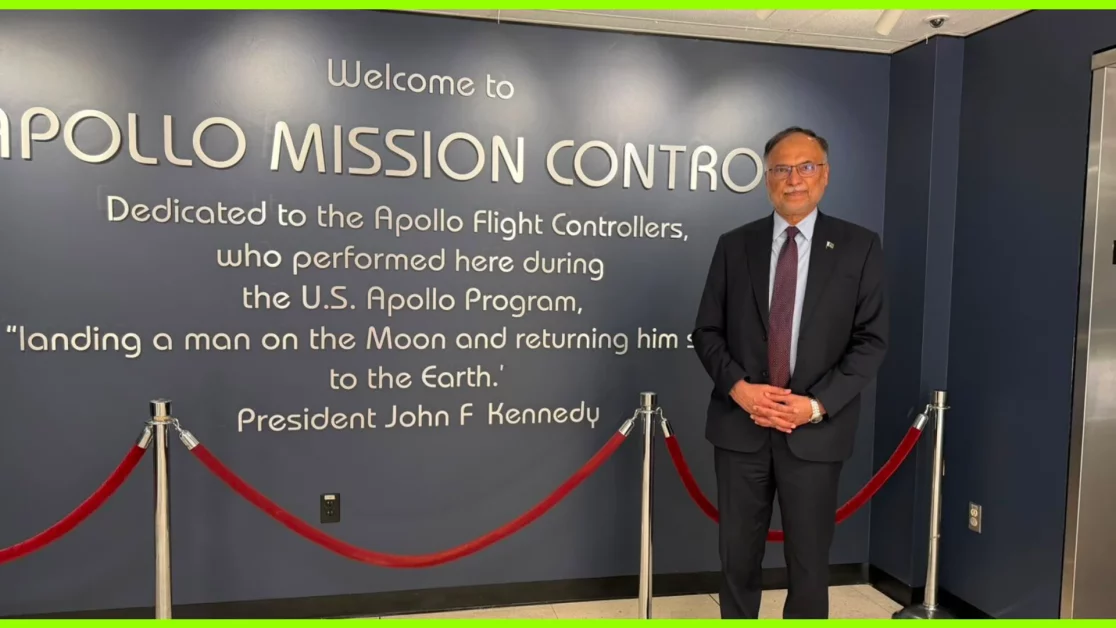
Pakistan held talks with NASA and US aerospace firms to strengthen cooperation in space science, research, education and innovation under its long-term space strategy.
Pakistan has initiated discussions with NASA and leading United States aerospace companies to expand cooperation in space science, research, education and technology as part of its long-term strategy to strengthen the country’s space programme and innovation ecosystem.
Federal Minister for Planning, Development and Special Initiatives Prof. Ahsan Iqbal Chaudhary held a series of meetings during visits to NASA Space Center Houston and the Bay Area Houston Economic Partnership, where he outlined Pakistan’s vision of developing into a knowledge-driven nation supported by scientific research, technological advancement and skilled human capital.
A major focus of the discussions was the proposed establishment of a Space Learning Centre and Museum in Narowal. The facility is intended to introduce students to astronomy, space exploration and scientific discovery through interactive exhibits covering topics such as the solar system, galaxies, black holes, the Big Bang and the history of human space missions.
According to the government, NASA representatives and participating US aerospace companies showed interest in supporting the proposed centre while also exploring opportunities for broader institutional collaboration with Pakistan’s evolving space sector.
During the engagements, the minister reiterated Pakistan’s long-term objective of achieving a lunar mission by 2035 and establishing a Pakistani presence on the Moon by 2047. He said these ambitions would require international cooperation in areas including scientific research, technical training, mission planning, knowledge exchange and institutional capacity building.
The discussions also highlighted Pakistan’s growing base of engineers, scientists and information technology professionals, with the minister inviting American organisations to pursue joint research projects, advanced engineering initiatives, software development and innovation partnerships.
Prof. Ahsan Iqbal also presented Pakistan’s expanding higher education network, specialised academic programmes in space sciences and the National Centre for Satellite Technology and Geographic Information Systems (GIS) as platforms for collaborative research and talent development.
The minister further called for broader Pakistan-US cooperation in sectors including education, healthcare, climate resilience, innovation and space exploration, describing scientific collaboration as an important tool for addressing shared global challenges.
Referring to climate change, he noted that Pakistan remains highly vulnerable to its impacts despite contributing only a small share of global greenhouse gas emissions, underscoring the importance of international partnerships in developing technological solutions.
Officials said the engagements form part of the government’s wider efforts to strengthen international technology partnerships, promote scientific excellence and equip Pakistani youth with skills required for emerging industries while advancing the country’s long-term space and innovation agenda.