

Zong, Zindigi Launch Embedded Banking to My Zong Users
August 19, 2026
Google Opens First Pakistan Office, Expanding Digital Partnership
August 20, 2026
Pakistan floods on a cycle now. In 2010, 2011, 2022, and again in 2025, each one a little more catastrophic than the last, each one a reminder that this is one of the most climate-exposed countries on earth. That is the uncomfortable backdrop to a much drier-sounding story, over the past two years, Pakistan has quietly built an entire regulatory system around ESG (environmental, social, and governance) standards, and this month, the framework took its biggest step forward yet.
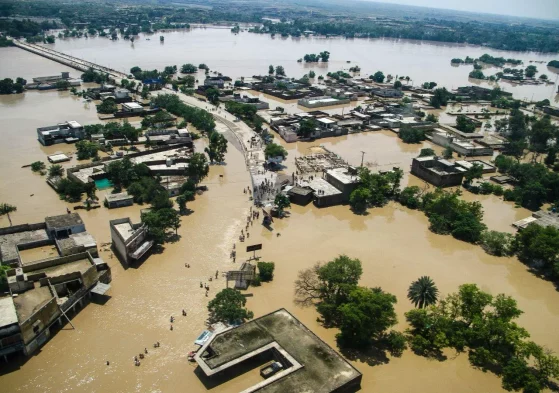
Image Source: YourWeather.UK
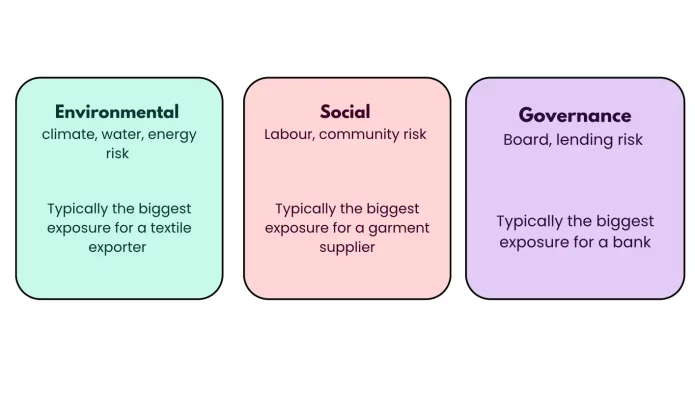
If you have never paid attention to ESG, here’s a short version. It started as two separate ideas that eventually merged. One is Corporate Social Responsibility (CSR), the voluntary, philanthropic idea that businesses owe something back to society. The other is investor risk management, the idea that climate change, labour unrest, or weak governance are financially material risks that belong in an investment decision, not just a charity budget. ESG is what you get when those two ideas collide: instead of asking “is this company good,” it asks “is this company measuring and managing the things that could actually sink it”. A useful way to think about the three letters is as three different places a company’s risk can hide, a textile exporter’s biggest exposure is probably environmental, a bank’s is probably governance, a garment supplier’s is probably social. With tens of trillions of dollars in global capital now sorted by exactly that question, regulators everywhere, Pakistan included have stopped treating “ESG” as a marketing word and started treating it as a legal one.
The Regulatory Landscape
Pakistan’s ESG regulations and laws has been built in layers over roughly fifteen years, starting with a narrow 2009 disclosure rule that almost no one outside compliance departments noticed, then compressed into two years of rapid escalation between 2024 and 2026. Three institutions are driving it, each from a different angle. The Securities and Exchange Commission of Pakistan (SECP) regulates companies and capital markets and has written most of the disclosure and fund rules below. The State Bank of Pakistan (SBP) regulates bands and green finance and has quietly been the most consistent actor here since 2017. The Pakistan Stock Exchange (PSX) is the newest entrant, now building the ESG benchmarks that will determine which listed companies count as “sustainable” in the market’s eyes. None of the three is working off a shared statute, this is regulatory convergence by coordination, not by design.
A Decade of Rules That Nobody Enforced
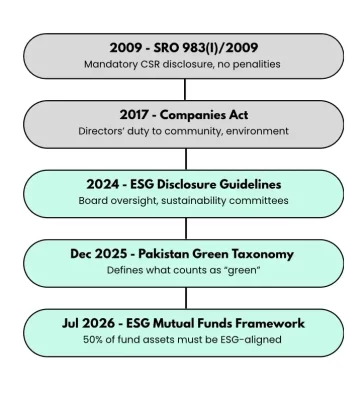
Pakistan’s first formal CSR requirement dates to 2009, when SRO 983(I)/2009 required all public companies to disclose their CSR activities, descriptive and monetary, in their annual director’s report, covering areas like environmental protection, community welfare, consumer protection, and workplace safety. SECP followed this with voluntary CSR Guidelines in 2013. Neither carried a penalty for falling short, both simply required companies to say what they had or had not done.
The Companies Act, 2017, replaced the old Companies Ordinance of 1984, and formally introduced the concept of corporate social responsibility into Pakistani company law, placing a statutory duty on directors to act in “in the best interests of the company, its employees, the shareholders, the community as well as the protection of the environment”. Listed companies’ directors’ reports now required to discuss the environmental impact of the business, not just its CSR spending. But the underlying logic never changed, through the Listed Companies (Code of Corporate Governance) Regulations of 2019, Pakistan’s CSR framework stayed disclosure-based rather than penalty-based or a “comply or explain” model where a company that did nothing on ESG faced no consequence beyond saying so in a report nobody outside compliance was likely to read closely.
That started to change fast in 2024. The SECP issued its first real ESG Disclosure Guidelines, a structured baseline within the Code of Corporate Governance pushing boards to actually oversee ESG risk, often via dedicated sustainability committees. SECP also showed the same international disclosure standards i.e., IFRS S1 for general sustainability disclosures, IFRS S2 for climate specifically, both issued by the International Sustainability Standards Board (ISSB), that dozens of other markets already use. That last part is significant because it means Pakistani company’s ESG numbers can be read and trusted by an investor in London or Singapore without translation, because they are speaking the same regulatory language. SECP also stood up “ESG Sustain,” an online repository of guidance and tools to help listed companies work through their first disclosures.
Then, in December 2025, SECP revised those guidelines again, trying them explicitly to a brand-new Pakistan Green Taxonomy, essentially a national rulebook defining what actually counts as a “green” economic activity, linked to Pakistan’s climate commitments under the Paris Agreement. But importantly, SECP built in a runway: none of this becomes mandatory until June 2029, phasing it gradually after that for listed companies. This five-year runway is an acknowledgement that most Pakistani companies do not yet have the accountants, data systems, or in-house expertise to produce taxonomy-aligned reporting reliably. The generous read is that SECP is sequencing capability before compliance. An example of this is EU, Brussels pushed its Corporate Sustainability Reporting Directive toward fast, granular, mandatory disclosure, and by 2025 received backlash enough for EU to introduce an “Omnibus” package scaling the whole thing back. Its sister rule, the Corporate Sustainability Due Diligence Directive (CSDDD), forcing large companies to police human-rights and environmental risk across their entire supply chain, which was pushed to 2029, the same year as Pakistan’s mandatory phase begins. The less generous read is that in Pakistan’s regulatory history, “voluntary” has often been where good intentions quietly stall. Which read turns to out to be correct depends entirely on what happens next, and that’s exactly where the story picks up.
The Month the Money Showed Up
Two major developments landed in the first week of July 2026, marking the moment Pakistan’s ESG framework stopped being purely disclosure-based and started being about capital allocation.
First. SECP’s ESG Mutual Funds Framework took effect on July 1st, introducing Pakistan’s first real rulebook for any fund wanting to call itself “ESG”. Any such fund must put at least 50% of net assets into ESG-aligned investments: equity funds primarily into companies on the new PSX Sustainability Index or firms already meeting SECP’s Disclosure Guidelines; debt funds into green, social, or sustainability-linked bonds issued under the Green Taxonomy. The threshold is worth pausing on as SECP’s original April 2026 proposal set the bar at 70% but industry pushback brought it down to 50% in the final rule, a large concession and an early signal of the friction between what regulators want ESG funds to look like and what asset managers believe they can currently deliver. Whether 50% is a sensible compromise or a floor set low enough to let existing funds relabel themselves without much real change is a question the market will answer over the next year or two, not one the rule itself settles.
Second, on July 6th, the Pakistan Stock Exchange released the concept paper for its first-ever Sustainability Index, open for public consultation until July 17th. Rather than applying one checklist across every industry, the index uses “materiality-adjusted” scoring, with sector-specific weighting that treats, say, water usage as a much bigger factor for a textile mill than for a bank. The methodology is still being finalised, but it already matters enormously, because it is the exact benchmark the new mutual fund rules point to. In other words, whichever companies this still-open index decides to include or exclude will directly determine which businesses qualify as “ESG-investable” under SECP’s fund rules, a lot of influence for a document that is still technically a draft.
Meanwhile, the State Bank of Pakistan (SBP) has been building its own track since 2017, with less noise and more continuity than either SECP or PSX. It started with Green Banking Guidelines requiring banks to build policies around environmental footprint. In 2022, that became the Environmental and Social Risk Management (ESRM) framework, giving banks a structured way to monitor environmental and social risk inside their actual leading books, the kind of granular, credit-level infrastructure SECP’s listed-company rules do not reach. December 2025’s Pakistan Green Taxonomy, adapted from EU and Chinese models but tailored to Pakistan’s own climate priorities, is now the single national definition banks and development finance institutions must use when updating their green lending policies. None of this is a policy proposal, it is already shaping green finance, with Pakistan issuing its first green bond in 2021 to finance a hydropower project. It has since introduced rupee-dominated green bonds and green sukuk, helping direct, green-labelled capital towards projects that meet sustainability criteria.
SBP also folded climate risk directly into banking regulation, requiring systematically important banks to run climate scenarios in their annual stress tests, the same way they already stress test for interest rate shocks. That says something, Pakistan’s central bank treats climate risk as a financial stability issue, not a green finance nicety.
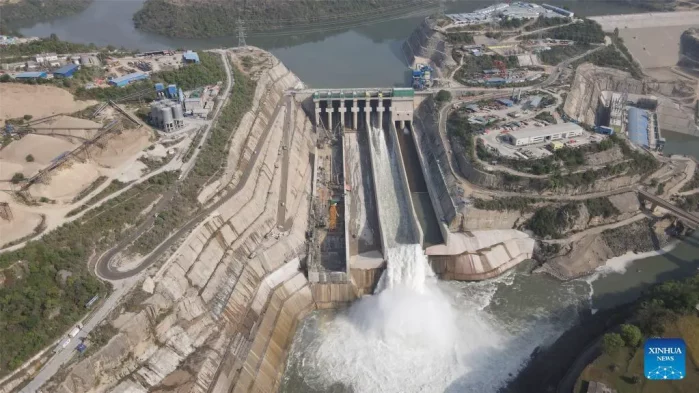
Image Source: Xinhuanet.net
Why This Is Not Really About Being a “Good Citizen”
Two forces are pulling in the same direction here, and neither of them is sentimental. The push is domestic and physical as Pakistan is repeatedly ranked among the world’s most climate-vulnerable countries, and that’s a recurring economic shock, not a policy talking point. The pull is external and financial as global capital increasingly would not flow into markets without credible ESG infrastructure behind them, and SECP and PSX have both said, more or less explicitly that these reforms are about making Pakistani companies and funds ‘investable” to international sustainable-finance capital that has other options. Read that way, Pakistan’s ESG framework looks less like a moral commitment and more like a survival strategy with an investor-relations function attached.
That is also why the pressure on individual businesses is not waiting for 2029. A textile mill in Faislabad selling into Europe may already find its toughest ESG regulator is not SECP at all, it’s the compliance department of the European retailer buying its shirts, since EU and UK import and disclosure rules increasingly demand this data regardless of what Pakistani law currently requires. Textiles are Pakistan’s largest export sector, which makes this more than an edge case. It’s the same “trickle-down” effect the EU saw with its own suppliers: smaller companies with no direct legal obligation yet end up filling out sustainability questionnaires anyway, because their biggest customer needs the answers and would not take “we’re not required to” as one.
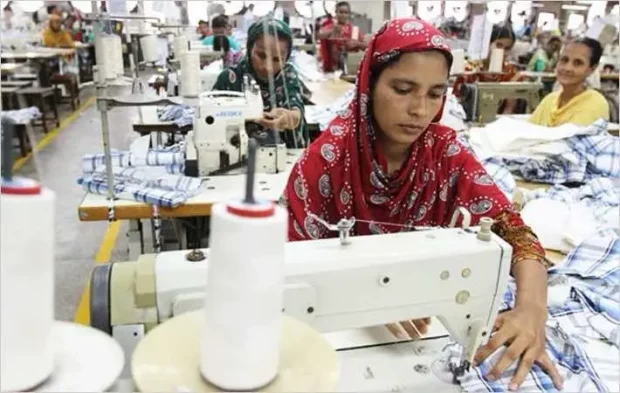
Image Source: AlchemPro.com
For everyday people, the point of all this is less about investment returns and more about who absorbs the cost when something goes wrong, a flooded factory town, an unsafe workplace, a river quietly polluted upstream. Historically, those costs have been externalities that are real but unpriced, and therefore, invisible in a compnay’s books until the bill comes due for someone else. ESG regulation, if done properly is an attempt to price them in before that happens, and to give ordinary investors who want to put their money somewhere responsible a way to actually verify that claim, rather than taking a fund’s word for it.
Who This Actually Affects, and When
Look across every rule described here and the same shape repeats that they start voluntary build capacity, then phase toward mandatory. The 2009 CSR order was mandatory but narrow, disclosure only, no substantive targets. The 2013 CSR Guidelines were fully voluntary; the 2024 Disclosure Guidelines stay voluntary until 2029. Even the ESG Mutual Funds Framework, the sharpest-toothed rule so far, is only mandatory for funds that choose to opt into the “ESG” label. None of these timelines are isolated decisions they are the same playbook run four separate times.
What that means depends on who you are. A large listed company should the building ESG governance right now with board oversight, a sustainability committee, baseline emissions and social data, because while mandatory reporting is years away, it is not decades away and the data infrastructure required takes years to build properly. An asset manager is already living under real rules as of July 1st. A bank or development finance institution has been operating under Green Taxonomy and risk-management obligations for months, if not years. A smaller private companies faces the lightest obligations of anyone right now but that is expected to shift as 2029 approaches and larger companies push ESG data requirements down their own supply chains, the same dynamic that became genuinely contested in Europe, where smaller suppliers with no formal obligation ended up doing the compliance work anyway.
The Tensions To Be Resolved
None of this is settled, and a few fault lines will determine whether Pakistan’s ESG framework ends up meaning something or becomes another well-intentioned system that quietly stalls. Enforcement capacity is the first: Pakistani regulation has historically been better at writing guidelines than monitoring compliance with them, and rules only matter if someone is actually checking. Data and assurance infrastructure is the second, meaningful ESG reporting needs reliable emissions data, verified social metrics, and independent assurance, all capabilities still being built across much of the corporate sector, not just switched on by decree. Cost is the third, and it falls hardest on smaller companies: as in the EU, ESG data demands risk trickling down from large firms to smaller suppliers who don’t have the resources to comply, unless Pakistan builds something like the EU’s lighter-touch voluntary SME standard to absorb that pressure. And underneath all of it sits a harder question: because these reforms are explicitly designed to attract international capital, there will be constant pressure to keep realigning with whatever the EU, the ISSB, and major global investors expect next, even as those standards themselves keep shifting under everyone’s feet.
What Actually Happens Next
Nothing is mandatory for most companies yet, that’s still 2029. But the direction of travel is now unmistakable as voluntary guidelines, then a taxonomy, then real money, mutual funds tied to a real benchmark. The Sustainability Index all inside about eighteen months. The real read is that the “voluntary” period is not really a grace period so much as a countdown. Companies that spend the next few years building real governance and real data will find the 2029 deadline is a formality, a paperwork exercise for work they have already done. Companies that treat “voluntary” as “optional” may find themselves scrambling in 2029 or more immediately, locked out of growing pool of capital that, by then, will simply have other, better-prepared options to choose from.
Frequently Asked Questions
Is ESG mandatory in Pakistan right now?
No. SECP’s ESG Disclosure Guidelines are voluntary until June 2029, after which compliance phases in for listed companies. Banks and DFIs already face binding obligations under SBP’s Green Taxonomy, ESRM, and climate risk rules.
How do I check if a company is on the PSX Sustainability Index?
The index is still in public consultation as of July 2026; once finalized, constituent companies will be published on PSX’s website alongside its other benchmarks like the KSE-100.
What are the risks of not complying with ESG standards?
Today, mainly reduced access to ESG-labelled capital and EU/UK buyer scrutiny for exporters. From 2029, non-compliance for in-scope listed companies moves from reputational to regulatory.
* Disclaimer: This blog was last updated in July.