
Avanceon Secures $6.3 Million Fuel Retail Orders
August 18, 2026
Zong, Zindigi Launch Embedded Banking to My Zong Users
August 19, 2026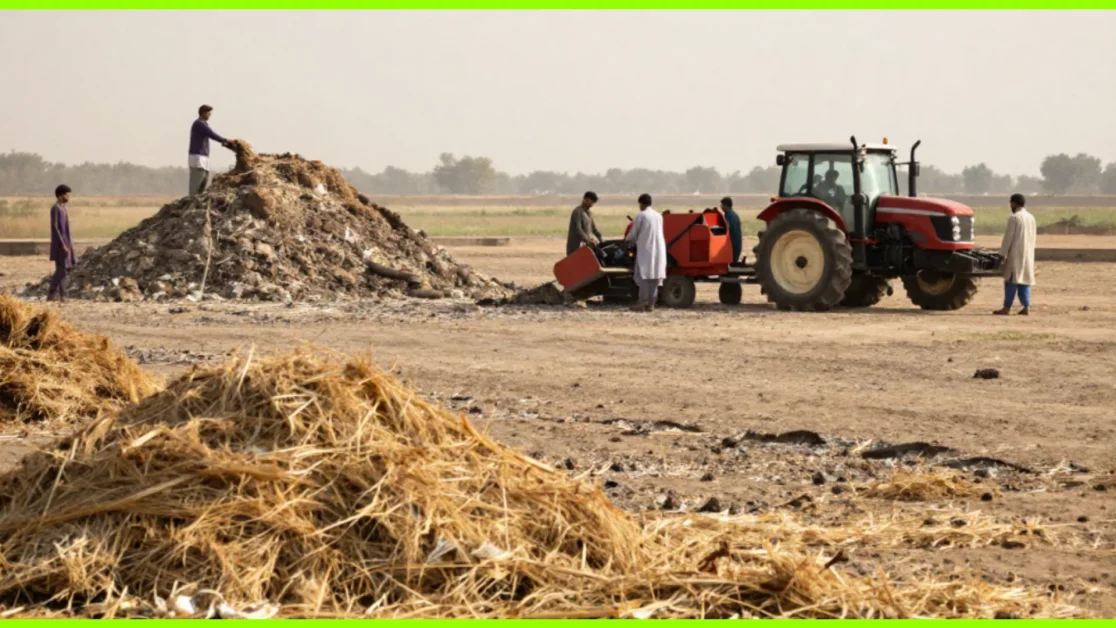
Pakistan will get its first full-scale plant converting agricultural waste into bio-coal pellets, backed by nearly £1.25 million in UK government funding.
Pakistan is set to receive its first full-scale plant converting agricultural waste into clean energy after academics at Northumbria University secured nearly £1.25 million in UK government funding for the project.
The initiative, known as the Safer Plus project, is being led by Northumbria University’s School of Engineering, Physics and Mathematics. It will convert agricultural waste, including cotton stalks and sugarcane residue, into bio-coal pellets through a heating process known as torrefaction.
The project aims to address the widespread burning of agricultural waste in Punjab, where millions of tonnes of crop residue are burned by farmers each year. The practice contributes to air pollution and seasonal smog while leaving agricultural waste with limited economic value.
Under the project, the crop residue will instead be collected and processed into an alternative fuel for industrial use. The resulting bio-coal pellets are intended to replace imported coal in applications including brick kilns and textile mill boilers.
According to project lead Dr Jibran Khaliq, Pakistan currently spends more than $2.5 billion annually on coal imports for industrial use. The project estimates that the bio-coal pellets could provide an alternative fuel at 40% to 50% lower cost than imported coal.
The initiative will also incorporate a women-led biomass cooperative responsible for collecting and supplying agricultural waste to the facility. More than 120 households located near the plant are expected to receive formal payments for agricultural material that farmers currently pay to dispose of.
At least 60% of training places under the project will be reserved for women. Payments to participating households will also be made directly through mobile wallets, creating a formal income stream linked to agricultural waste collection.
The project has already attracted interest from Pakistan’s textile industry. Three Pakistani textile manufacturers have signed letters of commitment to test the bio-coal pellets as a fuel for their boilers.
The plant is intended to build on six years of research and demonstrate a commercial-scale model that can subsequently be replicated and expanded across Pakistan.
By converting crop residue into an industrial fuel, the project combines agricultural waste management with clean energy production while creating an alternative source of income for rural households.
The initiative is expected to provide a model for reducing agricultural waste burning, lowering reliance on imported coal and developing local biomass-based energy solutions for Pakistan’s industrial sector.