
China’s Shengtang Group Eyes $10m Pakistan Investment
October 14, 2026
Human training data sounds like one of those painfully boring phrases you hear in a tech meeting and immediately forget. It sits somewhere between “machine learning pipeline” and “cloud infrastructure,” technically important, but hardly the stuff of a great conversation. Look closer at what is happening across South Asia, though, and it becomes much harder to ignore. People are recording themselves performing tasks, demonstrating movements, describing what they see, annotating footage, correcting AI outputs and showing systems how things are done. Sometimes they are simply completing a job. Sometimes they are producing something that could become far more valuable than the job itself: data a machine can learn from.
That changes how we should look at the AI economy in the region. For decades, South Asia has been one of the world’s great outsourcing destinations. Customer support moved here. Software work moved here. Transcription, moderation, data processing and countless other remote tasks followed. The basic deal was simple: a company somewhere else had work to be done, and someone in South Asia did it. AI is adding another layer to that relationship. The work itself can now become training material.
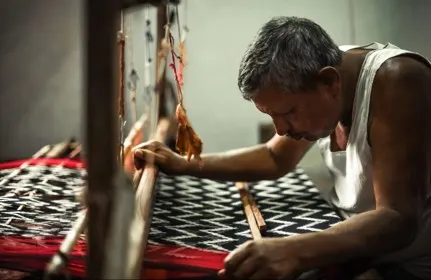
Akhil Pawar; Unsplash
Video makes this especially interesting because it captures something a spreadsheet or static photograph cannot. Imagine watching someone pick up a cup from a table. You see the cup, but you also see the person’s hand move toward it, adjust its position, make contact, grip it and lift it. You see the sequence, timing and relationship between the person and the objects around them. If the cup slips, you see that too. To us, this is just someone picking up a cup. To a machine-learning system, a large collection of these examples can contain information about how actions unfold in the real world.
That is where the story gets much bigger than “people are collecting data for AI.”
AI is starting to need examples of how the world behaves
There is a popular idea that AI’s appetite is mostly about quantity. Give a model more data, more computing power and eventually it becomes smarter. There is some truth in that, but it misses an increasingly important problem. If you want a machine to operate in the real world, recognising things is only the beginning. It also needs to learn patterns about what happens when those things interact.
Take something as ordinary as opening a drawer. You spot the handle, reach for it and pull. If it is heavier than expected, you adjust your force. If something is blocking it, you notice and change what you are doing. Your brain handles all of this without stopping to write a five-page instruction manual.
For a machine, that same situation is surprisingly complicated. It has to connect what it sees with what it should do, account for movement and timing, and respond when reality behaves differently from the example it was given. This is why video and behavioural data are becoming increasingly interesting in areas such as computer vision, multimodal AI, imitation learning and vision-language-action systems.
The shift is from showing a machine what something is to giving it examples of what can be done. A picture can help a system recognise a screwdriver. A video of someone using that screwdriver provides information about the sequence of actions, the objects involved and the relationship between what a person sees and what they do next.
The human performing the task suddenly becomes part of the training process. Their movements become examples, their mistakes become edge cases and their reactions become data. A few minutes of ordinary human behaviour can contain an absurd amount of information once someone turns it into a dataset.
We are quietly turning human experience into infrastructure
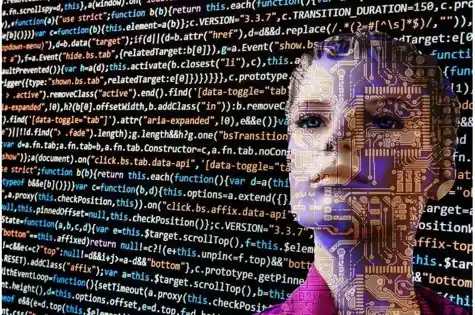
When people talk about AI infrastructure, the conversation usually jumps to data centres, GPUs, electricity and fibre networks. You cannot run modern AI on vibes and a decent Wi-Fi connection, obviously. Yet underneath all that hardware is another layer that is much more human: the information people create simply by interacting with the world.
Cell Press; Tech Explore
Someone has to perform the task. Someone has to record it. Someone has to clean the footage, label what happened or check whether the machine interpreted it correctly. Depending on the system, someone may also have to provide feedback when the model gets something wrong. Much of this looks suspiciously like ordinary digital labour.
That is why South Asia is such an interesting place to watch this happen. Countries across the region already have huge workforces built around remote services and outsourced digital work. There are established systems for transcription, moderation, image labelling, data processing and repetitive computer-based tasks. The machinery for turning human effort into organised digital information has been around for years.
The new part is what that machinery can produce.
A worker who once spent eight hours completing a task for a foreign company could now be involved in producing examples that teach an AI system how that task is performed. It would be wrong to pretend every annotation job is secretly part of some grand plan to automate the worker’s profession. AI supply chains are messy, datasets have specific purposes and the distance between one recording task and a future model can be enormous.
Still, something important is happening. Human behaviour is becoming increasingly easy to capture, organise and feed into machine-learning systems. Once you realise that, “data” starts sounding like a pretty inadequate word for what is actually being collected.
The outsourcing economy is starting to look different
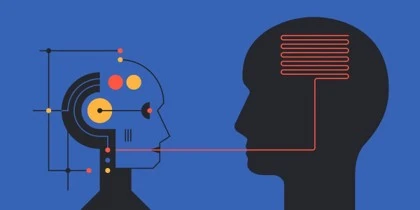
There is a strange progression hiding underneath the history of outsourcing. First, companies asked people in other countries to perform work. Then they increasingly asked people to label information so machines could understand it. Now there is growing interest in collecting demonstrations of how people actually perform tasks. The instruction has quietly shifted from “do this for us” toward “show the machine how this is done.”
Imagine thousands of people performing similar tasks while cameras, phones, screens or sensors capture what happens. Individually, each recording might seem almost worthless. Put enough of them together, clean them up and structure them properly, and you have something that can become useful for training or evaluating AI systems.
The person making the recording does not necessarily know what happens to it later. They might see a short-term gig or data-collection assignment, while somewhere further down the chain, that material becomes part of a dataset used to develop a much more sophisticated system. Several companies and technical processes can sit between the person producing the data and the person building the model.
Cole Stryker and Mark Scapicchio; IBM
This makes the South Asian story more interesting than the usual conversation about cheap labour. The region has enormous populations, multiple languages, wildly different environments and a huge workforce already accustomed to producing digital information for companies elsewhere. Those characteristics can make it useful when developers need varied examples of human behaviour.
And there is an uncomfortable irony here. South Asia spent decades becoming a major destination for outsourced human work. Now some of the same economic structures may be helping produce the data needed to automate parts of that work.
That does not mean a robot is coming for your cousin’s customer-service job tomorrow morning. It does mean the relationship between human labour and automation is becoming much more complicated than the old “AI takes jobs” headline suggests.
The real question is who gets the value from human experience
Once you start looking at AI this way, the obvious question about jobs feels incomplete. Another question sits earlier in the pipeline: who owns and benefits from the information created when humans teach machines how to work?
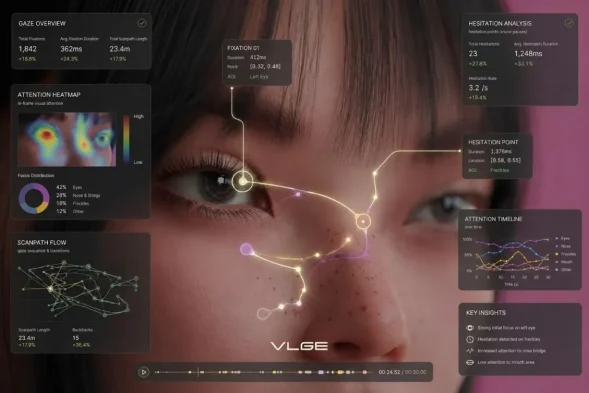
Suppose someone spends an hour recording themselves performing a task. They are paid for that hour, and the job ends. The recording, however, could remain useful long after the worker has moved on. It might become part of a dataset and contribute to systems deployed at enormous scale. The worker’s contribution happens once. The information extracted from it can potentially keep travelling.
Cortney Harding; Forbes
That creates a strange imbalance. Human effort is temporary, while machine-readable knowledge can persist.
It also raises uncomfortable questions. What exactly are workers consenting to when they record themselves? Who owns the footage? Who gets to reuse it? Does someone understand what their demonstration might eventually be used for? If a dataset becomes commercially valuable, does the person who generated part of it have any claim to that value?
There are no easy answers, and pretending there are would make the story less interesting. What is worth watching is the larger shift. AI companies have spent years trying to give machines better models of the world. Increasingly, one way of doing that is to watch humans interact with the world and turn those interactions into training material.
The next generation of AI infrastructure may still be built from chips, servers and enormous amounts of electricity, but there is another layer underneath all of that. It is made from people doing ordinary things, often without knowing just how much information those actions contain.
And honestly, that is more interesting than the idea of robots suddenly waking up and taking over. The stranger possibility is that the transition will be much quieter. People will keep doing the work, recording the work and labelling the work, while somewhere down the pipeline, machines get a little better at learning how to do it themselves. That is the part worth paying attention to.