
Pakistan Fast-Tracks Historic Satellite Broadband Rollout
October 14, 2026
China’s Shengtang Group Eyes $10m Pakistan Investment
October 14, 2026
Pakistan’s Universal Service Fund has surpassed $1.054 billion in deployed subsidies across 158 infrastructure projects, delivering high-speed digital connectivity to over 38.4 million marginalized citizens as the country readies its landmark satellite internet framework.
Pakistan’s Universal Service Fund (USF) has officially crossed the $1 billion threshold in deployed contracted subsidies, marking a transformative milestone in the nation’s push to bridge the deep digital divide between urban tech hubs and remote rural frontiers.
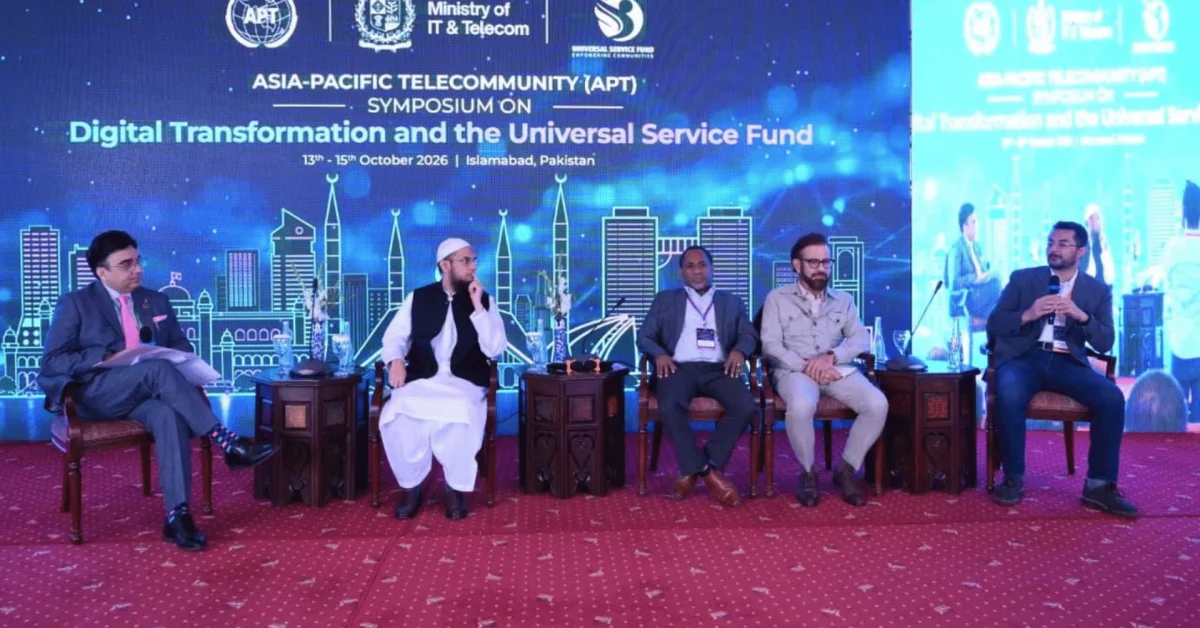
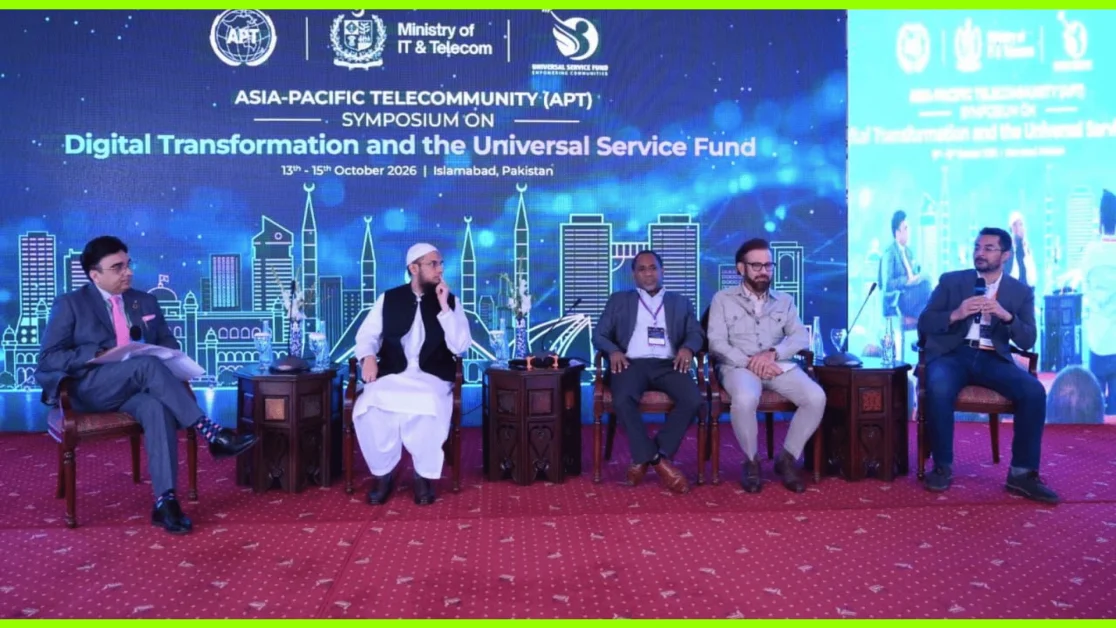
The announcement was made by Minister of State for Information Technology and Telecommunication, Shaza Fatima Khawaja, during the inaugural session of the prestigious Asia-Pacific Telecommunity (APT) Symposium on Digital Transformation and the Universal Service Fund, hosted in Islamabad.
Speaking before international delegates, regional regulators, and telecom executives, Khawaja revealed that USF has disbursed over $1.054 billion across 158 comprehensive connectivity initiatives. These projects have expanded broadband access, optical fiber backbones, and next-generation mobile coverage to more than 38.4 million people residing in traditionally unserved and underserved pockets of Balochistan, Khyber Pakhtunkhwa, Gilgit-Baltistan, Azad Jammu and Kashmir, and interior Sindh.
The milestone signals a decisive shift in how Pakistan approaches digital equity. Rather than limiting subsidies to conventional cellular towers and legacy 2G/3G voice services, the Ministry of IT and USF are pivoting toward gigabit optical fiber deployment, non-terrestrial satellite networks, and disaster-resilient infrastructure capable of enduring extreme climate shocks.
A critical pillar of this next-generation strategy is the country’s forthcoming satellite internet regulatory framework, which officials confirmed is now in its final stages of completion. Once ratified, the policy will open doors for Low Earth Orbit (LEO) satellite constellations, bringing ultra-low-latency broadband to terrains where laying terrestrial fiber remains economically or geographically unfeasible.
Addressing regional telecom leaders, industry analysts noted that capital expenditure alone cannot eliminate digital exclusion if device affordability remains unaddressed. In response, USF and the IT Ministry are accelerating Buy-Now-Pay-Later (BNPL) smartphone financing models to lower hardware barriers for rural households, while aligning infrastructure planning with rural digital literacy and localized AI-driven services.
As global tech leaders convene in Islamabad through October 15 to outline regional blueprints for universal service reform, Pakistan’s billion-dollar deployment stands as evidence that telecom investment in rugged, hard-to-reach geographies is no longer treated as charity, it is recognized as essential economic infrastructure.