
Karandaaz Secures Green Climate Fund Accreditation
November 3, 2026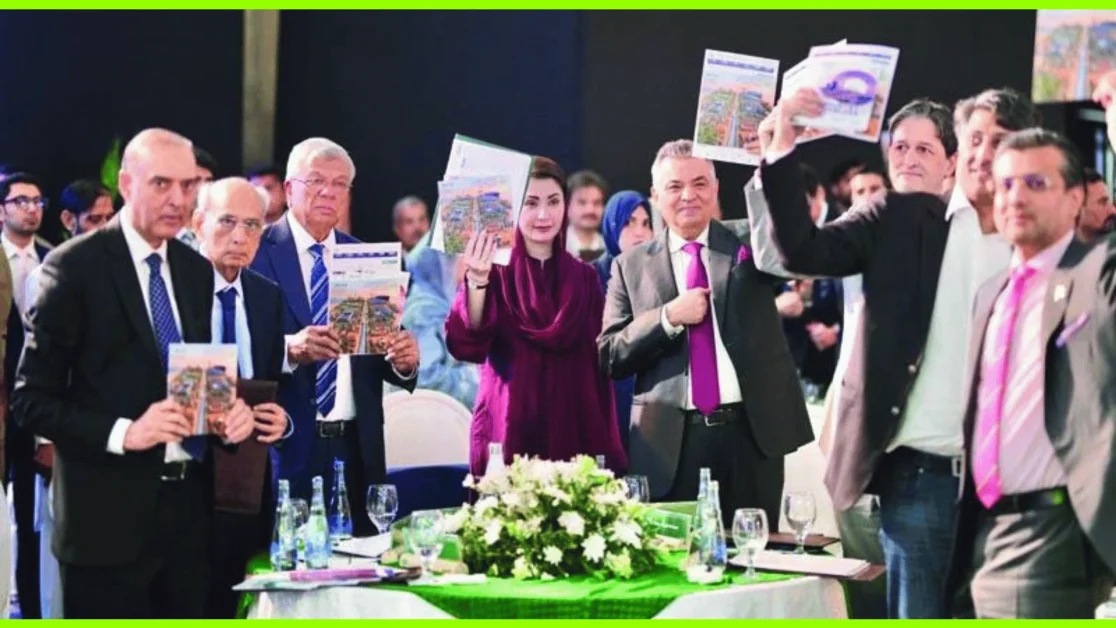
Punjab has launched its three-year PIVOT economic programme for 2026–29, combining Rs1.089 trillion in public investment with Rs906 billion from the private sector. The plan targets $6.8 billion in additional exports, 162,000 jobs and skills training for more than 402,000 people.
Punjab Chief Minister Maryam Nawaz has launched the Punjab Innovation for Value, Opportunity and Transformation (PIVOT) programme, a three-year economic plan for 2026–29 designed to increase exports, attract private investment and expand employment across the province.
The programme brings together Rs1,089 billion in planned government investment and Rs906 billion from the private sector, taking the total proposed investment to approximately Rs1.995 trillion. Its targets include an additional $6.8 billion in exports, 162,000 new jobs and improved livelihoods for one million people.
According to Profit, Rs753.7 billion has been earmarked for industrial development, while Rs300 billion in concessional financing will be made available for industrial projects at interest rates ranging from zero to five percent. The programme also aims to train 402,060 people over three years in skills linked to industry, technology and international employment markets.
A separate report by Dawn described PIVOT as an effort to position Punjab as an export-led industrial hub. At the launch, Maryam Nawaz said: “Punjab is ready to move towards a new model of economic growth, driven by industry, innovation, value addition and exports.”
The plan covers manufacturing sectors including garments, sports goods, leather, footwear, pharmaceuticals, fans and ceramics. It also includes machinery duty refunds, support for solar energy and battery storage, industrial infrastructure improvements and reforms to make business operations easier.
Agriculture is another major component. Four agro-processing parks are planned for Sargodha, Khanewal, Okara and Bhakkar, focusing on fruit processing, cold storage, grading and value addition. Further measures include farm mechanisation, improved storage, meat and dairy processing, disease prevention and support for farmers. Aquaculture projects are also intended to strengthen shrimp farming and fisheries infrastructure for export-oriented production.
The programme also identifies tourism, digital skills and technology as areas for investment. Planned initiatives include IT internships, internationally recognised certifications, start-up incubation and entrepreneurship support. Tourism development will focus on historical and religious destinations, Lahore’s night-time economy, Potohar and Cholistan.
To oversee implementation, the government plans to establish a dedicated PIVOT secretariat in the Planning and Development Department, supported by a monitoring cell in the Chief Secretary’s Office. Deputy commissioners will serve as district focal persons.
The programme’s success will depend on translating its investment commitments and policy measures into actual projects, exports and employment. Its three-year targets provide benchmarks against which progress can be assessed.