
GTA 6 Sells $3.79 Billion in a Single Day
November 22, 2026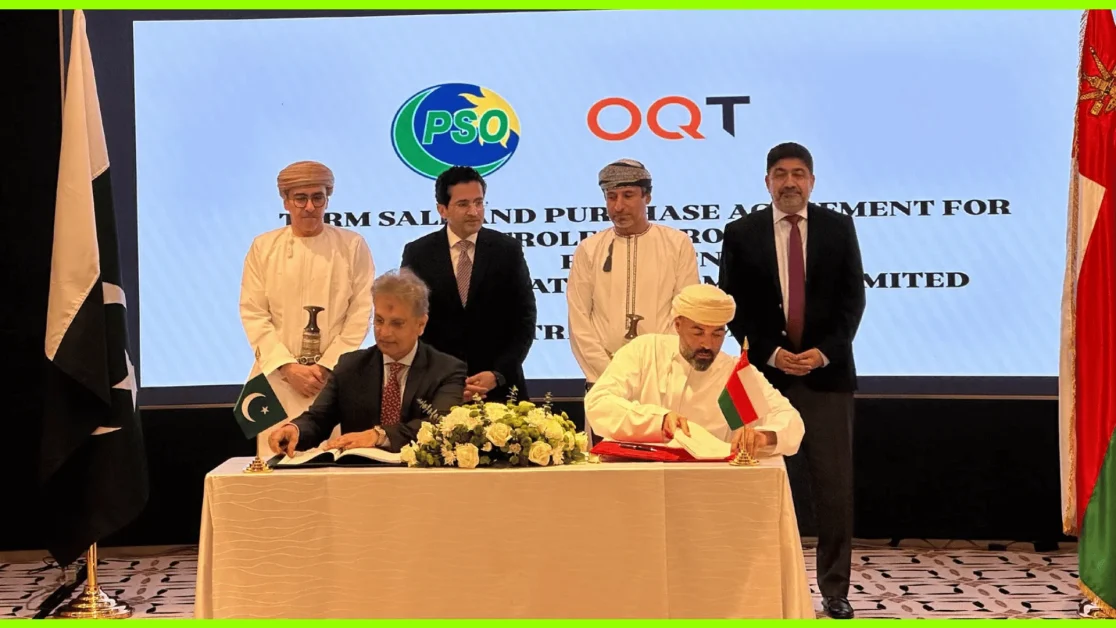
Pakistan signs a $200m Oman oil deal to diversify fuel imports and strengthen energy security amid regional disruptions.
Pakistan has secured a $200 million credit facility from Oman’s OQ Trading to finance petroleum purchases, alongside a new agreement for petroleum product supplies. The deal comes as disruptions linked to the US-Iran conflict continue to threaten energy shipments through the strategically important Strait of Hormuz.
The agreement was signed on November 22 between Pakistan State Oil (PSO) and OQ Trading, Oman’s global commodity trading company, during Petroleum Minister Ali Pervaiz Malik’s visit to Muscat. Oman’s Minister of Energy and Minerals, Salim Al Aufi, also attended the signing ceremony following discussions on expanding bilateral energy cooperation.
Under the arrangement, OQ Trading will extend a $200 million credit line to PSO to facilitate petroleum purchases. The agreement establishes a structured supply framework intended to improve fuel availability and strengthen Pakistan’s ability to manage volatility in international energy markets.
The development is particularly significant as Pakistan faces growing risks to its energy supply routes. The ongoing US-Iran conflict has disrupted commercial shipping around the Strait of Hormuz, while attacks on regional energy infrastructure have also affected liquefied natural gas (LNG) shipments from Qatar.
According to Pakistan’s Petroleum Division, the agreement builds on an established commercial relationship between the two companies. OQ Trading has already supplied more than one million tonnes of gasoline to PSO during 2026, making it a major supplier to the state-owned oil company.
Its presence in Pakistan’s liquefied petroleum gas (LPG) market has also expanded, with supplies reaching both public and private sector buyers. The company’s LPG shipments to Pakistan are expected to exceed 120,000 metric tonnes by the end of 2026.
Welcoming the agreement, Pakistan’s Petroleum Division said it would strengthen bilateral energy ties and support efforts to diversify imports. It added that the arrangement would support supply reliability amid continued volatility in regional energy markets.
Beyond petroleum supplies, both ministers also welcomed the establishment of a Pakistan-Oman Joint Working Group on Oil and Gas. The mechanism is expected to provide a platform for expanding cooperation in energy and mining, alongside exploring investment opportunities and stronger commercial partnerships.
The agreement marks another step in Pakistan’s efforts to reduce its exposure to regional supply disruptions by broadening its energy partnerships. However, its longer-term impact will depend on the reliability of supplies and how effectively the new credit arrangement supports PSO’s purchasing needs.