
S&P Global Praises Pakistan’s Macroeconomic Turnaround
July 6, 2026
Pakistan Offers $2.5bn Power Investment Pipeline
July 7, 2026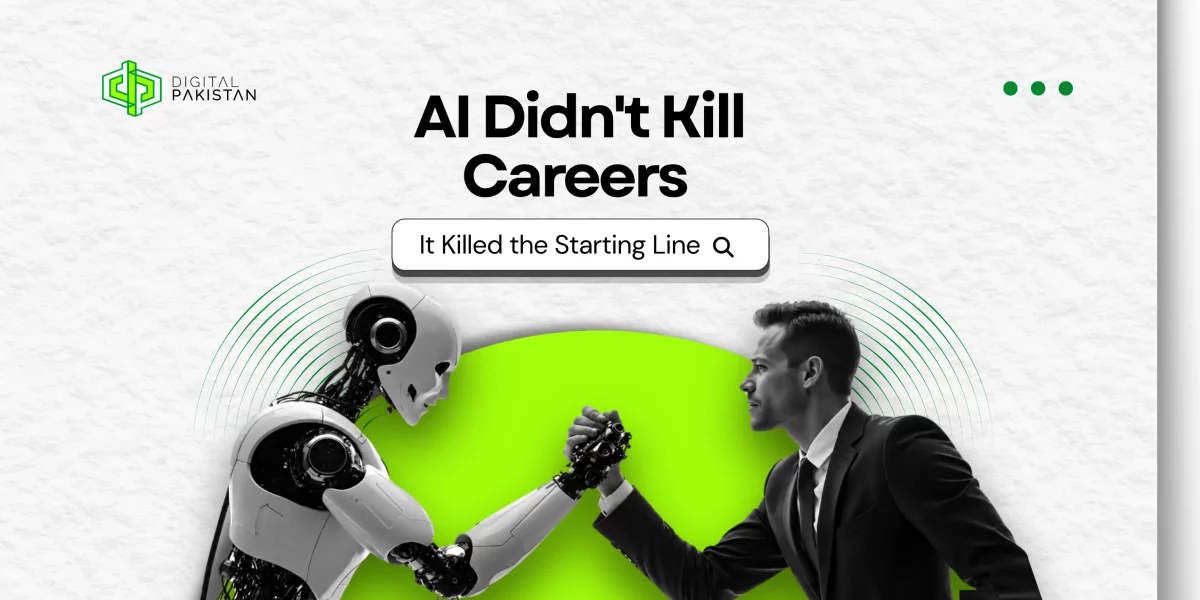
If you’ve spent more than five minutes on LinkedIn lately, you’ve probably seen someone claim that AI is coming for everyone’s job. It’s become one of those internet debates that somehow ends with either “learn AI or become unemployed” or “AI will never replace humans.” Reality, as usual, is somewhere in the middle.
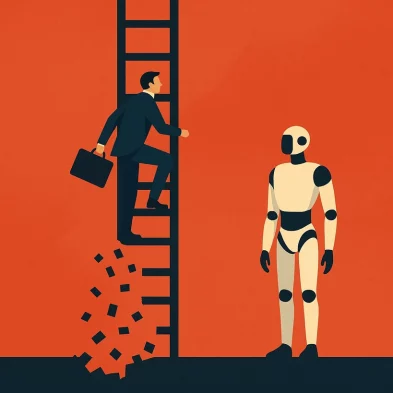
The conversation around AI replacing entry level jobs misses a much bigger issue. Most people focus on whether companies will hire fewer graduates or junior employees. A far more interesting question is what happens when AI automates the work people traditionally did to gain experience. If the first step on the career ladder disappears, the entire ladder starts looking a little unstable.
Every career starts with work nobody dreams about
Nobody graduates from university expecting to lead a team on day one. Whether you’re a software engineer, marketer, accountant, lawyer, or journalist, your first year is usually filled with repetitive tasks that more experienced colleagues would rather avoid. You write documentation, clean spreadsheets, fix simple bugs, research competitors, proofread reports, and sit through meetings wondering why they couldn’t have been emails.

Jade Scipioni; CNBC
It doesn’t sound exciting, but that’s exactly the point. Those tasks are designed to teach you how the industry works. Every bug you fix teaches you how a system behaves. Every report you write sharpens your judgment. Over time, those small lessons stack up until you’re the person making decisions instead of following instructions.
Think of it like learning to cook. Nobody becomes a great chef by immediately creating Michelin-star menus. You start by chopping vegetables, cleaning stations, and learning techniques that seem boring until you realize they form the foundation of everything else.
AI isn’t just replacing tasks. It’s replacing the training ground
This is where modern AI tools change the equation. Applications like ChatGPT, GitHub Copilot, Cursor, and Gemini can already generate first drafts, write boilerplate code, summarize meetings, document APIs, build presentations, and even explain unfamiliar concepts. Coincidentally, those are many of the same responsibility companies have traditionally handed to junior employees.
From a business perspective, that sounds like a win. Teams become more productive, projects move faster, and senior employees spend less time on repetitive work. It’s difficult to argue against software that saves hours every week, especially when deadlines never seem to get any shorter.

Mina Rad; Unplash
The trade-off is less obvious. Those repetitive tasks weren’t valuable because of the output they produced. They were valuable because they gave beginners a safe environment to learn, make mistakes, and gradually develop confidence. When AI completes that work instantly, companies save time, but new professionals lose countless opportunities to build intuition.
That’s why this conversation isn’t really about automation. It’s about learning. AI may not eliminate the need for skilled workers, but it is changing how those workers become skilled in the first place.
Pakistan’s young workforce could feel this shift first
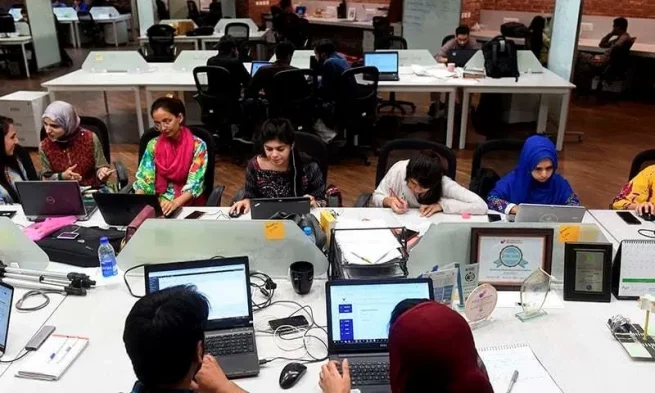
This debate feels especially relevant in Pakistan, where one of the country’s biggest strengths is its young population. Every year, thousands of graduates enter software houses, startups, digital agencies, and freelancing platforms hoping to build experience before moving into more specialized or senior roles. Those first jobs have traditionally been the bridge between university and the real world.
The challenge is that many of those entry-level responsibilities are exactly the kind of structured, repetitive work AI handles surprisingly well. A junior developer might spend weeks writing CRUD functionality that an AI assistant can generate in minutes. A content writer can now produce first drafts with AI instead of spending hours researching. Even basic data analysis and presentation building are becoming increasingly automated.
That doesn’t necessarily mean graduates will struggle to find work, but it does mean employers are likely to expect more from day one. Companies may place greater value on critical thinking, communication, creativity, and problem solving because those are still difficult to automate. Ironically, the most valuable skills in a technology-driven economy may end up being the ones that make us distinctly human.
Reuter; Dawn
Universities and training programs will also have to adapt. If graduates no longer gain experience through repetitive workplace tasks, they’ll need practical opportunities much earlier. Otherwise, businesses could end up looking for experienced candidates while offering fewer chances to become one.
The career ladder isn’t disappearing. It’s being redesigned
It’s easy to read all of this and assume AI is bad for young professionals, but that would ignore the other side of the story. The same AI tools replacing routine work are also lowering barriers that once seemed impossible to cross. A university student in Lahore can now build an application, launch an online business, learn programming from an AI tutor, or prototype a startup idea without needing a large team or expensive software.
The nature of entry-level work is changing rather than disappearing entirely. Tomorrow’s junior professionals may spend less time creating first drafts and more time reviewing AI-generated work, verifying information, solving complex problems, and asking better questions. Those are valuable skills too, but they require a different mindset from simply following instructions.
Travis Frisinger; AiBuddy.software
History shows that every major technological shift changes the definition of valuable work. The Industrial Revolution automated physical labour. Computers automated calculations. The internet automated access to information. AI appears to be automating routine knowledge work, which means the qualities that remain valuable are becoming increasingly human rather than mechanical.
The biggest question isn’t about AI. It’s about experience
The future of work isn’t just about whether AI replaces jobs. It’s about whether society can create new pathways for people to develop expertise when traditional apprenticeships begin to disappear. Every industry depends on a steady pipeline of people who start as beginners and gradually become experts. If that pipeline weakens, the effects won’t be obvious tomorrow, but they will become impossible to ignore a decade from now.
Perhaps that’s the real paradox of AI. The technology is making experienced professionals more productive than ever, while quietly reshaping the journey that creates those professionals in the first place. Companies, universities, and young workers all have an opportunity to rethink what the first step of a career should look like.
Because the biggest challenge of the AI era may not be that machines replace experts. It may be figuring out how future experts gain the experience they need when AI is already doing the work that once taught them everything they knew.