
Mobilink Bank Wins Top Climate and Gender Diversity Awards
September 6, 2026
PTA Conditionally Approves Ufone-Telenor Rebranding
September 6, 2026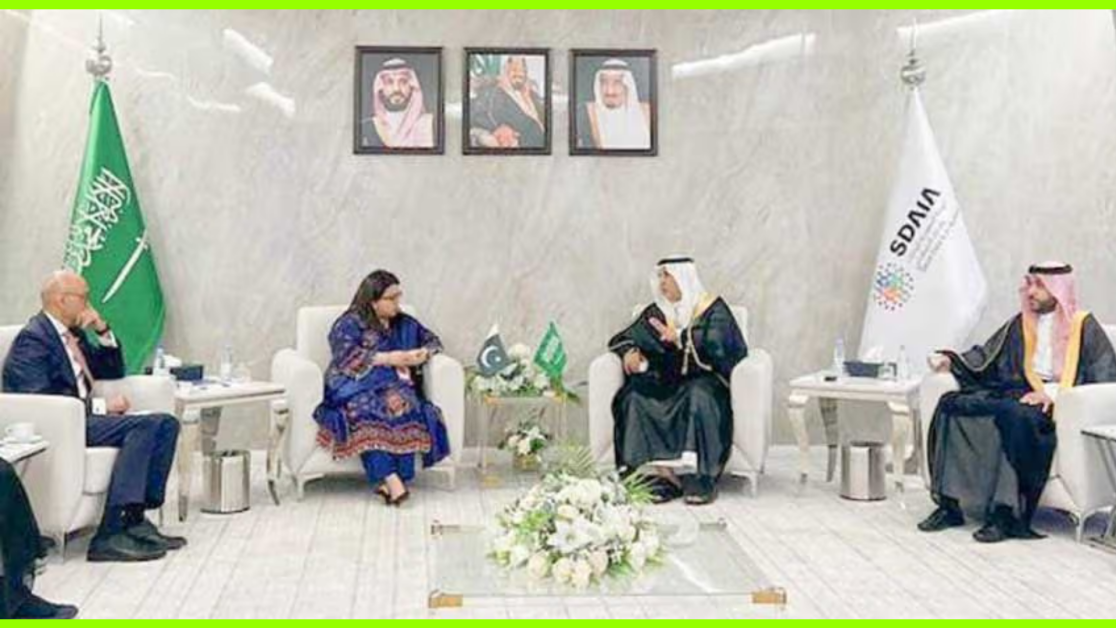
Pakistan and Saudi Arabia agreed at LEAP 2026 in Riyadh to build a comprehensive, sustainable partnership in AI, data governance, and cybersecurity, including a planned AI Hub linking Pakistani tech firms to Saudi clients.
Pakistan’s technology diplomacy with Saudi Arabia just moved from conversation to commitment. Federal Minister for IT and Telecommunication Shaza Fatima Khawaja met Abdullah bin Sharaf Alghamdi, President of the Saudi Data and Artificial Intelligence Authority (SDAIA), on the sidelines of the LEAP 2026 conference in Riyadh, where both sides agreed to build a comprehensive and sustainable partnership in artificial intelligence, data governance, and advanced technologies.
The visit also produced a formal agreement. Pakistan and Saudi Arabia signed a Memorandum of Understanding on cybersecurity, signed by Shaza Fatima Khawaja and Saudi Arabia’s National Cybersecurity Authority Governor Engineer Majed Al-Mazyed.
The MoU aims to protect the cyberspace and vital interests of both countries and will facilitate the exchange of expertise to address emerging cyber threats.
During her meeting with Alghamdi, Shaza Fatima briefed the SDAIA president on Pakistan’s ongoing initiatives to advance the country’s national AI and data governance agenda and reaffirmed Pakistan’s commitment to building a strong data ecosystem and strengthening the country’s digital economy.
The commercial dimension of the engagement runs deeper than government-to-government agreements. Pakistan and Saudi Arabia are moving to link digital skills training directly to jobs and joint tech ventures, rather than standalone training programmes, under a new AI partnership being rolled out between the two countries.
The initiative centres on a planned AI Hub; a matchmaking platform that will connect Pakistani freelancers, software houses, and technology firms with Saudi companies seeking digital services.
Shaza Fatima told Arab News that the Prime Minister had shifted the government’s key performance indicators for technology training: “It is no longer how many children have been trained, but how many of those trained are actually employed.”
She added: “Through the AI Hub, we are forming joint companies, supporting private sector firms and bringing investment; we are not talking about aid or loans, we are talking about value creation on both sides.”
The planned AI Hub is anchored by Saudi Arabia’s GO Telecom, which launched an AI hub in Islamabad last month, marking its first major technology venture in Pakistan.
Pakistani technology firms attending LEAP 2026 in Riyadh this week are targeting clients, partnerships and permanent operations in the Kingdom, as Pakistan seeks to expand technology exports and commercial links with Saudi Arabia.
The LEAP engagements arrive as Pakistan-Saudi Arabia ties extend across multiple sectors simultaneously. Both countries are also parties to a broader regional defence framework, and the technology cooperation now being formalised adds a civilian digital economy layer to what is becoming one of the most multi-dimensional bilateral relationships in Pakistan’s recent foreign policy history.
For Pakistan’s IT sector, the stakes are significant. Saudi Arabia’s Vision 2030 is driving an unprecedented wave of digital investment in the Kingdom, and a structured AI Hub that routes Saudi demand directly toward Pakistani tech talent could represent one of the most consequential market access opportunities the sector has seen.