
Pakistan, Norway Forge Stronger Ties Across Security, Trade
August 17, 2026
Pakistan Refineries Plan $5 Billion Modernisation Drive
August 18, 2026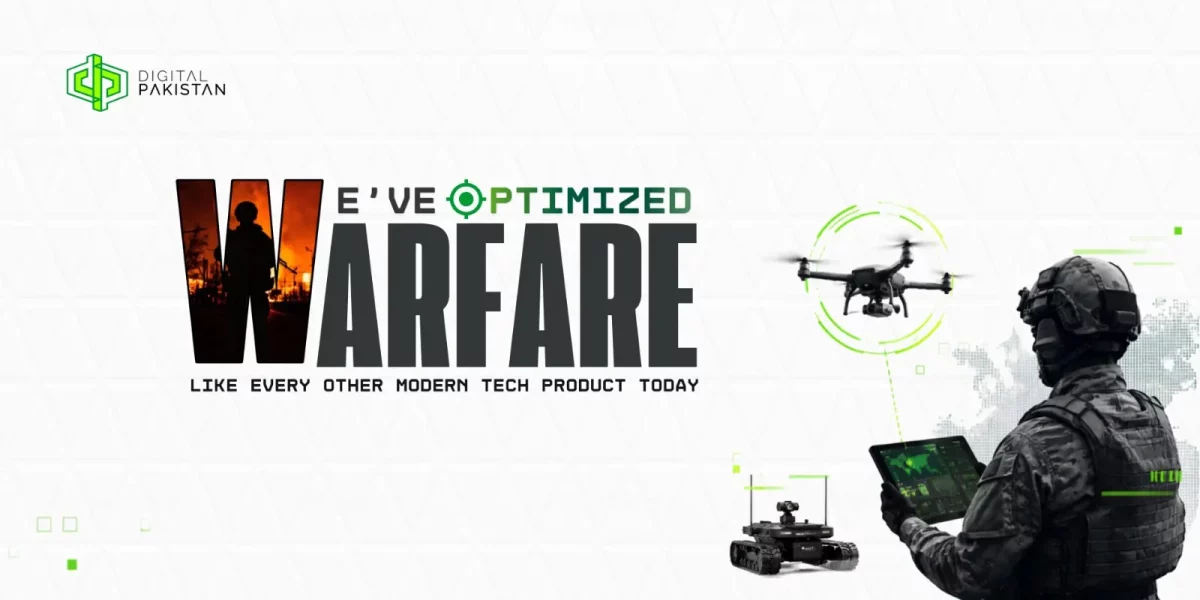
Human beings have always built technology to solve problems. Wheels solved transport, antibiotics fought disease, and smartphones made it possible to argue with strangers at three in the morning without even getting out of bed.
But technology and war have always evolved together too, even if that side of innovation gets a lot less applause. We usually tell the story of progress as if every invention pushes humanity forward, yet we rarely pause to ask what progress has done to the act of killing.
If you zoom out over the last few thousand years, a pattern starts to appear, and it is not exactly comforting. Every major leap in military technology has done one thing exceptionally well, it has made killing someone easier by making them feel farther away.
A sword demanded eye contact, a rifle created distance, artillery erased proximity, missiles erased presence, drones erased the battlefield, and artificial intelligence might eventually erase judgment itself.
That is the uncomfortable trajectory. AI did not invent remote warfare; it simply inherited a system humanity has been refining for centuries. And maybe the real story is not that weapons are becoming smarter, but that people are becoming more emotionally disconnected from what those weapons do.
Every generation made killing easier
History classes love talking about bigger empires, better weapons, and decisive battles, but they spend far less time on how technology quietly reshaped the psychology of violence itself.
Imagine standing in front of another person with nothing but a sword. There is no dashboard, no satellite feed, no confidence score, no algorithm suggesting your next move. There is just another human being looking directly at you, breathing the same air, existing in the same moment.
That kind of violence demands something modern warfare often avoids, emotional confrontation. As weapons evolved, that confrontation slowly faded into the background.
Firearms removed the need for close contact. Cannons and artillery pushed combat even farther apart. Air power allowed pilots to destroy targets without ever meeting the people below. Missiles stretched that distance across countries, and drones stretched it across continents.
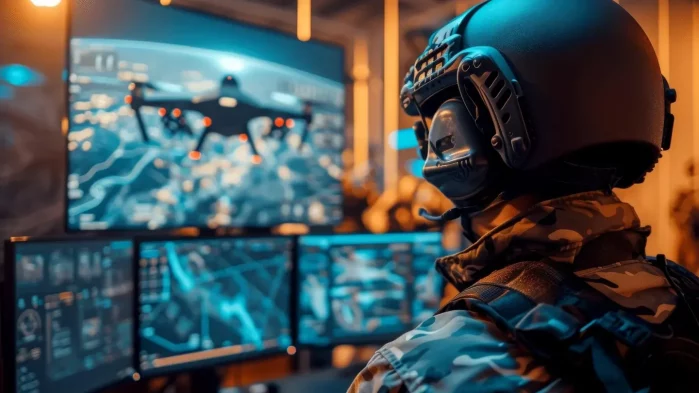
Today, a military operator can sit in an air-conditioned room thousands of kilometres away, watching live footage from the other side of the planet. The battlefield, in many cases, now looks suspiciously like a workstation.
Bernard Marr; Forbes
That is not an accident, it is the logical endpoint of centuries of technological progress. The interesting part is not just that weapons became more effective, but that every generation quietly removed another layer of psychological friction.
Think about how much easier it is to ignore a rude comment online than to ignore someone saying it to your face. Distance changes behaviour, screens change behaviour, anonymity changes behaviour. War is no different.
Technology has slowly transformed killing from an intensely personal act into something increasingly abstract. Violence did not disappear; it just became easier to outsource emotionally.
The battlefield now fits inside a laptop
If medieval warfare looked like a battlefield, modern warfare increasingly looks like a software interface. That shift is not just visual, it is structural, and it changes how decisions are made in real time.
Today’s military systems are shaped by enormous amounts of data. Satellites scan landscapes around the clock, thermal cameras detect movement in darkness, facial recognition systems help identify individuals, and machine learning models sort through hours of drone footage that no human could realistically process alone.
On top of that, predictive analytics attempt to flag suspicious patterns before anything even happens. One widely discussed example is Project Maven, which uses artificial intelligence to help analyse drone imagery, reducing the burden of manual review and speeding up decision-making.
In several modern conflicts, AI-assisted intelligence has already supported surveillance, logistics, and target identification. Ukraine, for example, has shown how commercial satellite data and AI-powered analysis can reshape battlefield awareness in real time. Governments are increasingly partnering with major tech companies because software is no longer optional, it is infrastructure.
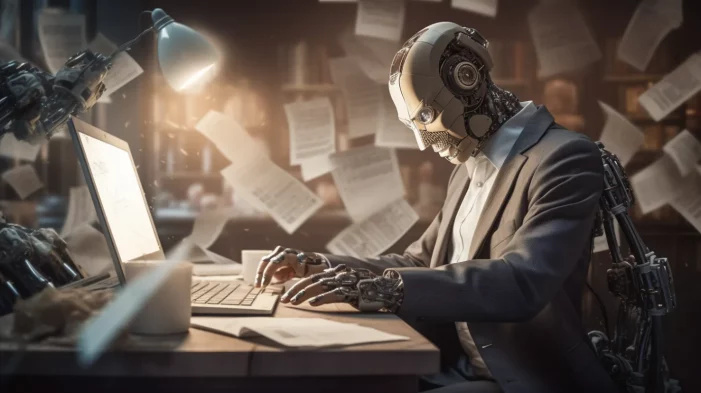
Daniel Simons; Matters
None of this automatically means machines are independently deciding who lives or dies. But it does mean something more subtle is happening, humans are making life-and-death decisions through layers of screens, maps, predictions, and algorithmic suggestions. And that changes the emotional texture of war.
Pixels do not cry, coordinates do not have families, and heat signatures do not tell stories. A spreadsheet will never remind you that someone was planning dinner before they became a target.
Technology is extremely good at turning messy human reality into clean data points. That is useful, even necessary, but it becomes dangerous when we forget that every glowing dot on a screen represents a real person. Modern warfare is not becoming less human because humans disappeared from it. It is becoming less human because interfaces are replacing experiences.
We didn’t remove violence, we removed friction
Whenever new military technology appears, the conversation usually follows a familiar pattern. Supporters talk about precision, critics talk about risk, and both sides are often partially right. But there is a more uncomfortable question underneath all of that. What actually happens when war becomes easier to start?
Imagine if you had to walk five kilometres every time you wanted fast food. You would probably think twice before ordering it. Now imagine the same food arriving with two taps on your phone. Your hunger did not change, but the friction disappeared.
Human behaviour changes dramatically when friction disappears. Technology companies understand this better than anyone, which is why every app is designed to remove one more step between you and what you want.
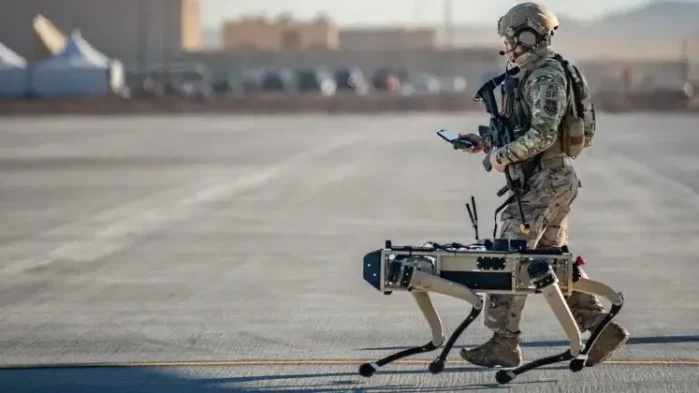
Tshilidzi Marwala; United Nations University
Military technology follows a similar logic, even if the stakes are infinitely higher. When deploying soldiers meant massive casualties, political leaders had to justify war in front of entire populations. When missiles can be launched remotely, some of that pressure fades. When drones reduce casualties on one side, public resistance often shifts again.
If future autonomous systems reduce those costs even further, another layer of friction disappears. This does not mean countries suddenly become reckless or evil. It means difficult decisions become slightly easier to make, and history shows that humans rarely ignore tools that become faster, cheaper, and more efficient.
The real danger of AI may not be inaccurate targeting. It may be that it slowly lowers the emotional and political cost of using force in the first place. Precision is valuable, but precision is not the same thing as restraint.
The AI arms race nobody can afford to lose
Here is the frustrating part of all of this, almost nobody wants to fall behind. The United States is investing heavily in military AI. China is doing the same. Russia continues developing AI-enabled defence systems. Israel has integrated advanced technologies into its operations. The United Kingdom, India, NATO members, and many others are all moving in the same direction.
This is not necessarily because every government dreams of autonomous warfare. It is because every government fears what happens if someone else gets there first. That is how arms races work. Fear does not wait for permission, it does not pause for ethics committees, and it does not slow down for comfort. Fear accelerates innovation.
The internet connected the world because everyone wanted communication. Military AI is spreading because nobody wants to become strategically obsolete. It is the same logic that drives social media trends, just with far higher consequences.
Nobody wants to be the only one still using outdated tools while everyone else has moved ahead. Now replace smartphones with military capability, and the pressure becomes obvious.
This is also why global agreements around AI in warfare are so difficult. Trust is expensive, suspicion is cheap, and history suggests countries usually choose the cheaper option. Technology has always escalated competition. Artificial intelligence simply raises the stakes.
War is becoming another user interface
There is a thought that keeps coming back, and it is not a comfortable one.
Imagine opening your laptop in the morning. Instead of emails, you are reviewing surveillance footage. An AI system highlights potential threats, confidence scores appear beside recommendations, and additional intelligence loads automatically. Then someone clicks approve. A notification appears, task completed.
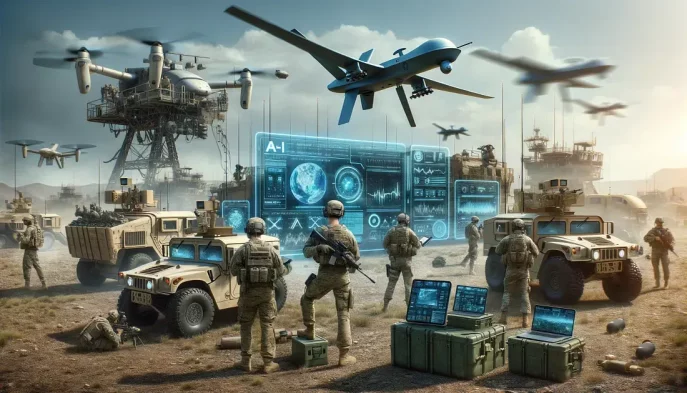
Kelly Turner; Medium
If that sounds familiar, it is because modern software already works like this. Dashboards, notifications, recommendations, approval buttons, progress indicators, we are already trained to interact with the world through interfaces that simplify complex decisions.
Now imagine those same design principles applied to warfare. That is where things get unsettling. The future of conflict may not look like robots marching through cities. It may look far more ordinary, office workers staring at multiple screens, keyboard clicks replacing explosions, and decisions flowing through systems that feel more like project management than combat.
The greatest achievement of military technology may not be creating intelligent weapons. It may be making violence emotionally invisible. Because once death becomes another interface, something shifts. Humans become metrics, lives become probabilities, and loss becomes data. And when every decision arrives neatly packaged inside a clean user interface, it becomes easier to forget that somewhere, someone will never get to go home.
The history of warfare has never really been about making killing harder. It has been about making it faster, cheaper, safer for the attacker, and increasingly distant. Artificial intelligence is not breaking that pattern. It is refining it.
The most frightening weapon of the twenty-first century may not be a drone, a missile, or an autonomous system. It may be a screen that allows someone to end a life without ever feeling close enough to hesitate.
Because once death becomes just another interface to optimize, humanity risks treating war the same way it treats every other technology, as a problem waiting for better software.