

Ghandhara Tyre Secures US DOT Nod, Opens Path to American Market
July 16, 2026
Pakistan Expects Binding China Health Investment Agreements
July 17, 2026
Meta Glasses privacy concerns
Meta Glasses privacy concerns are not some dramatic internet overreactions, and I am honestly tired of people pretending they are. They are the obvious result of putting a camera on your face and asking everyone else to act normal about it.
That is the part people keep trying to skate past. This is not just about a gadget, or a shiny new feature, or whatever Silicon Valley wants to call it this week. It is about consent, visibility, and the basic right to know when you are being recorded.
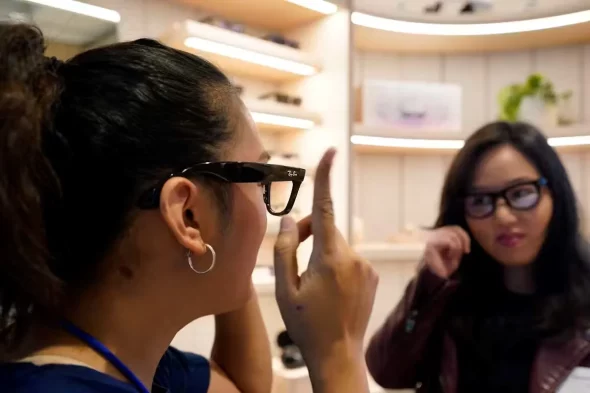
For years, cameras at least came with a signal. Someone pulled out a phone, you saw it, and even if you hated it, you knew what was happening. Meta wants to erase that moment, and that is exactly why people should be uneasy.
Victoria McArthur; The Conversation
The whole pitch is built around making recording feel casual, effortless, and harmless. That sounds cute in a launch video, but in real life it means women have one more thing to worry about in spaces where they already have to stay alert.
Meta is not selling glasses, it is selling a new social norm
Let’s be blunt, Meta is not just selling eyewear here. It is trying to sell the idea that a camera on your face should feel as ordinary as sunglasses, and that is a much bigger cultural move than people are admitting.
That is why the branding is so polished, so glossy, and so aggressively lifestyle coded. Ray-Bans, celebrity campaigns, influencer clips, coffee runs, beach walks, festival shots, all of it is designed to make the camera disappear into the vibe.
Kylie Jenner is not the story; she is the camouflage. The whole point of using someone like that is to make people stop asking what the product does, because once something looks cool enough, people get lazy about the ethics.

Ellen Eberhardt; Dezeen
And that is the trick, really. Nobody gets excited about surveillance when it is called surveillance, so Meta wraps it in fashion and hopes nobody notices the difference. The camera is the product, even if the marketing pretends otherwise.
The less visible the recording feels, the easier it becomes to normalize it everywhere. That is not innovation, that is social conditioning with better lighting.
Women will likely bear the cost first
This is where the conversation gets real, because women already live with a level of vigilance that men often do not have to think about. We scan rooms, watch exits, check who is behind us, and clock the guy who has been staring a little too long, because experience teaches you to notice things before they become problems.
Now imagine adding a discreet camera directly onto someone’s face. Suddenly the woman sitting across from him on the train has to wonder whether she is being filmed, whether her body is being captured, whether her face is going to end up in some stranger’s camera roll, or worse, online.
That is not a small concern. That is a whole new layer of stress in places where women already feel exposed, whether it is a gym, a bar, a club, a campus, a rideshare, a festival, or just walking home with your keys in your hand and your shoulders tense.
And let’s not pretend the risks stop at being recorded. A clip can be saved, shared, cropped, mocked, sexualized, deepfaked, or turned into revenge porn, and women already know how fast that spiral can happen once a man decides privacy is optional.

Georgia Poncia; BBC
The burden always lands on women first. We are the ones expected to stay calm, stay polite, stay aware, and somehow stay unbothered while the world keeps inventing new ways to make us feel watched.
Silicon Valley keeps asking women to absorb the risks
There is a pattern here, and it is getting harder to ignore. Tech companies love talking about disruption, but they get very quiet when it is time to talk about who gets hurt by the disruption.
We have seen this movie before, and the ending is always the same. Deepfakes spread before protections existed, revenge porn outran the law, AirTags became stalking tools, and women were left to deal with the fallout while everyone else debated whether the product was “technically neutral.”
That excuse is getting old. “It is just a tool” is the kind of line people use when they want to sound reasonable without taking responsibility for predictable harm.
If a company can anticipate crashes, theft, fraud, and abuse in every other context, then it can absolutely anticipate that wearable cameras will be used to secretly film women. Pretending otherwise is either dishonest or insulting, and I am not sure which is worse.
The truth is simple. If millions of ordinary people can immediately imagine how these glasses could be misused, then the people building them definitely imagined it too. The question is not whether they knew it is whether they cared enough to slow down.
The future of privacy should not be decided by marketing campaigns
What bothers me most is how quickly we are expected to accept all this as normal. The criticism gets framed as fear, as if asking basic questions about privacy means you are anti-technology, anti-progress, or some kind of luddite who still thinks flip phones are a personality.
That is nonsense. Questioning a product that makes recording less visible is not fearmongering, it is common sense, especially for women who already have to navigate public spaces like they are solving a risk assessment in real time.
Companies have become very good at turning huge social shifts into lifestyle choices. A camera becomes a fashion accessory, data collection becomes personalization, and surveillance gets dressed up as convenience until people stop noticing what they are actually agreeing to.

That is why this matters now, before the habit sets in. Once a new norm becomes socially acceptable, it becomes incredibly hard to pull back, and women usually end up paying the price for everyone else’s comfort.
Women have spent decades fighting for the basic right to exist in public without being harassed, followed, photographed, or treated like background content for someone else’s feed. Against that reality, it is completely fair to be furious about a product that makes recording easier, quieter, and harder to challenge.
So no, this is not just about sunglasses. It is about whether public space still belongs to the people in it, or whether we are supposed to accept a future where convenience for the person wearing the camera matters more than safety for the person standing in front of it.