
Google Limits Meta’s Access to Gemini Over Compute Shortfall
June 29, 2026
EFU Life Eyes Waada Digital Acquisition
June 30, 2026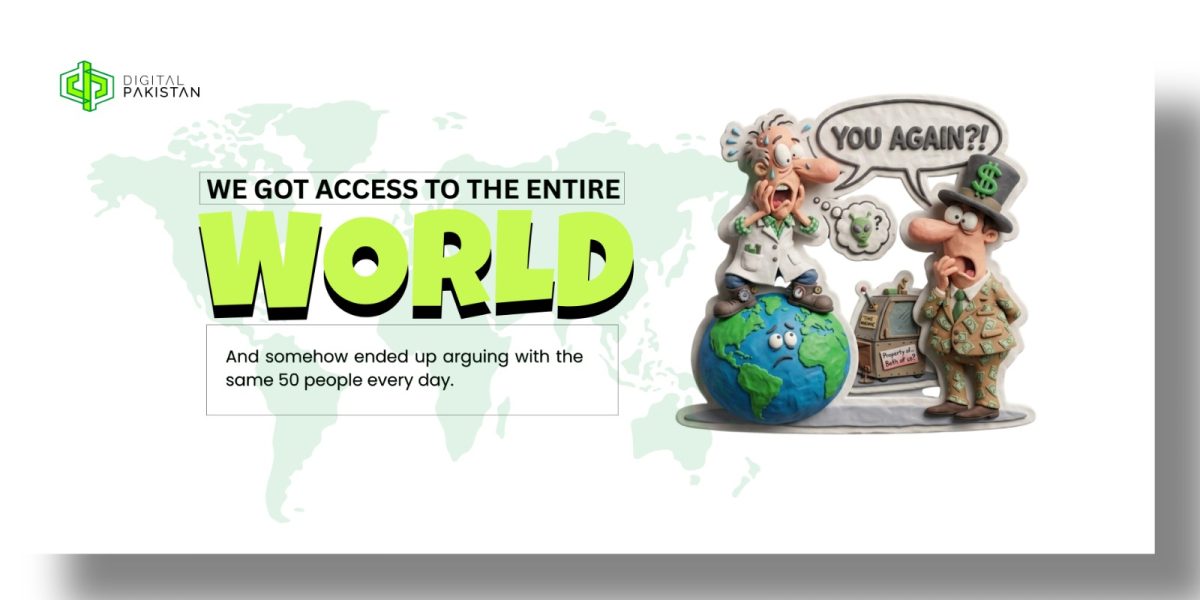
For years, the internet was sold as humanity’s great unifier. It was supposed to flatten distance, dissolve borders, and make the world feel smaller in the best possible way. Geography would matter less. Cultures would mix more freely. Information would move instantly across continents. People would understand one another better because they would finally have access to one another.
That prediction was only partly right, the internet did connect billions of people at once, but it also encouraged them to sort themselves into smaller, more familiar worlds. Instead of one global village, we got millions of digital villages, each with its own language, heroes, villains, rituals, and version of reality. The result is not just a more connected society, but a more divided one. We gained access to the entire world, yet many of us now live inside carefully filtered corners of it.
Technology connected humanity, but not necessarily minds
The biggest misconception about the internet is that exposure automatically creates openness. In theory, if people can see more of the world, they should become more informed, more tolerant, and more curious. In practice, access to more information does not guarantee shared understanding.
The internet gave people an almost endless range of ideas, but it also gave them the tools to curate their own environment with remarkable precision. News, commentators, communities, and even arguments can now be chosen to fit a preferred worldview. If someone wants to hear only one side of a debate, they can. If they want to avoid uncomfortable perspectives, they can. If they want to spend years inside a niche interest or ideology, they can do that too.

Chase Guttmon; The Forecast
A crypto enthusiast can live inside crypto spaces. A political loyalist can build an entire feed around one ideology. A sports fan, K-pop follower, gaming obsessive, wellness believer, or conspiracy theorist can spend years inside a parallel world without ever needing to step outside it. Technology widened the map, and people responded by choosing smaller neighbourhoods. The internet made the world available, but not everyone wanted the whole world. Many people wanted a version of it that felt safe, familiar, and emotionally comfortable.
Human nature never left the equation
Many discussions about polarization assume technology changed human nature. A better explanation is that technology amplified instincts that were already there. For most of human history, survival depended on belonging to a group. Loyalty, cooperation, and social cohesion mattered. The line between insider and outsider often decided who stayed safe and who did not. Humans evolved to notice difference quickly, to trust their own group more than strangers, and to protect the beliefs that held the group together. Those instincts did not disappear when smartphones arrived. They simply moved online.
The desire to belong, defend a group, and seek validation from like-minded people now operates at a scale our ancestors could never have imagined. A person no longer needs to find agreement in their immediate surroundings. They can find thousands of people who think exactly like them in seconds. That makes identity feel stronger, certainty feel easier, and disagreement feel more threatening than ever before.
This is why digital villages are so powerful. They do not just offer information. They offer belonging. And belonging is one of the strongest forces in human psychology.
Algorithms reward division
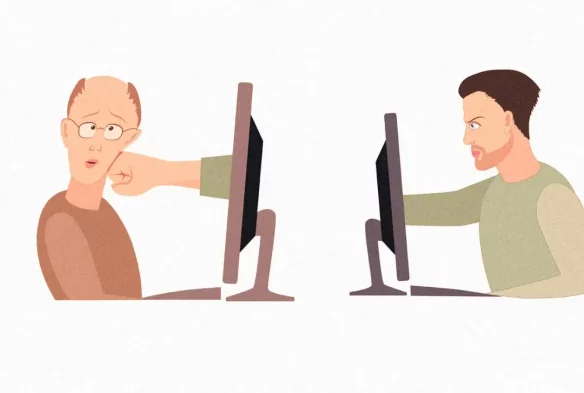
Whenever people discuss online polarization, algorithms enter the conversation for good reason. These systems are built to maximize engagement, and engagement rises when people feel emotionally invested. A passionate fanbase comments more than a casual audience. A political supporter shares more than an indifferent user. A tightly bonded community spends more time defending, debating, and promoting its beliefs. That means the internet does not simply reflect human behaviour, it organizes it.
Brian Resnick; Vox
Platforms did not invent tribal instincts, but they became very good at identifying and amplifying them. The stronger the identity, the stronger the engagement. The stronger the engagement, the more valuable the community becomes. That is why outrage spreads so quickly, why conflict performs so well, and why nuance often gets buried under louder, more emotionally charged content.
This is also why digital villages can become so intense. They are not just communities. They are engagement engines. The more a group feels attacked, the more it rallies. The more it rallies, the more visible it becomes. The more visible it becomes, the more the algorithm rewards it. In that sense, division is not always a bug in the system. Sometimes it is the feature that keeps the system alive.
Identity, fandoms, and the business of belonging
One of the strangest developments of the digital age is how fandoms have changed. There was a time when being a fan meant enjoying a movie, musician, or sports team. Today, many online communities behave more like identity groups than audiences. People defend influencers with unusual intensity. Criticism feels personal. Disagreement can sound like betrayal. Support becomes a marker of loyalty, and loyalty becomes a public performance.
The pattern extends far beyond entertainment. Podcasters, streamers, tech founders, political commentators, and internet personalities often attract communities with shared language, shared narratives, and shared enemies. From the outside, it looks like a fanbase. Inside, it often feels like a tribe with rules.
This is where the business side becomes impossible to ignore. Identity has become a business model. Brands sell belonging. Creators sell alignment. Platforms sell the feeling of being part of something larger than yourself. People do not just buy products anymore; they buy signals. They buy symbols that tell others who they are, what they value, and which side they are on. In that sense, belonging itself has become monetized. The internet did not just create communities. It turned community into a market.
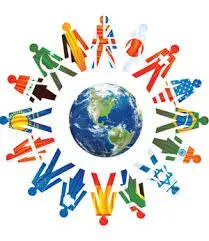
The internet created digital villages, not one global village
This is the defining contradiction of the internet age. Humanity has never had greater access to diversity. People can explore cultures, perspectives, and experiences from almost anywhere in the world. They can watch a protest in another country, follow a creator on another continent, or join a discussion with strangers they would never have met in offline life. The internet has made the world feel larger in terms of access. Yet many people spend most of their time surrounded by people who think like them. The world became larger, but social worlds often became narrower.
Anqi Li; Medium
That is the paradox of digital life. Technology created unprecedented opportunities for cross-cultural understanding, while also making it easier than ever to avoid uncomfortable perspectives. The result is a strange mix of global access and local thinking. People are connected to the entire world yet remain deeply embedded in their own digital villages.
This does not necessarily mean people are more ignorant than before. It means the internet makes it easier to choose comfort over confrontation, familiarity over friction, and identity over uncertainty. It is easier to stay inside a world that confirms what you already believe than to step into one that challenges it.
The internet did not create a global village. It created millions of digital villages, each with its own beliefs, heroes, language, norms, and worldview. Technology connected humanity at an unprecedented scale, but connection alone was never enough to create unity. People still seek belonging. They still organize around identity. They still divide the world into those they trust and those they do not. The difference is that these instincts now operate inside a digital environment that can connect billions of people instantly.
The real cost of living in separate realities
The most serious consequence of digital villages is not just polarization. It is the erosion of shared reality. When people no longer consume the same information, trust the same sources, or interpret events through a common framework, even basic conversation becomes difficult. Political disagreement becomes more intense because it is no longer just disagreement over policy. It becomes disagreement over facts, motives, and meaning.

Curated Lifestyle; Unsplash
That is why so many online debates feel impossible to resolve. People are not always arguing within the same reality. They are often arguing from different ones. This has consequences beyond politics. It affects trust in institutions, trust in media, trust in science, trust in neighbours, and trust in society itself. When every group has its own heroes, enemies, and truths, the social fabric becomes harder to hold together.
The question that matters now
The internet promised connection, and in many ways it delivered. But it also revealed something uncomfortable about human beings: we do not always use connection to broaden our world. Sometimes we use it to shrink it into something more familiar.
That is why digital villages matter. They explain why the internet feels so expansive and so fragmented at the same time. They explain why people can be more informed and more isolated, more connected and more divided, more exposed and more certain.
The real question is no longer whether we are connected. It is whether societies can stay cohesive when citizens increasingly live inside different realities.