
PM Shehbaz Vows Budget Steps to Tax Informal Economy
June 4, 2026
Beyond Code: Scaling Judgment in Pakistan’s Tech Sector
June 5, 2026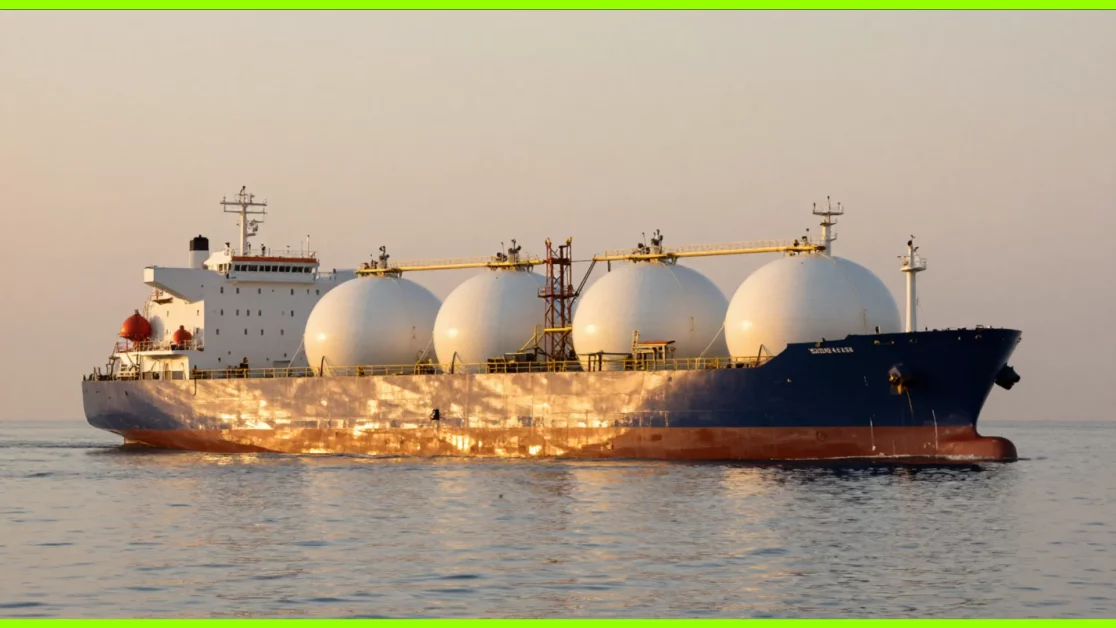
Pakistan has lined up LNG supplies, including a spot cargo, while restoring gas production to strengthen power generation and manage rising summer energy demand.
Pakistan has secured three liquefied natural gas (LNG) cargoes under long-term agreements with Qatar and is pursuing an additional spot cargo to meet rising electricity and industrial demand during the summer season, according to a report by The News. The move comes as authorities seek to ensure uninterrupted energy supplies amid increasing consumption across key sectors.
Pakistan LNG Limited (PLL) has invited bids for the delivery of one LNG cargo at Port Qasim, Karachi, during the June 6-7, 2026 window. The procurement process is aimed at supplementing existing supplies and providing additional support to the national energy system during peak demand.
The issue was discussed during a media interaction attended by Federal Minister for Petroleum Ali Pervaiz Malik, senior officials from the Petroleum Division, and executives from OGDCL and PSO. During the briefing, a Petroleum Division spokesperson stated that LNG imports had been approved on a full cost-recovery basis following a request from the Power Division to address electricity requirements. According to The News, the spokesperson said, “LNG imports had been allowed on a full cost-recovery basis at the request of the Power Division to meet electricity demand.”
Officials noted that LNG cargoes arriving through long-term contracts with Qatar continue to offer economic advantages because they were negotiated on a Cost and Freight (CFR) basis. They added that authorities are also redirecting domestically produced gas to power plants to reduce reliance on higher-cost imported fuel.
According to officials, indigenous gas is currently being supplied to power producers at a subsidised rate of Rs200 per MMBtu, compared with the standard tariff of Rs3,500 per MMBtu. A proposal to formalise the pricing framework is being prepared for submission to the Economic Coordination Committee (ECC) for approval.
The Petroleum Division also reported that approximately 400 million cubic feet per day of gas production has been restored following disruptions linked to the Middle East conflict. Production had previously been constrained due to technical and security challenges affecting major exploration and production companies, including OGDCL, PPL and Mari Petroleum.
Officials said the combination of restored domestic gas output and additional LNG imports is intended to strengthen electricity generation capacity and support broader economic activity throughout the high-demand summer period.