
Pakistan Plans Energy City At Ports Expansion
May 9, 2026
LOLC Bank, Teach For Pakistan Sign Strategic Partnership Agreement
May 10, 2026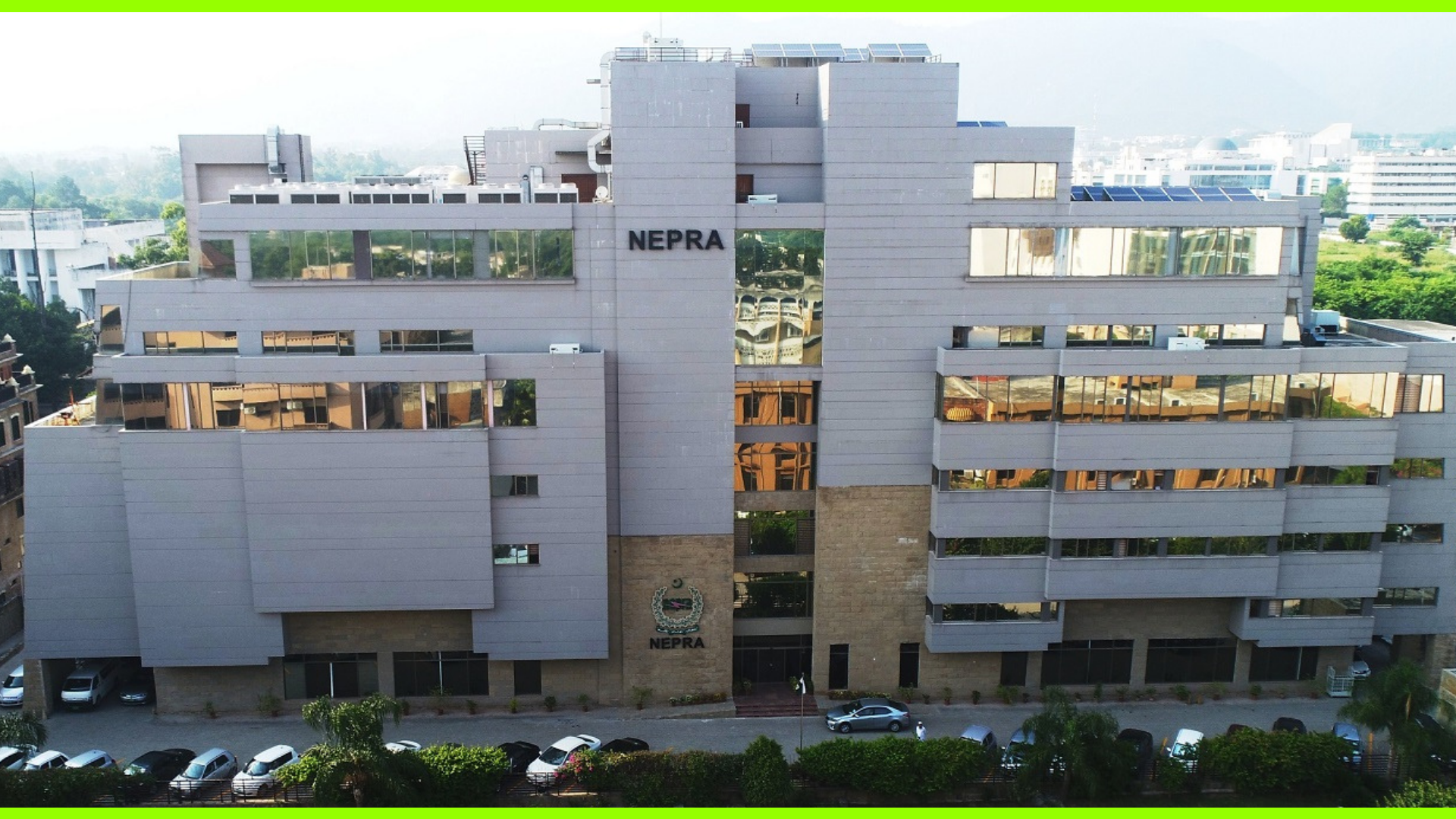
NEPRA flags flaws in IGCEP 2025–35, warning against unrealistic demand forecasts, hydropower delays, and rising surplus capacity risks.
Pakistan’s power sector planning is facing renewed scrutiny after the National Electric Power Regulatory Authority (NEPRA) raised serious concerns over the Indicative Generation Capacity Expansion Plan (IGCEP) 2025–35. The plan projects a major expansion in installed electricity capacity, increasing by 49% from 43,069 megawatts in 2024 to 64,035 megawatts by 2035.
NEPRA questioned whether the underlying demand assumptions justify such aggressive expansion at a time when electricity consumption is showing signs of slowdown. A NEPRA spokesperson noted, “The demand assumptions used in the expansion plan appear overly optimistic given current consumption trends.” The regulator warned that continued overestimation could lead to long-term financial and operational inefficiencies.
Another key concern raised by NEPRA is the existence of surplus electricity generation capacity alongside weakening demand growth. The authority has asked why expansion is still being prioritized without a clear alignment to real consumption patterns and economic conditions.
Significant delays in major hydropower projects have also complicated the planning outlook. Projects such as Dasu (2,160 MW), Mohmand (800 MW), and Diamer Bhasha (4,500 MW) have all seen revised commercial timelines compared to earlier projections, raising uncertainty over future supply additions.
The revised plan also incorporates 3,109 megawatts of renewable energy projects under market-based induction. However, NEPRA has flagged concerns about shifting timelines for both generation and transmission infrastructure, warning that such delays could disrupt system reliability and long-term energy planning.
The regulator further highlighted inconsistencies between IGCEP 2025–35 and the Transmission System Expansion Plan. It also questioned why committed projects from provincial governments and K-Electric were not fully included in the planning process.
NEPRA additionally raised concerns over the lack of detailed consultation with distribution companies and the absence of a comprehensive tariff impact analysis. These gaps, it warned, could affect transparency and increase financial risks for end consumers.
On the demand side, officials have reported a noticeable decline in grid-connected electricity consumption, attributed to economic slowdown and rapid growth in rooftop solar systems and net-metering adoption. However, long-term planners argue this trend may be temporary and not sufficient to alter expansion strategies.
A National Grid Company official stated, “Demand fluctuations due to rooftop solar are being monitored closely, but are currently considered temporary.” Despite this, uncertainty remains over how distributed energy resources will reshape future demand patterns.
The revised plan also forecasts increased electricity exports to K-Electric, expected to rise significantly by 2035. NEPRA has urged a full reassessment of capacity additions, tariff impacts, and system assumptions before final approval, stressing the need for a more realistic and financially sustainable energy roadmap.