
HBL Supports Pakistan’s First-Ever Panda Bond Issuance
May 18, 2026
S.G. Power Plans ₨535 Million Healthcare Expansion
May 19, 2026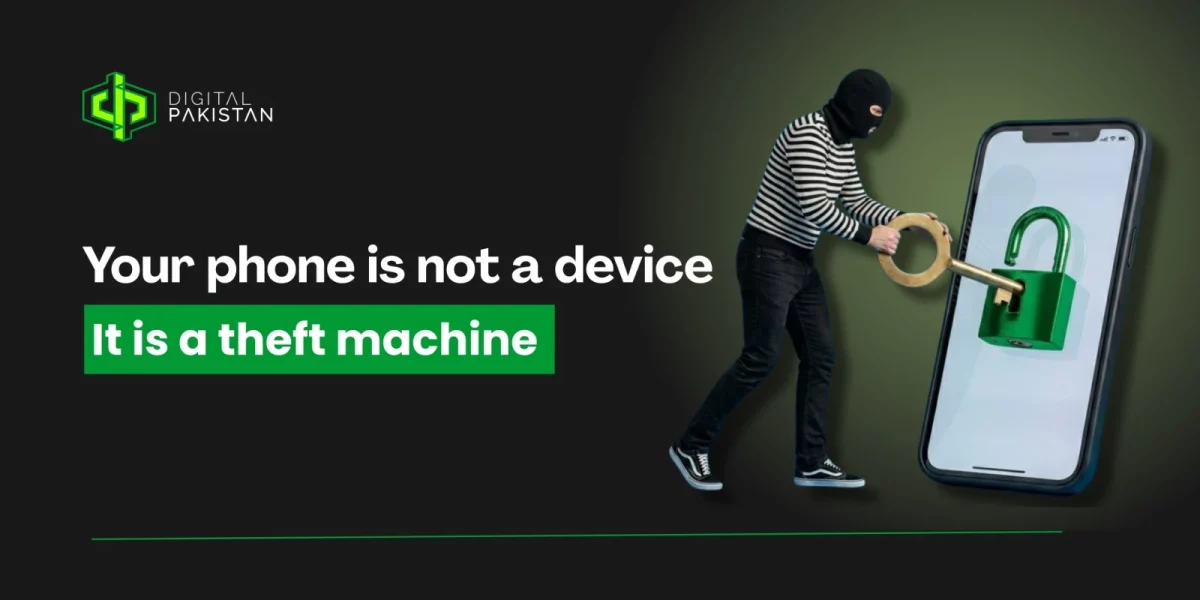
Introduction
Stop looking at your phone like it is harmless glass and code. It is not. It is not just convenience either. It is the end product of a chain that starts in places most people will never visit and most companies will never fully admit to. Everything about it feels modern and clean on the surface, but underneath it is built on something old and violent. Extraction. The kind that does not show up in advertisements.
Start where it actually begins. Start in the Democratic Republic of the Congo. That is where cobalt is pulled out of the ground to feed your digital world. Not neatly. Not safely. Not fairly. It is dug out through brutal manual labor, often in unstable tunnels, often without protection, often by people who have no meaningful alternative. Children are part of this system. Not as an exception, but as a reality. Wages sit at levels that barely cover survival. Accidents are common. Death is not rare. This is not a side effect of the system. This is the system doing exactly what it was designed to do.
And yet this raw suffering is transformed into something polished and expensive. Something that sits in your hand and gets marketed as progress, innovation, and connection.
That transformation is the first lie.
Extraction Is Not a Bug, It Is the Blueprint
The cobalt does not stay in Congo. It cannot. That would defeat the purpose of the system. It is extracted, packed into global supply chains, and sent outward where its value is multiplied and its origins are erased.

Katherine Houreld; The Washington Post
It moves through refining, manufacturing, and assembly, eventually becoming part of the devices produced by companies like Apple, Google, and Microsoft. Somewhere in that process, the reality of its origin disappears. What was once human labor under extreme conditions becomes a specification sheet. What was once danger becomes a feature list.
This is not an accident. It is not a failure of oversight. It is how the system maintains itself. The hardest and most dangerous parts of production are pushed outward, away from the centers of profit. The value is pulled inward, toward those same centers. One region takes the risk. Another collects the reward.
And then the story gets rewritten as innovation. But if you strip away the branding, what you are left with is simple. Cheap labor in one place. High value transformation somewhere else. Wealth concentrated at the top. Costs pushed downward and outward. That is not development. That is extraction with a polished interface.
You Are Not Scrolling. You Are Being Processed
Now zoom forward. Because the exploitation does not end when the device is built. That is where it evolves into something more subtle and more constant.
Once that phone is in your hand in Pakistan or anywhere else, a second system activates. One that does not rely on physical labor in mines but on something just as valuable. Human attention.

Katie Rosseinsky; The Independent
Every interaction becomes data. Every pause becomes a signal. Every click becomes input for prediction. Every scroll is recorded, even when you think nothing is happening. You are not just using apps anymore. You are feeding them.
Companies like Meta and Google do not operate on generosity. They operate on extraction at a different level. Your behavior is mapped, categorized, and turned into a product. You are not the customer in this system. You are the resource being mined.
Attention is the new raw material. And just like cobalt, it is extracted in massive quantities from populations that are never fully compensated for its value. The difference is that this extraction feels invisible. It feels like entertainment. It feels like choice. That is what makes it so efficient.
One System, Two Layers of Control
Now connect the structure without pretending it is complicated.
At the start, there is physical extraction. Cobalt pulled from the ground under dangerous conditions in the Democratic Republic of the Congo. At the end, there is behavioral extraction. Data pulled from users everywhere through platforms controlled by a small number of corporations.
In between, there is manufacturing, branding, distribution, and consumption. At every stage, value moves upward while cost moves downward. Risk is pushed into poorer regions. Profit is pulled into richer ones.
This is not two separate systems. It is one continuous chain that simply changes form halfway through. And somehow it is still described as progress.
But progress for who.
They Rebranded Colonialism and Sold It Back to You
Call it what it is. Digital colonialism is not a dramatic phrase. It is a structural description of how power operates today.
Colonial systems were never just about land or flags. They were about extraction and dependency. Raw materials were taken from one region, processed in another, and turned into wealth elsewhere. The source regions were kept dependent, while the center accumulated power. That logic never disappeared. It adapted.
Now it runs through servers instead of ships. Through algorithms instead of colonial administrations. Through platforms instead of empires. Through terms of service instead of treaties that no one actually had equal power to negotiate.
The structure is the same. The language is what changed. And the language matters because it hides the violence.
The Most Dangerous Part Is That You Participate Willingly
No one needs to force you into this system with visible violence. That is what makes it so stable. You participate willingly. You enter it through everyday decisions that feel completely normal.

Rossandro Klinjey; Medium
You buy the phone. You download the apps. You accept the terms. You scroll without thinking about what is happening underneath. You return every day because the system is designed to be unavoidable, addictive, and socially embedded. That is the real mechanism of control. Not force. Familiarity.
Because when exploitation feels like convenience, people defend it. When surveillance feels like personalization, people accept it. When extraction is invisible, it stops being questioned. The system does not need you to agree with it. It only needs you to keep using it.
The Illusion of Equal Opportunity
There is a common narrative that technology is the great equalizer. That it gives everyone access. That it creates opportunity. And on the surface, that is not entirely false. But it is incomplete in a way that matters.
Access does not equal control. Participation does not equal ownership. Usage does not equal benefit.
The people extracting cobalt in the Democratic Republic of the Congo are not becoming stakeholders in the companies that depend on them. The users generating data in Pakistan are not receiving proportional returns from the systems that monetize them. The regions supplying both labor and markets are not the ones setting the rules of the digital economy.
So what looks like global participation is actually global imbalance with a digital interface.
Conclusion
This is where the conversation usually gets softened. People ask whether technology is good or bad. That question is too comfortable. It avoids structure. The real question is not moral simplicity. It is power distribution.
Who owns the platforms. Who controls the infrastructure. Who writes the algorithms. Who decides what is visible and what is hidden. Who collects value at scale. Who absorbs the cost. The answer is not hidden. It is just normalized.
Control is concentrated in a small number of corporations. Profit flows toward a small number of countries. And the costs are exported toward regions that have historically been treated as sources of raw material rather than equal participants in global systems.
From the mines of the Democratic Republic of the Congo to the data centers powering the internet, this is one continuous extraction system. Physical first. Digital next. Both feeding the same structure of power.
And if that still feels like innovation to you, then the system is not just working. It has already shaped the way you think about it.