
Pakistan, Sweden to Begin Investment Treaty Talks in November
October 13, 2026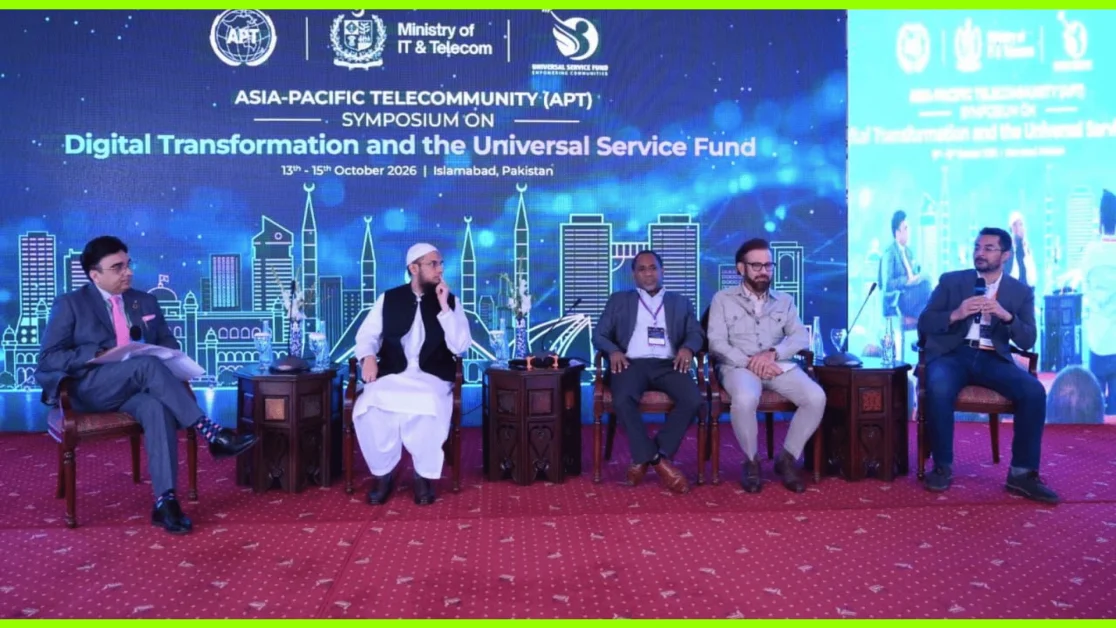
ISLAMABAD – Pakistan must address gaps in device affordability, connectivity and digital skills to unlock the economic potential of artificial intelligence (AI) and ensure its benefits extend beyond major urban centers, said Kazim Mujtaba, President of Jazz GSM, at the Asia Pacific Telecommunity (APT) Symposium on Digital Transformation and the Universal Service Fund.
Speaking during a panel discussion titled “Future-proofing Universal Service for Sustainable Digital Transformation,” Mujtaba emphasized the importance of translating advances in AI and digital infrastructure into practical benefits for farmers, small businesses and underserved communities.
“The internet gave access to information. AI has given access to knowledge,” he said, highlighting AI’s potential to make expertise more widely accessible and create new opportunities for individuals, businesses and communities.
Mujtaba noted that investments in data centers, computing infrastructure and advanced networks must be accompanied by affordable devices, reliable connectivity and digital skills to enable wider adoption of AI-powered services. He stressed the importance of collaboration among government, telecom operators and other industries to develop practical applications that address local needs and improve economic opportunities.
He also highlighted the opportunity for the Universal Service Fund (USF) to build on its contribution to expanding connectivity in underserved areas by supporting initiatives focused on device affordability, fiber-optic infrastructure and digital inclusion.
With fifth-generation (5G) device penetration estimated at just 5–7%, access to affordable, compatible smartphones remains a key challenge as Pakistan expands its next-generation mobile networks. Mujtaba said Jazz was willing to collaborate with USF on initiatives to improve device penetration and extend advanced connectivity to more communities.
The discussion also highlighted the need to accelerate fiber broadband deployment. Of Pakistan’s approximately 40 million households, around five million have access to fiber broadband, indicating considerable scope for expansion. Participants emphasized facilitating right-of-way access and infrastructure sharing to reduce deployment costs, improve service quality and make broadband more accessible.
Satellite connectivity and emerging direct-to-device technologies were also discussed as potential solutions for remote areas and during natural disasters. Drawing on Pakistan’s experience with floods, Mujtaba highlighted their potential to complement terrestrial networks when damaged infrastructure or difficult access conditions disrupt communications.
The panel also examined how universal service policies could evolve alongside emerging technologies through technology-neutral approaches that allow fiber, mobile and satellite networks to complement one another. Participants discussed the importance of supportive policies on spectrum allocation, right-of-way access, digital payments and emerging technology frameworks in encouraging investment and innovation.
Fellow panelists included Chaudhry Mudassar Naveed of the Universal Service Fund, Pakistan; Mohammad Jahanzeb Rahim, Member (Telecom), Ministry of Information Technology and Telecommunication; Umar Rauf, Director General (Telecom), Ministry of Information Technology and Telecommunication; Warren Suti of Papua New Guinea’s National Information and Communications Technology Authority; and Wahaj Siraj, CEO of Nayatel.