
JazzWorld Supports Google’s Digital Pasban Initiative to Advance Digital Safety in Pakistan
August 21, 2026
IFC, Bank Alfalah Sign First $100m DPR Financing
August 22, 2026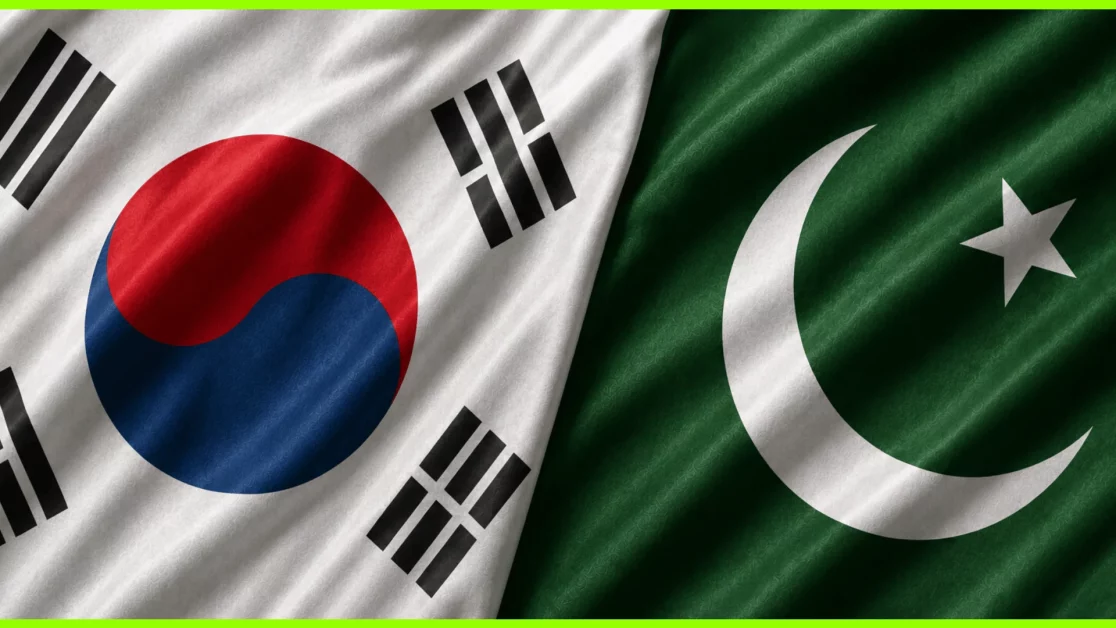
Pakistan and South Korea completed their first CEPA round in Seoul, signing six trade MoUs with 173 businessmen in attendance, and a follow-up conference planned for March 2027.
Pakistan’s trade diplomacy just reached Seoul, and the results are tangible. Federal Minister for Commerce Jam Kamal Khan announced the successful conclusion of the first round of Comprehensive Economic Partnership Agreement (CEPA) talks between Pakistan and South Korea at the Pakistan-Korea Trade and Investment Conference held in Seoul on August 20, 2026.
The conference drew more than 170 businessmen from both countries, with 91 Korean and 82 Pakistani delegates in attendance, the latter group including members of Korea’s Pakistani diaspora alongside representatives from the Sialkot and Gujranwala chambers of commerce and industry.
The event produced six Memoranda of Understanding between Pakistani and Korean firms, spanning sectors including salt, cosmetics, and oil and sesame seed trade. Khan pressed business leaders on both sides to convert the conference’s momentum into firm partnerships before the final CEPA is signed.
Pakistan’s Ambassador to South Korea opened the proceedings, followed by remarks from the Daegu Chamber of Commerce and Industry’s vice chairman.
Representatives of the Special Investment Facilitation Council (SIFC) and the Trade Development Authority of Pakistan (TDAP) then walked participants through Pakistan’s export strengths, spanning textiles and apparel, leather, surgical and sports goods, agro-food products, minerals, and IT services.
The six signed MoUs, while primarily exploratory in nature, are intended to serve as a springboard toward more formal commercial contracts between the firms involved, with Sialkot and Gujranwala chamber-affiliated companies among the primary Pakistani signatories.
A follow-up conference is already being planned for Seoul in March 2027, intended to build on the momentum once the CEPA framework is further developed.
The CEPA push with South Korea is part of Pakistan’s broader strategy to diversify its trade relationships beyond traditional markets. South Korea represents a compelling partner: it is one of Asia’s most advanced economies, home to global industrial giants in electronics, automotive, and petrochemicals, and a significant importer of raw materials and agricultural goods in which Pakistan holds competitive strength.
A finalised CEPA would give Pakistani exporters preferential market access to a $1.7 trillion economy that currently receives only a fraction of Pakistan’s export capacity.
The first round’s conclusion signals that both governments are moving beyond intent. With the second round on the horizon and six commercial agreements already signed at the business level, the Pakistan-South Korea trade corridor is beginning to take structural shape.