
Pakistan Secures 13 Mining Deals, $1.3bn Financing Interest
November 17, 2026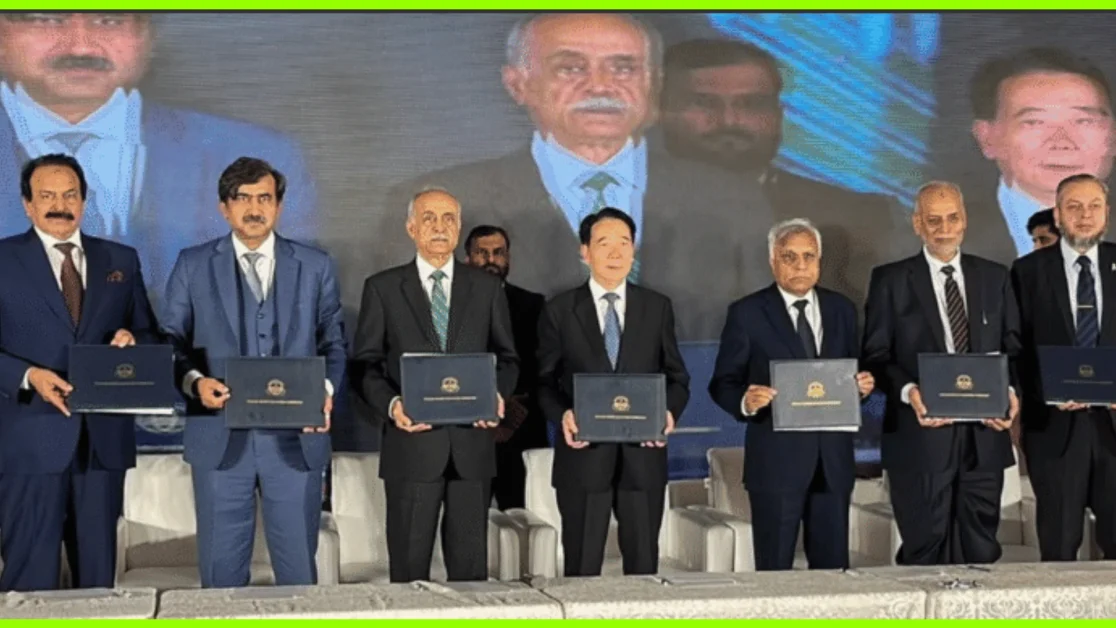
IUB signs agreements with three Chinese institutions to advance agricultural research, academic exchanges, and water-efficient farming technologies.
The Islamia University of Bahawalpur (IUB) has expanded its academic and research collaboration with China through new cooperation agreements signed with three Chinese institutions. The agreements were announced following meetings held on November 13, 2026, at the Pearl Continental Hotel in Lahore. The Chinese partners include the Gansu Academy of Agricultural Sciences (GAAS), Northwest University, and Southwest University.
Under the arrangements, IUB signed a Memorandum of Understanding with GAAS and Letters of Intent with the two universities. The agreements establish a framework for research partnerships, academic exchanges, and cooperation in modern agricultural technologies, with an emphasis on strengthening scientific collaboration between Pakistan and China.
The discussions covered several areas of agricultural research, including soil fertility management, water-efficient agriculture, and advanced irrigation systems. Representatives from IUB’s Department of Soil Sciences and the Chinese delegation explored opportunities for joint research and the exchange of scientific knowledge and expertise. Modern drip irrigation systems and other water-saving technologies were also discussed, reflecting the focus on improving agricultural resource management and addressing challenges associated with water availability and soil productivity.
The three Chinese institutions bring different academic and research capabilities to the proposed partnership. GAAS specialises in agricultural research and technological development, providing opportunities for joint scientific initiatives and knowledge-sharing in modern agriculture. Meanwhile, the Letters of Intent with Northwest University and Southwest University offer a basis for exploring further academic and research partnerships.
IUB’s international collaboration framework also provides for joint research initiatives, academic and scientific exchanges, staff and student mobility, shared access to research facilities, conferences, and the exchange of publications. These arrangements could facilitate broader institutional engagement and strengthen research capacity through collaboration.
The Chinese delegation included senior representatives from GAAS, its Institute of Soil Fertility and Water-Saving Agriculture, and Southwest University’s Graduate School. IUB was represented by faculty members and officials involved in agricultural research, institutional development, and technology initiatives. Dr. Ali Raza, Director of the Intercropping Institute, coordinated the MoU with GAAS, while Professor Dr. Wajid Nasim Jatoi handled matters related to the Letter of Intent with Southwest University.
Addressing national and international delegates at the Honhaar Pintech Expo 2026, IUB Vice Chancellor Professor Dr. Muhammad Kamran highlighted the importance of innovation, practical learning, entrepreneurship, and international academic cooperation in higher education.
The latest agreements contribute to broader Pakistan-China efforts to strengthen cooperation in agricultural research and technology. Previous partnerships between Pakistani and Chinese institutions have focused on crop improvement, climate-resilient agriculture, biotechnology, soil health, water management, and agricultural technology transfer.
For Pakistan, collaboration in these areas could support agricultural productivity, water conservation, food security, and the development of farming practices suited to changing climate conditions. However, the practical impact of the new agreements will depend on translating institutional commitments into joint research projects, academic exchanges, and effective technology-sharing initiatives in the coming years.