

Income-Based Energy Tariff Reform Planned Nationwide
February 20, 2026
Pakistan’s HEC Mandates AI Course in All Degrees
February 21, 2026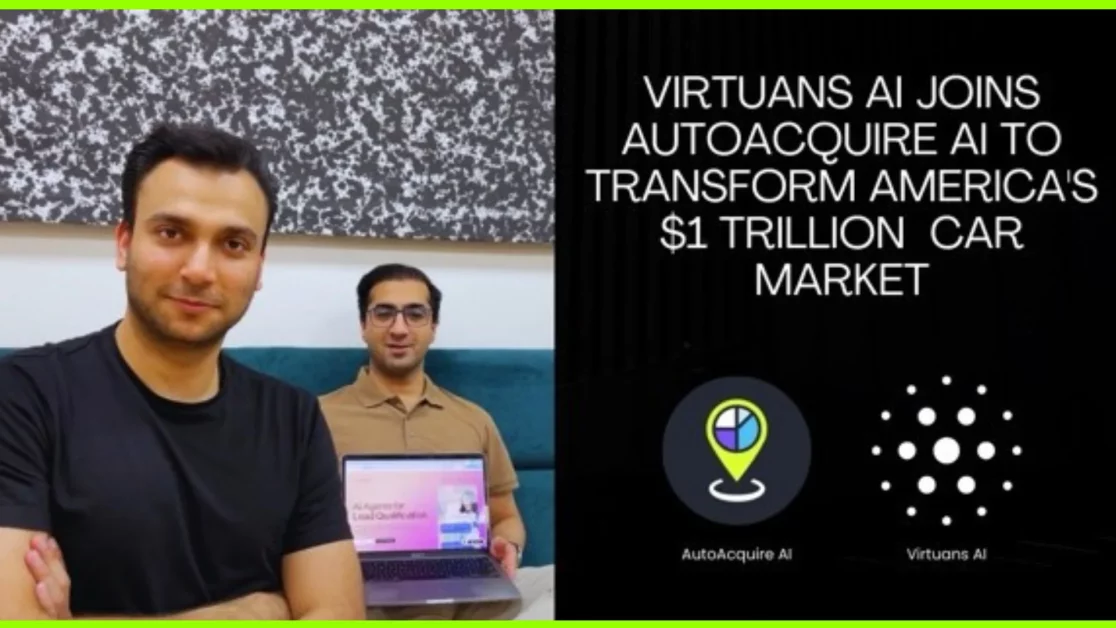
Introduction
There’s a certain kind of startup story that doesn’t get told enough, not the one about chasing trends or raising rounds, but the one about two engineers who saw a real problem, built a real solution, and quietly changed an industry.
That’s the Virtuans AI story.
The Problem Nobody Was Solving Well
Before founding Virtuans, Muddassar Sharif and Raheel Ahmad were already working deep in AI. But one thing kept nagging at them: businesses were losing money rapidly on missed conversations.
Sales teams stretched too thin. Support queues overflowing. Leads coming in at 2 a.m. and going cold by morning.
The question they asked was deceptively simple: What if an AI could handle these conversations not like a chatbot, but like a human?
That question became a company.
Building the Thing That Proves Itself
The real test of any product isn’t a demo, it’s the moment a paying customer forgets they’re talking to software.
For Virtuans, that moment came early. One of their first clients had an AI agent running full sales conversations in Arabic, answering questions, handling objections, and guiding decisions. The client assumed it was a human on the other end.
That’s when the founders knew they had something real.
The agents Virtuans built don’t just respond; they qualify leads, book appointments, send follow-ups, and work around the clock in over 40 languages. Under the hood, a custom reinforcement learning engine means every interaction makes the system smarter. The AI doesn’t just perform; it improves.
Why the Acquisition Made Sense
Virtuans was growing. The customers were happy. But the story took a decisive turn when Auto Acquire, a major U.S. automotive technology company, came calling.
They weren’t interested in a feature. They wanted Virtuans as the core engine of their entire customer communication layer. They wanted to scale it, not absorb it.
That distinction matters. The Virtuans team stayed together. The product kept evolving. For customers, nothing broke, things only got better.
Today, Virtuans powers AI-driven communication at scale across the U.S. automotive industry. Not bad for a startup that didn’t exist two years ago.
The Lesson for Every Founder Still Selling Hours
The founders are blunt about what made this work: they stopped thinking about hourly rates and started building intellectual property.
Virtuans wasn’t acquired because it was cheap. It was acquired because it solved a specific, painful problem in a “boring” industry still running manual workflows and missed calls. The automotive space wasn’t glamorous; that was the point. The less glamorous the industry, the more room there is to be the smartest thing in the room.
The tools that power AI in Silicon Valley are the same tools available in Lahore and Karachi. The playing field has leveled. The only question is what you build with it.
Build something that learns. Build something that solves a real problem. Get paid customers. Create assets, not contracts.
That’s how Virtuans did it. And that’s exactly why it worked.