

Pakistan, China Launch Information Corridor to Counter Misinformation
October 28, 2026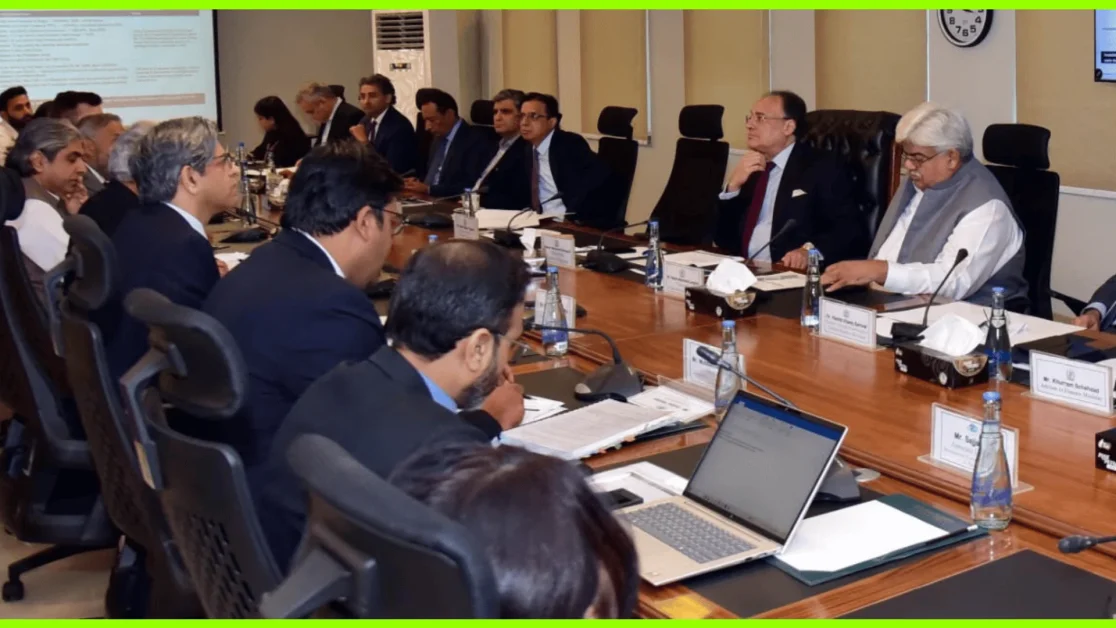
Pakistan is preparing a private equity framework targeting up to $15bn in investment, with reforms focused on domestic capital, taxation and regulatory rules.
The government is preparing a National Private Equity Framework designed to strengthen Pakistan’s private equity market and attract between $10 billion and $15bn in tax-neutral investment from local and international investors.
The framework is expected to be completed within two weeks, with policy measures requiring legislative changes likely to be incorporated into the Finance Bill for fiscal year 2027-28. Regulatory measures, however, could be implemented immediately after the framework is finalised.
The plan was discussed at a meeting of the Prime Minister’s Committee for Developing the National Private Equity Framework, attended by Finance Minister Muhammad Aurangzeb. The committee reviewed regulatory and tax reforms, domestic capital mobilisation and ways to develop a pipeline of viable investment opportunities.
International models from the United Kingdom, Middle East and India were also examined. These markets were cited as having attracted an estimated $100bn to $150bn through private equity.
Participants identified acquisitions, business consolidation, new projects and investor exits as potential areas for expanding Pakistan’s private equity market. The growth of bank investment in REITs was cited as an example of how regulatory changes can increase institutional participation, with the portfolio rising from Rs22bn in 2021 to more than Rs280bn.
The committee also assessed capital available through banks, insurers, mutual funds, pension schemes and development finance institutions, along with corporations and family offices. Various mechanisms for directing these funds towards private equity funds and commercially viable projects were considered.
Officials noted that international investors generally seek predictable rules governing the entry and exit of capital. Such arrangements could support investment in sectors including minerals, real estate, agriculture, oil and gas, tourism and manufacturing.
The State Bank of Pakistan briefed participants on regulatory changes, including the increase in the permissible investment by a bank in a single private equity fund from 10pc to 20pc.
Tax proposals included treating private equity funds as pass-through vehicles, with taxation applied at the investor level. Aurangzeb called for international tax practices to be assessed before being adapted to Pakistan, while ensuring the framework prevents tax arbitrage and regulatory distortions.
The finance minister said domestic capital mobilisation should be prioritised initially, with a stronger local market subsequently helping attract foreign institutional investors and international co-investment.
He directed relevant authorities to resolve outstanding regulatory and taxation matters, coordinate their approaches and identify viable investment opportunities as the framework moves towards implementation.