
Meta Expands AI Teen Safety Measures in Pakistan
May 10, 2026
Faysal Bank And Avanza Expand Digital Banking Collaboration
May 11, 2026
Introduction
In today’s digital environment, the average user is no longer just an audience member. They are part of the distribution system. That sounds harmless until you realize what is being distributed is not just information but influence, persuasion, and at times outright manipulation. What we are living through is not a free flow of ideas. It is a battlefield where narratives are constructed, amplified, and fought over in real time.
There was a time when information meant something slower, something deliberate. Newspapers filtered it. Editors shaped it. Institutions stood behind it. That system was never perfect, but it at least acknowledged responsibility.
Now open Facebook or Twitter and try to tell the difference between fact, opinion, propaganda, and performance. You cannot. Not because you are incapable, but because the system is designed to blur those lines.
You are told this is democratization. That everyone has a voice. That this is freedom. That is the sales pitch. What it really did was decentralize control while quietly replacing it with something far less accountable. Algorithms. Virality. Engagement metrics. None of these care about truth. They care about attention.
Anyone can post. That does not mean anyone gets heard. And it definitely does not mean truth wins.
The Machinery of Misinformation
Let’s stop pretending misinformation is some kind of accident. It is not slipping through the cracks. It is thriving because the system feeds it.

CMFR Staff; CMFR
Emotional content travels faster than rational content. Anger beats nuance. Fear beats context. Outrage beats accuracy. This is not a flaw in the system. This is the system working exactly as designed.
Algorithms reward what keeps people scrolling. Algorithms do not care what is true. They care what keeps you hooked. What makes you react. What makes you stay. So, what rises to the top is not what is accurate. It is what is effective. And what is effective is often what is distorted, exaggerated, or outright false.
Then come the echo chambers. You are fed what you already agree with until disagreement starts to feel like attack. And suddenly you are not just consuming information. You are defending a position.
At that point the line between user and participant disappears.
Narrative Control Is the Real Power
Everyone keeps arguing about facts. That is a distraction. Facts do not win anything on their own. Narratives do.
Control the narrative and you control how facts are interpreted. You decide what matters. You decide what gets ignored. You decide what people feel before they even think. That is real power.
Verena Schoenmueller; Esade
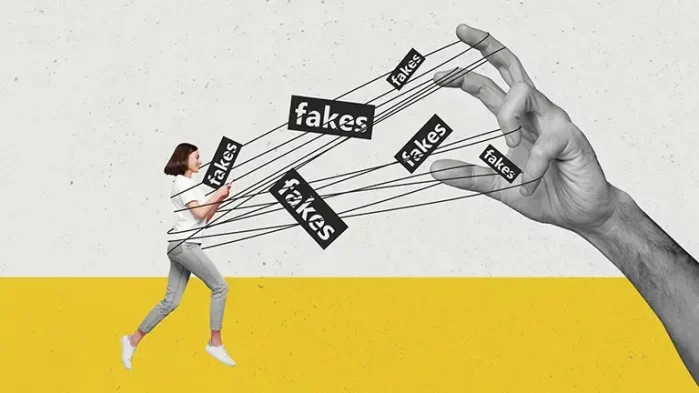
Narratives shape how people interpret reality. Control the narrative and you do not need to control facts. You only need to control how those facts are framed, repeated, and emotionally charged.
A single event can be turned into completely different stories depending on who is telling it and who is amplifying it. And those stories are not competing on truth. They are competing on emotional impact. This is not random noise. It is a fight for dominance over perception.
Polarization Is Not an Accident
People act like society just became divided overnight. Like polarization came out of nowhere. It did not. It is being fed constantly.
Calm people do not engage. Angry people do. So, the system pushes what makes you angry. Over and over again. Groups start forming around narratives. Then those narratives become identities. You are no longer someone with an opinion. You are someone who belongs to a side.
And once you are on a side, you are not looking for truth anymore. You are looking for confirmation. Debate dies right there. What replaces it is noise, aggression, and endless confrontation that goes nowhere. And every second of it is profitable for the system.
This is the part people do not like to hear. You are not just a victim of this system. You are one of its engines. Every time you share something without checking it, you push a narrative forward. Every time you like something because it feels right, you validate it. Every time you stay silent in a space that rewards outrage, you allow it to dominate.
You do not need to be part of some organized campaign to be part of information warfare. All you need to do is react. And reacting is exactly what the system trains you to do. So yes, ordinary users are not just consuming information. They are spreading it, shaping it, and in many cases distorting it without even realizing it.
That is how this machine sustains itself.
Real Consequences in the Real World
This is not just online noise. It is rewriting how societies function. Public opinion is no longer built on shared facts. It is built on competing narratives that barely overlap. Trust in institutions is collapsing because every institution is constantly being reframed through suspicion and counter narratives.
People are living in the same country and experiencing completely different versions of reality. And once that happens, fixing anything becomes nearly impossible. Because you cannot solve problems when you cannot even agree on what the problem is.
This is not just an online problem. It bleeds into everything. Public opinion becomes unstable. Trust in institutions erodes because every institution is constantly being reframed through competing narratives. Even basic facts become contested.
Societies start operating on parallel realities. People live in the same country but experience completely different versions of truth. And once trust collapses, rebuilding it becomes almost impossible. Because now every attempt at correction is seen as manipulation.

Sidra Khan; Medium
Conclusion
Nothing about this is accidental and nothing about it is harmless. This is a system that runs on your attention, feeds on your reactions, and grows stronger every time you engage without thinking. You are not standing outside it. You are inside it, shaping it, fuelling it, and in many cases being shaped by it.
We need to stop pretending this is just content. It is influence. It is power. It is a constant fight over what people believe is real. The uncomfortable truth is that narrative control only works because people hand it over so easily. They share before they question. They react before they understand. They pick sides before they even know what they are defending. If that does not change, nothing else will.
Because no platform is going to save you from this and no system is going to suddenly become ethical on its own. The only thing that can disrupt this cycle is a user who refuses to be predictable, refuses to be reactive, and refuses to blindly amplify whatever is put in front of them. Until then, this does not slow down. It gets sharper, louder, and more effective.
And you will either learn how it works, or you will keep being used by it.