

Bank of Punjab Plans Rs30bn Share Issue for Punjab
August 11, 2026
Bankware Global Secures Rs1.57bn Pakistan Post Contract
August 12, 2026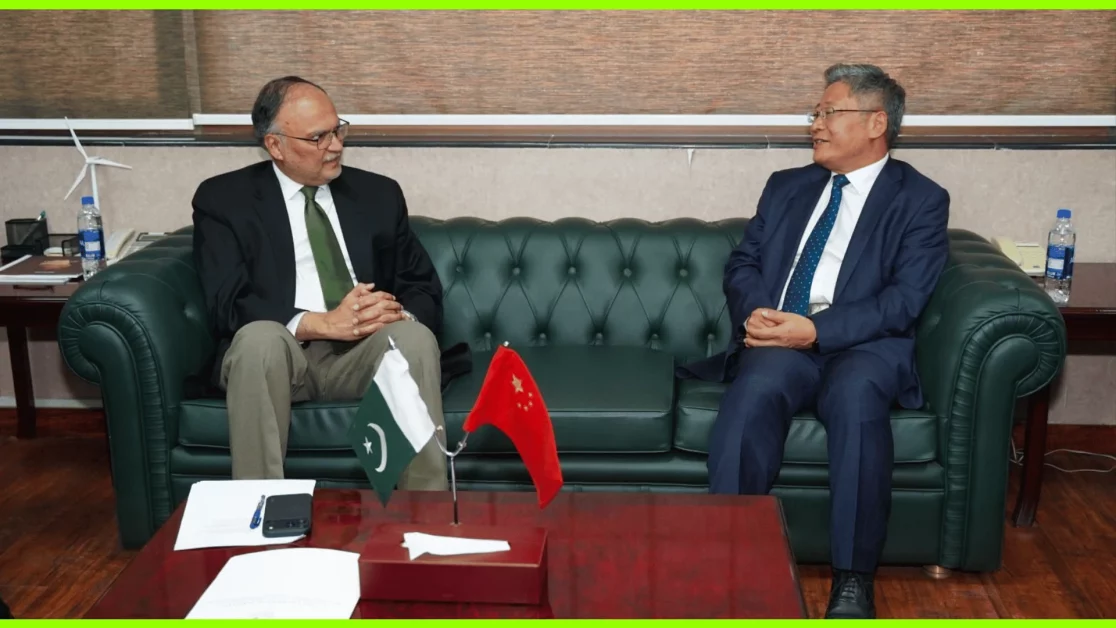
CPEC 2.0 is set to shift Pakistan-China cooperation toward industrialisation, B2B partnerships, technology, agriculture, SMEs and export-led growth.
Pakistan and China are looking to give the next phase of the China-Pakistan Economic Corridor (CPEC) a stronger focus on industrialisation, exports, technology and business-to-business partnerships.
A high-level Chinese delegation led by Sun Dongsheng, Senior Advisor at China’s Economic Affairs Press, met Federal Minister for Planning and Development Ahsan Iqbal at the CPEC Secretariat to discuss priorities for the next phase of bilateral economic cooperation.
Ahsan Iqbal said CPEC Phase-I played a significant role in addressing Pakistan’s energy and infrastructure challenges. Under CPEC 2.0, however, the focus is expected to move beyond infrastructure development toward industrialisation, while cooperation shifts from government-to-government arrangements toward business-to-business partnerships.
The discussions also covered Pakistan’s ambitions under Uraan Pakistan to participate in the Fourth and Fifth Industrial Revolutions, including Industry 4.0 and Industry 5.0. Pakistan aims to draw on China’s experience in innovation, automation and robotics, alongside plans for a proposed National Centre for New Manufacturing.
Expanding exports was identified as a key priority for the next phase. China’s annual exports are estimated at around $2.6 trillion, while Pakistan’s exports to the Chinese market remain significantly smaller, with Pakistan’s share of China’s import market currently estimated at around $3 billion.
According to the planning minister, CPEC Phase-II should therefore contribute to addressing Pakistan’s export deficit by creating opportunities for export-led growth.
The next phase is expected to focus on stronger B2B partnerships and greater cooperation between Pakistani and Chinese businesses, particularly small and medium-sized enterprises. Agriculture, industry and mining have been identified as areas with potential for expanded collaboration.
Technology and modernisation are also expected to form part of the cooperation agenda, with Pakistan seeking to strengthen industrial and agricultural productivity through greater access to Chinese expertise, technology and investment.
Sun Dongsheng appreciated the progress achieved during CPEC Phase-I and reaffirmed China’s commitment to strengthening cooperation with Pakistan in industry, agriculture and the SME sector.
The two sides also discussed aligning the five corridors of CPEC 2.0 with Pakistan’s 5Es Framework. The proposed approach aims to support industrial, agricultural, technological and export growth while creating stronger economic linkages between businesses in Pakistan and China.
The development comes as Pakistan seeks to use the next phase of CPEC to move towards a more export-oriented and technology-driven economic model.