
DeepSeek Launches V4 AI Model With Lower Costs
April 26, 2026
FBR Integrates 12,950 Retailers Into POS System
April 27, 2026
Introduction
Let’s be honest for a moment. We keep telling ourselves that we are living in the most creative era in human history. It sounds good, it feels progressive, and it gives us the illusion that something meaningful has shifted. Everyone is an artist now, or at least that is the narrative. Everyone has a platform, a phone, a feed, and a voice that can supposedly reach the world. But that story falls apart the second you look a little closer.
What we are calling democratization is not really freedom. It is scale. It is speed. It is volume. Art did not just open up, it got absorbed into a system that thrives on endless production. What used to be slow, deliberate, and often uncomfortable has been reshaped into something quick, repeatable, and easy to consume.
When Art Carried Risk
There was a time when art carried risk. Not just personal risk, but social and political weight. Artists challenged authority, exposed hypocrisy, and said things that could not be said directly. Art functioned as resistance. It gave people a way to push back when systems were too rigid or too oppressive to confront head on. It was not always safe, and it was not meant to be.
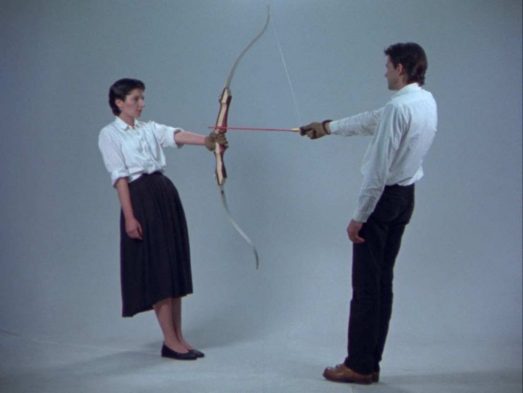
Image Source: Cai Qing; Made in China Journal
Now, most of what passes as art barely disturbs anything. It moves fast, disappears faster, and rarely leaves a mark. You scroll past it without thinking, maybe pause for a second, maybe not even that. It does not ask anything from you, and because of that, it gives you nothing in return. It is not meant to stay with you. It is meant to keep you moving. That is not a coincidence.
The platforms that host this so called creative explosion are not built for reflection. They are built for engagement, and engagement does not reward depth. It rewards immediacy. It rewards familiarity. It rewards whatever keeps you from closing the app. The result is a system where art is no longer experienced, it is consumed in fragments. And when everything is constantly available, nothing feels important.
Political Expression Under Siege
Political expression suffers the most in this environment. Not because people have stopped caring, but because the conditions that once allowed art to challenge power have been quietly eroded. Strong ideas need space. They need time to unfold, to provoke, to unsettle. That kind of work does not perform well when it is forced to compete with trends, jokes, and endless distraction. So, it gets buried.
Not always through direct censorship, but through something more subtle. It gets overshadowed, diluted, or reshaped into something easier to digest. What used to be sharp becomes soft. What used to confront becomes aesthetic. You end up with content that looks political but says very little. And people adjust to that without even realizing it.
You start to notice what gets attention and what disappears. You begin to shape your output around that. Maybe you avoid certain topics, maybe you simplify your ideas, maybe you package them in a way that feels safer. It does not feel like censorship, but it changes what you are willing to say. Over time, the edges get worn down. This is how rebellion fades. Not all at once, but gradually.
At the same time, the reality of everyday life makes things worse. People are tired. Work takes up most of their energy, and what little time is left is usually spent recovering, not creating. The idea that everyone can be a creator ignores the fact that most people do not have the space to do it in any meaningful way. So, they consume instead. They scroll, they watch, they absorb, and they move on. It becomes a routine, almost automatic. The system depends on that behavior. It needs people to stay engaged, not to step back and question what they are engaging with.
The AI Acceleration
Then AI enters the picture and speeds everything up even more. Suddenly, creation does not require much effort at all. Images, music, writing, all of it can be generated almost instantly. At first, it feels impressive, even exciting. But there is something off about it, something that feels too smooth, too complete. It lacks the tension that usually comes from human effort. That tension matters more than people admit.
Art is not just about what you see at the end. It is about the process behind it, the time, the mistakes, the revisions, the intention. When that process disappears, something essential disappears with it. What you are left with might look finished, but it feels empty in a way that is hard to explain. Still, it fits perfectly into the system.
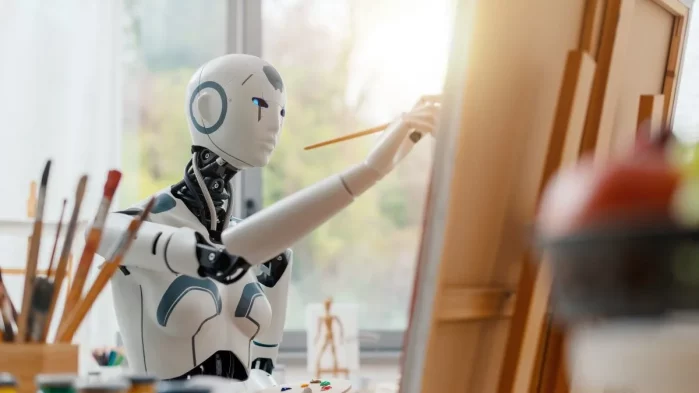
Image Source: Dilek Yacin; Daily Sabah
It is fast, it is scalable, and it feeds the constant demand for more. And the more it spreads, the harder it becomes for anything slower, more deliberate, or more challenging to stand out. The noise increases, and meaningful work struggles to be heard over it.
The tools, the platforms, the distribution, all of it is controlled by a small number of powerful entities. They set the rules, even if those rules are not always visible. They shape what gets seen and what does not. And while they promote the idea of open creativity, the reality is far more controlled than it appears. You are free to create, but not necessarily free to be heard.
And when visibility depends on systems you do not control, expression starts to shift. It becomes strategic. It becomes filtered. It becomes less about saying something real and more about surviving within the system. That is not freedom. That is adaptation.
Drowning in Noise
The result is a culture that feels full but lacks substance. There is no shortage of content, but very little of it stays with you. Everything blends together. Styles repeat, ideas recycle, and originality becomes harder to find, not because people are incapable of it, but because the environment does not support it.
And still, we participate. We keep scrolling, even when we know it is numbing us. We keep engaging, even when we feel disconnected. We say we value art, but we rarely give it the time or attention it needs to matter. That contradiction sits at the centre of all of this.
We have more access than ever before, but less connection to what we are accessing. We are surrounded by expression, but we are not really engaging with it. And the kind of art that once pushed boundaries and challenged power is struggling to exist in a space that prioritizes speed over everything else. So, this is not some golden age of creativity. It is something messier, something more complicated. A system where creation is easy, but meaning is hard to hold onto. Where expression is everywhere, but impact is rare. Where rebellion has not completely disappeared, but has been softened, scattered, and often pushed out of view.
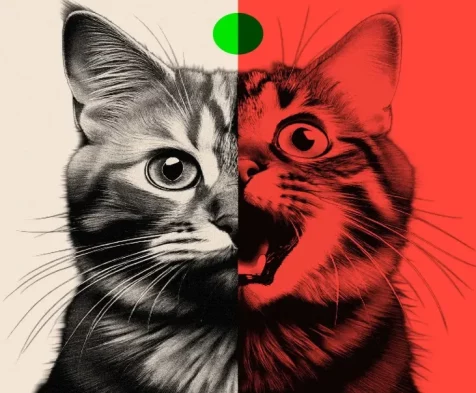
Image Source: Joey Tidy; BBC
Conclusion
Unless something shifts, this pattern is not going to change. Not because people lack ideas, but because the environment they are operating in makes it difficult for those ideas to take root. Slowing down, paying attention, and engaging would make a difference, but those are exactly the things the system discourages. So, most people will keep doing what they are already doing.
They will keep scrolling.