
5G Rollout Expands to 23 Cities Nationwide
September 13, 2026
FBR Tightens Factory Exit Rules With Digital Eye
September 14, 2026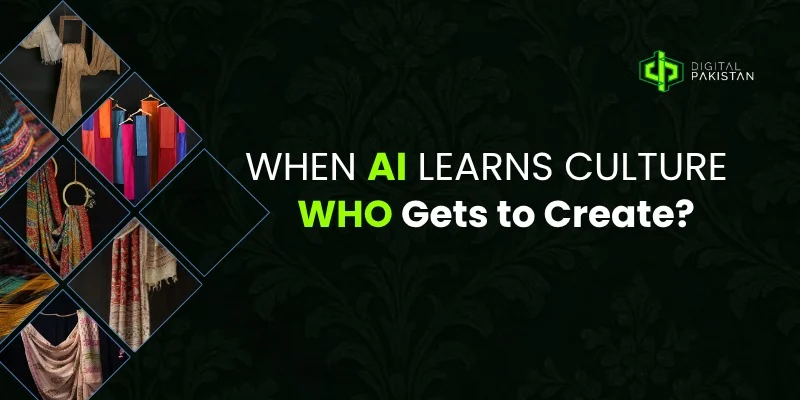
The AI in textile and design industry is changing how we imagine, create, and understand fashion. Give an AI tool a few words and, before your coffee has properly kicked in, you can have a textile print, embroidered garment, colour palette, or entire fashion collection on your screen. It is fast, convenient, and slightly terrifying in the way all impressive technology tends to be.
Imagine typing, “Luxury Pakistani fashion, intricate embroidery, traditional motifs, muted jewel tones, editorial lighting.” You click generate, and suddenly there is a polished garment staring back at you. It has elaborate embroidery, familiar colours, and just enough “South Asian luxury” to look like it belongs on a Pinterest board called Desi but make it fashion week.
Then comes the awkward question: what exactly did we ask the machine to make? What does “more Pakistani” actually mean? Is it ajrak, Sindhi embroidery, mirror work, block printing, zardozi, handwoven fabric, or something else entirely? Pakistan does not have one convenient textile aesthetic waiting to be turned into a mood board.
Its textile heritage includes techniques developed by different communities, in different regions, for different reasons. These practices carry stories through colour, material, pattern, and the people who make them. Online, however, culture has become remarkably easy to package as a visual trend. We already have “old money,” “cottagecore,” “dark academia,” “desi aesthetic,” and “South Asian wedding inspiration.” Give Pinterest five minutes and it will turn an entire culture into a colour palette.
AI simply makes that process faster. It can collect visual references, blend them together, and produce something that looks culturally rich without understanding where those references came from. That is why the more interesting question is not whether AI can design. It clearly can. The real question is: when culture becomes a prompt, what happens to the people behind it?
AI learns from images. Artisans learn from hands.
Comparing AI with traditional textile craftsmanship is almost comical when you look at the speed. AI works through prompts, generations, scrolling, rejecting, and regenerating. An artisan works through thread, stitch, pull, repeat, and probably a level of patience the rest of us lost somewhere between food delivery apps and instant messaging.
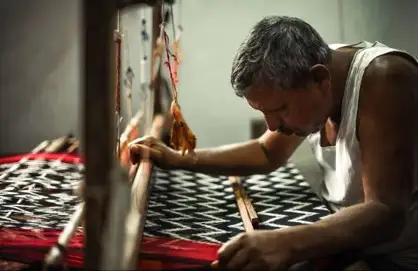
The difference, however, is not only about speed. It is about the kind of knowledge involved. When people talk about Pakistani artisans, they often describe them as if they are frozen in time, quietly “preserving tradition” while the modern world rushes past. It sounds respectful, but it can also make their work seem passive. An artisan is not simply following an old set of instructions. They are making design decisions constantly.
Akhil Pawar; Unsplash
Which thread works with the fabric? How tight should the stitch be? How dense should the pattern become? What happens when the textile moves? How should a motif repeat? What can realistically be made by hand without damaging the material? These decisions require experience, judgement, and a deep understanding of how fabric behaves.
Much of that knowledge is not stored in a textbook or neatly labelled inside a software programme. It comes from watching someone work, practising, making mistakes, repeating a technique, and eventually knowing what to do almost instinctively. It may be passed from a mother to a daughter, from a teacher to a student, or from one craftsperson to another within a community.
That matters when we talk about Pakistani textile traditions. The value of embroidery does not exist only in the finished image. It also exists in the labour, skill, and cultural memory required to create it. AI can generate an image of an incredibly detailed embroidered textile in seconds, but it does not understand the physical limits of a needle, the tension of thread, or the patience required to fill a surface stitch by stitch. It knows what the finished result looks like. The artisan knows how to get there, and that is a pretty significant difference.
The Gen Z problem with authenticity
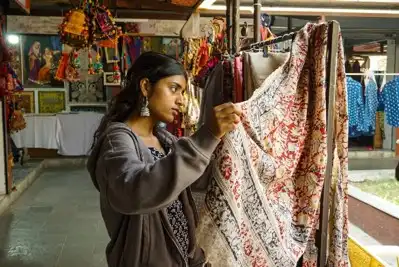
Here is where things become wonderfully ironic. Gen Z loves authenticity. We want vintage clothes, handmade jewellery, thrifted finds, independent designers, and small businesses with actual people behind them. We care about where products come from, who made them, and whether the story attached to them is real. We can spot a fake “candid” Instagram photo from three pixels away, yet we are surrounded by technology that can manufacture the appearance of authenticity.
AI can make something look vintage, handwoven, embroidered, or carefully produced by a creative team. It can create a fashion campaign that appears to have taken weeks of styling, photography, and art direction, even when the original idea was typed into a box between two meetings. Sometimes, honestly, you cannot immediately tell the difference. That is what makes the situation uncomfortable.
Kushali Bhagat; Unsplash
We are becoming more interested in authenticity while developing tools that can imitate it almost perfectly. A garment can look handmade without being handmade. A print can look culturally specific without having any real understanding of the culture it references. A technique can become a texture, a motif can become a “look,” and a cultural reference can become a keyword.
The problem is not inspiration itself. Fashion has always borrowed, reinterpreted, and reinvented. The problem begins when borrowing becomes extraction. If an AI system learns from thousands of images of Pakistani embroidery, who gets recognised for the knowledge contained in those images? Is it the artisan whose work was photographed, the community that developed the technique, the designer who documented it, or simply the person who typed the prompt?
The algorithm is not sitting there thinking about cultural ownership. It is identifying patterns and producing something that satisfies a request. Humans, unfortunately, are left to deal with the complicated part. Culture has context, history, and consequences. It is not just a filter you can apply after choosing the right lighting.
Can AI preserve a craft or just imitate it?
It would be easy to turn this into an “AI bad, handmade good” argument, but that would be too simple. AI can be genuinely useful in the textile industry. Designers can use it to explore colour combinations, develop print variations, visualise garments, and test ideas before creating physical samples. That could reduce waste and make certain stages of the design process more efficient.
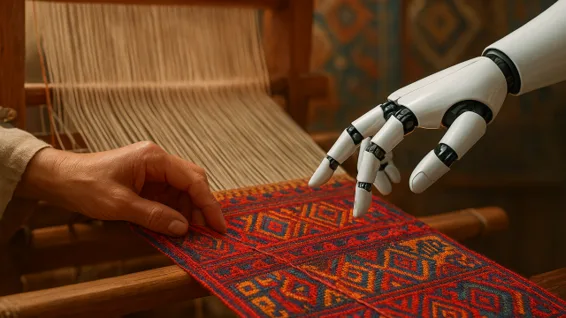
Digital tools could also help document textile traditions that are at risk of being forgotten. Imagine creating detailed archives of regional motifs, embroidery techniques, weaving practices, and the stories connected to them. Imagine recording an artisan’s process so future generations can see not only what the finished textile looks like, but how it was made and why the technique matters.
Nirbhay Rana; Linkedin
That is very different from asking AI to “make it look traditional.” One approach records and respects knowledge. The other can flatten it into a visual shortcut. Technology can become a tool for preservation, but only if the people and communities connected to that knowledge remain part of the process.
There is also an exciting possibility in collaboration. A designer could use AI to generate experimental compositions and then take those ideas to an artisan. The artisan could decide what is technically possible, what needs to change, and what should probably remain on the screen. AI might suggest a pattern with impossible details, awkward proportions, or a design that would take six months to produce. The artisan brings the reality check.
In that relationship, the AI generates possibilities, the designer develops the concept, and the artisan understands the material. The final textile could become something none of them would have produced alone. However, there is a clear boundary. If AI imitates a cultural craft while excluding the people who developed it, that is not meaningful innovation. It is simply a faster way to take.
Maybe the future of fashion needs more hands, not fewer
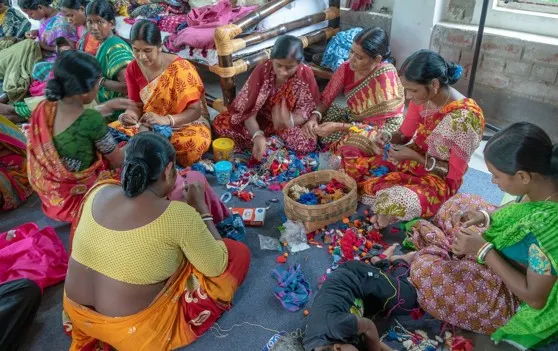
We tend to assume that faster automatically means better. Textiles challenge that idea because some of their value comes from the time they require. A hand-embroidered piece can take hours, days, or longer. A woven textile carries the marks of its process, and a tiny irregularity can prove that an actual person was there.
In a world where AI can generate an unlimited number of polished designs, that imperfection may become more valuable, not less. If you can create 500 patterns in five minutes, another beautiful pattern is not especially rare. What becomes rare is a technique learned from a family member, a motif tied to a particular community, or a textile made by hand over several days.
Nasirra Ahsan; World Bank Blogs
This does not mean designers should reject AI or pretend technology has no place in fashion. It means they need to become more intentional about what they ask it to do. AI can help with repetitive tasks, early experimentation, visualisation, and research. Humans should remain responsible for context, cultural sensitivity, material knowledge, authorship, and meaning.
There is a difference between knowing that a pattern exists and understanding why it matters. That may be the biggest lesson Pakistani textile traditions can offer an industry obsessed with speed. Not everything needs to be faster, optimised, or turned into content before lunch. Some things deserve time because the time is part of their value.
AI can generate a pattern, remix colours, imitate textures, and create something that looks convincingly handmade. It cannot explain why a particular stitch was passed from one generation to another, understand the significance of a motif simply because it has seen thousands of images, or care about the person sitting behind the fabric.
Maybe that is where the human hand becomes more important, not less. When machines can generate almost anything, the rarest thing may not be another beautiful design. It may be proof that someone cared enough to make it.