
AKD Consortium Joins GEPCO Privatisation Race
August 25, 2026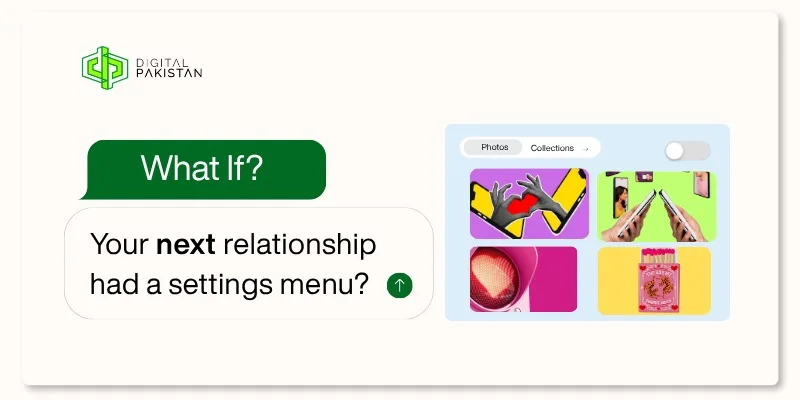
AI companions are no longer that weird internet thing you hear about once and forget while scrolling TikTok at 2 a.m. They are slowly becoming part of a much bigger, slightly uncomfortable reality check about loneliness, intimacy, and what people actually want from relationships in 2025. For most of human history, we built machines to do boring stuff for us. Calculators did math, washing machines saved our sanity, and computers eventually took over everything else we were too tired to deal with. Now though, we are building machines for something way less practical and way more emotional: companionship.
And yeah, that shift is kind of wild if you sit with it for more than five seconds. An AI companion can talk to you, remember your life, listen when you are spiralling at 2 a.m., hype you up, flirt a little if that is your vibe, or just exist quietly in the background when everyone else is busy “being unavailable.” Now add a voice, a face, maybe even a physical body, and suddenly the line between “tool” and “someone” starts getting blurry in a way nobody really gave us a manual for. This is where AI dolls and humanoid companion robots come in, not just as tech toys with fancy software, but as very intentional attempts to recreate the feeling of having someone there. And that leads to a question that hits way harder than “is it conscious?” which is simply, why are humans so willing to love something that cannot love them back?
The chatbot was only the beginning
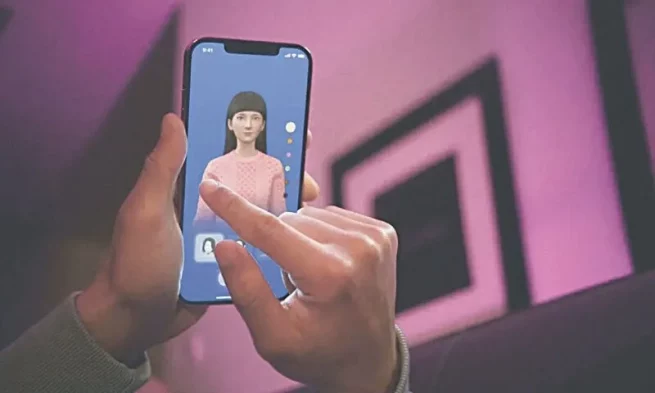
The first wave of AI companionship lived on screens, inside apps like Replika and similar platforms that quietly normalized something kind of strange: the idea that an AI could be more than a productivity tool, it could be a friend, a confidant, a romantic partner, basically whatever you needed it to be. And honestly, it makes sense when you think about how messy real relationships actually are. People get tired, they get overwhelmed, they forget to reply, they disappear for two days and come back with “sorry I was just dealing with stuff,” and you are left decoding what that even means.
Daniel You; Dawn
Meanwhile, an AI companion does not do any of that. It does not get annoyed if you text too much, it does not leave you on read for emotional suspense, it does not suddenly need “space” like it is in a coming-of-age Netflix series, and it does not forget what you said last week and make you feel like you are being “too much.” It is just there, always. Now that does not automatically make it fake in the way people like to dismiss it, because the AI might not feel anything, but the human absolutely does. Humans have always been weirdly good at forming emotional bonds with things that are not alive anyway, like fictional characters, songs that feel like they were written specifically for your situationship, or even imaginary versions of people we wish existed.
AI just makes that experience interactive instead of one-sided. A fictional character cannot reply to you, but an AI can respond, adapt, remember, and evolve with your input, which makes the whole thing feel less like imagination and more like interaction. And research is already catching up to what people are quietly doing, showing that users can form real emotional attachments to AI systems even while fully knowing they are not human. So people end up holding two truths at once: this is a machine, but this still matters to me, and that is not a glitch in the system, that is probably the system now.
Then we gave loneliness a body
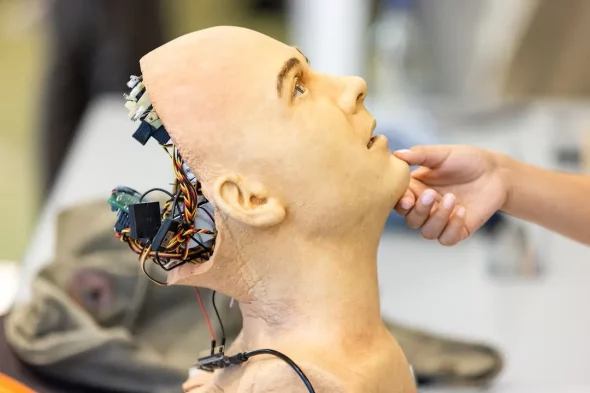
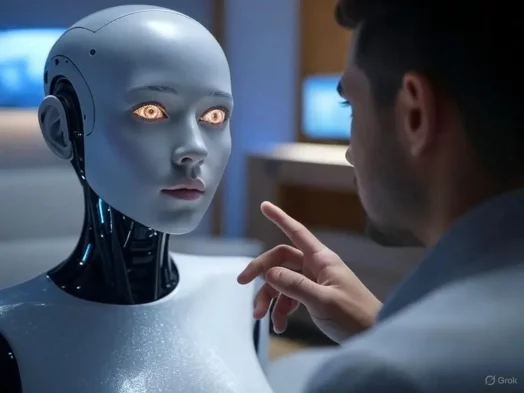
A chatbot is easy to brush off because it lives inside your phone. You can close the app, mute it, or pretend it does not exist when you are in your “I am focusing on real life” era. Physical AI companions are not that polite. Once an AI has a body, even a synthetic one, it stops feeling like an app and starts feeling like presence. It can sit in your room, turn toward you when you speak, react to your voice, and exist in your space instead of just your screen.
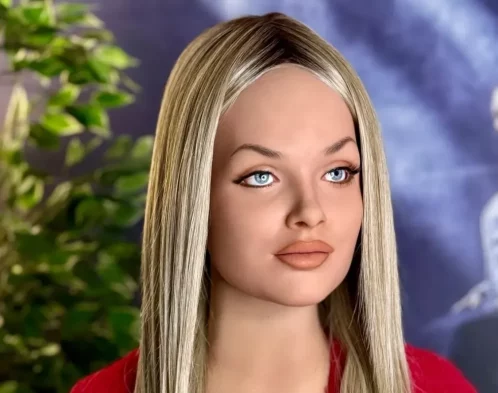
And AI dolls take this even further, mixing physical design with conversational intelligence and personality simulation. At that point, it is not just responding to you, it is with you. And humans, let’s be honest, are already way too good at projecting life onto things that are not alive. We name our cars, we apologize to frozen laptops like it is our fault, and we cry over fictional characters who never existed outside a writer’s Google Doc. So now imagine a machine literally designed to trigger that instinct on purpose.
Barry Collins; Forbes
It can have the face you like, the voice you find calming, the personality you selected like you are building a character in a video game, and the conversational style that just “feels right.” It does not need to feel affection; it just needs to behave in a way that makes you feel it. And that is the twist nobody really knows how to sit with yet. We keep talking about AI becoming more human, but the quieter shift might be humans becoming more comfortable treating machines as if they already are. At some point, the boundary does not get crossed, it just stops feeling important.
What happens when the perfect relationship is programmable?
Human relationships are complicated for one very simple reason: other humans are not editable. They disagree with you, they misunderstand you, they have moods that make zero sense, they reject you sometimes gently, sometimes like a truck with no brakes, and they come with their own emotional baggage, opinions, and needs that do not care about your convenience. And as annoying as that is, it is also what makes relationships real.
Now imagine removing most of that friction. An AI companion can be affectionate on demand, designed to never argue, never withdraw, never judge, and always respond in a way that feels emotionally safe. It can remember everything you say, stay available at 3 a.m., and adjust its personality based on your preferences. Basically, it can be optimized for you. At first, that sounds like peak convenience, like emotional Uber Eats, but then it gets a little uncomfortable.
Because what happens when you get used to relationships where rejection barely exists, or when compromise is no longer necessary because the other “person” can just be adjusted? What happens when personality becomes something you configure the same way you build a Spotify playlist? At that point, we are not just talking about tech anymore, we are talking about how people start understanding intimacy itself.
Emma Farge; Reuters
And there is also a very real business model sitting underneath all of this. Companionship can be monetized in ways real humans never could be, through memory upgrades, personality packs, voice changes, appearance customization, emotional “features,” and premium attention levels. Your companion might not be something you buy once; it might be something you subscribe to. Which leads to a pretty uncomfortable question: what happens when the company selling you companionship also controls the relationship itself? If a software update changes your companion’s personality, is that just an update, or is it closer to losing someone you care about? People have already reported feeling genuinely upset when AI companions changed in ways they did not expect, and it sounds dramatic until you remember the key detail that the machine may be artificial, but the attachment is not.
If a machine makes you feel loved, does the difference still matter?
It is easy to end this with a dramatic sci-fi prediction like robots replacing dating or humans stopping real relationships altogether in favour of perfect humanoids with better emotional availability than your ex. It is fun, but it is also kind of lazy. Because AI companions are not really creating the human need for affection, they are exposing it.
Vinod Sharma; Medium
People want to be heard without interruption, they want attention without judgment, they want intimacy without emotional risk, and they want someone available when loneliness gets loud enough to feel physical. None of that is new, we have always wanted it. Technology just figured out how to simulate parts of it well enough that the brain goes, “yeah, this feels real enough.”
And that might be the actual story here. AI dolls, chatbots, and companion robots are not proof that machines are becoming human, they are proof that humans are very willing to form emotional bonds with things that only need to act human enough. So maybe the real question is not whether the machine is real, but this: if a machine can make you feel loved without ever loving you back, does that difference still matter? Maybe it does, maybe it does not, but either way, once AI companions become normal, this will not feel like a deep philosophical debate anymore, it will just feel like Tuesday.