

BankIslami Launches AI-Powered Financing Automation Platform
May 30, 2026
Pope Leo Warns AI Could Make War Uncontrollable
June 1, 2026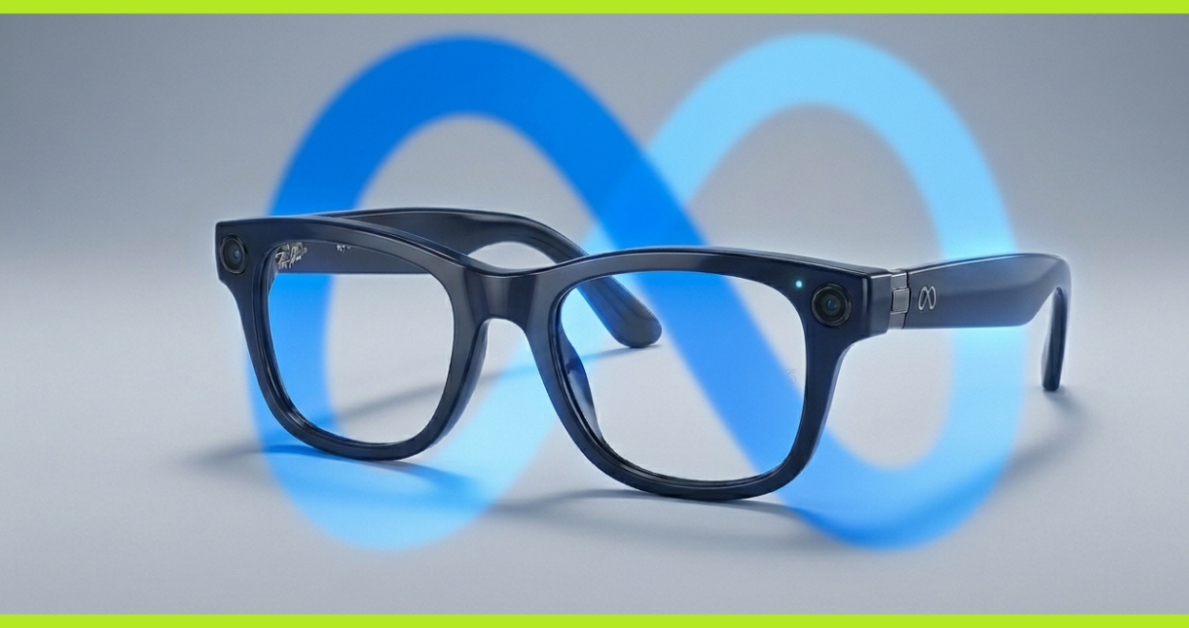
Meta plans an AI pendant, expanded smart glasses, and a “Wearables for Work” service to rescue its loss-bleeding Reality Labs hardware division by 2026.
Meta Platforms is making an ambitious bet on wearable technology, with internal plans that could redefine how humans interact with artificial intelligence in their everyday lives and at their desks.
According to a memo reviewed by The Information, Meta’s Vice President of Wearables, Alex Himel, has laid out a three-pillar hardware strategy: an AI-powered pendant, a dramatically expanded smart glasses lineup, and a new enterprise subscription service called “Wearables for Work.”
The pendant, which Meta plans to begin testing within the next year, could reportedly include a camera, a detail that raises both excitement and privacy concerns. The device draws directly from Meta’s 2025 acquisition of Limitless, an AI-wearables startup whose signature product, also called “Pendant”, was a clip-on Bluetooth microphone capable of recording, transcribing, and summarising real-world conversations throughout the day.
At the time of the acquisition, Limitless CEO Dan Siroker stated, “Meta recently announced a new vision to bring personal superintelligence to everyone and a key part of that vision is building incredible AI-enabled wearables.”
The urgency behind this roadmap is unmistakable. Meta’s hardware unit, Reality Labs, posted a staggering $4.03 billion loss in the first quarter alone, on revenue of just $402 million, a gap that has left investors and analysts watching closely. Himel’s memo frames the wearables push as a direct vehicle for reversing those losses and driving broader adoption of Meta’s AI models.
On the smart glasses front, Meta is reportedly preparing a wave of new models beyond its existing Ray-Ban and Oakley collaborations with EssilorLuxottica. Codenames like “Modelo,” “Luna,” “RBM2 Refresh,” and “Mojito VIP” are slated for release across 2026, with more experimental models, “Artemis” and “SSG” (supersensing glasses), in future pipeline.
All devices will reportedly run on Meta’s latest AI model, Muse Spark, and an unreleased AI agent codenamed “Hatch.”
The “Wearables for Work” service targets enterprise customers willing to pay a premium for industry-specific features, aligning with Meta’s recently launched two-tier subscription for Meta AI available across Facebook, Instagram, and WhatsApp.
Himel has set a target of 10 million wearable devices sold in the second half of 2026, alongside 6.8 million monthly active wearable users by year’s end.
With daily usage of AI-powered smart glasses reportedly tripling year over year and Mark Zuckerberg calling it “one of the fastest-growing categories of consumer electronics ever”, the question is no longer whether Meta can build the hardware. The question is whether it can sell enough of it before the losses become politically untenable inside one of the world’s most-watched tech companies.
Meta declined to comment on the report.