
Sitara Petroleum IPO Hits Cap Price in Minutes
May 4, 2026
Pakistan, Uzbekistan Explore Expanded Trade And Industrial Cooperation
May 5, 2026
Introduction
Let’s drop the comforting lie that the internet is some kind of equal playing field where everyone gets a shot. It isn’t. It is a rigged attention economy dressed up as opportunity. You have been told that anyone can go viral, anyone can build an audience, anyone can be heard. That story exists for one reason only, to keep you posting, hoping, and feeding a system that was never designed for you in the first place.
Because if this space was actually fair, you would not be seeing the same faces, the same lifestyles, the same aesthetics recycled over and over again. You would be seeing chaos, diversity, contradiction, real life in all its unevenness. Instead, you get a narrow, polished slice of reality that looks suspiciously like wealth, comfort, and aspiration on repeat. That is not coincidence. That is selection.
Visibility is a class privilege
The people dominating your feed are not just “more talented.” They are better equipped. They have faster internet, better devices, better lighting, better locations, and most importantly, time. Time is the one thing no one talks about because it exposes everything.
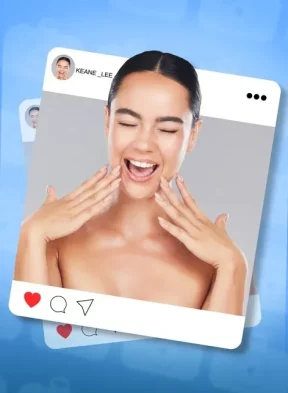
Image Source: Vanessa Scaringi; SubStack
You cannot build a personal brand when you are exhausted. You cannot curate a lifestyle when you are trying to survive. You cannot film aesthetic morning routines when your mornings are chaos. But the internet pretends that all of this is just about effort, as if discipline alone can replace resources. It cannot.
So what you end up watching is not creativity. It is class performance. It is people turning their access into content and then selling it back to you as inspiration. The luxury travel vlogger, the perfectly curated apartment, the fitness influencer with endless free hours. These are not just individuals, they are walking advertisements for a life most people will never have. And somehow, you are expected to admire it.
The people you will never see
Now think about who is missing. Not in theory, but in reality. Where are the creators from smaller towns with unstable internet. Where are the people who cannot afford editing software, high quality cameras, or even the time to experiment. Where are the voices that do not fit into clean aesthetics or trending formats. They exist. They are just not visible.
In places like Pakistan, this divide is brutal. A handful of urban influencers can build massive audiences showcasing luxury brands, international travel, and lifestyles that feel completely detached from the average person’s reality. Meanwhile, creators outside those circles are stuck trying to upload a single video without it failing halfway through. And then people have the audacity to call this meritocracy.
Aspiration is control
You are not just watching content, you are being trained. Trained to want certain things, to admire certain lives, to measure yourself against standards that were never meant to be reachable.

ImageSource: Gary Drenik; Forbes
This is where it stops being harmless entertainment and becomes political. Because aspiration is not neutral. It is manufactured. When the same types of lives are constantly pushed to the front, they become the definition of success. Everything else becomes background noise.
And when people internalize that, they start to believe that their own lives are somehow less valuable, less interesting, less worth showing. That is how invisibility becomes self enforced.
The algorithm is a gatekeeper, not a tool
People talk about “beating the algorithm” like it is a game. It is not a game. It is a gatekeeping system that decides what deserves attention and what does not. And it is not designed to uplift the unheard, it is designed to maximize engagement. And what drives engagement. Familiarity. Comfort. Predictability.
Anything that challenges that, anything that feels too raw, too political, too different, gets quietly pushed down. Not necessarily banned, not explicitly censored, just… ignored. Which in a system built on visibility is the same thing as erasure. So no, the algorithm is not your friend. It is the invisible editor of your reality.
If you want to be seen, you have to adapt. That is the unspoken rule. You have to soften your opinions, clean up your environment, package your life in a way that feels digestible. You cannot be too messy, too angry, too real. Even resistance gets aestheticized. Even struggle has to look good.
That is how the system neutralizes anything that could actually challenge it. It turns it into content. It strips it of urgency and repackages it as something you can scroll past without feeling uncomfortable for too long. And if you refuse to play that game, you disappear.
Attention is power and you are giving it away
Here is the part no one wants to admit. Every time you scroll, like, share, and engage, you are reinforcing this system. You are telling it what deserves to be seen. And more often than not, you are rewarding the same patterns that keep others invisible. Attention is not passive. It is power.
The people who get it shape culture. They decide what trends, what matters, what people talk about. And when that power is concentrated in a narrow group of creators, their perspective becomes dominant, whether it reflects reality or not.
That is how digital spaces quietly reproduce real world inequality while pretending to be progressive.

Image Source: Charles Singh; LinkedIn
Conclusion
So no, you are not invisible because you are not interesting enough. You are invisible because the system does not need you to be visible. It needs you to watch, to consume, to stay engaged. The internet did not erase inequality. It refined it, polished it, and made it easier to ignore.
And the most uncomfortable part is this. The same people who are excluded from visibility are the ones sustaining the system the most. Watching lives they cannot live, supporting creators they cannot relate to, and calling it entertainment. You are not seeing the world. You are seeing a curated hierarchy of it.
And until people start questioning what they are rewarding, the same faces will stay visible, and everyone else will remain exactly where they are.
Out of frame.