
Punjab to Launch Cyber Crime Unit for Protection
April 12, 2026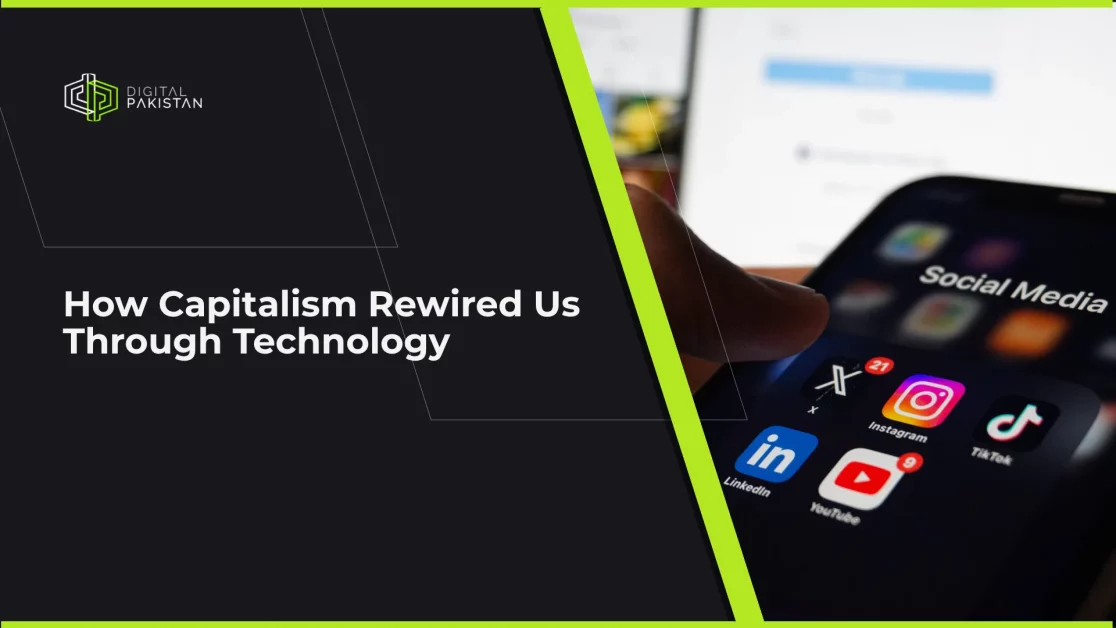
Author Info

Introduction
We tend to discuss capitalism as though it is somehow external to us, and it exists in markets, corporations, and state machinery that we sometimes participate in. That framing no longer holds. Capitalism is not the thing that we enter and leave today, it is the thing that we move in and out of, and that is the way we think, what we value, and how we understand ourselves.
It was not only speed or scale that changed, but proximity. Technology did not merely speed up capitalism but made it personal. It imbibed economic rationality into normal life, into habits that are natural and intimate. The system does not wait to participate anymore; it predicts it, researches it, and restructures itself around it.

Image source: Sean IIIing; Vox
Shoshana Zuboff captures such transformation in The Age of Surveillance Capitalism, in which she outlines a type of capitalism that feeds off human experience itself. Not only what we make or what we eat, but how we act, what we think, what we attend to. Experience is transformed into data and data into a source of economic value.
Everyday Life as Extraction
The very act of opening Instagram or scrolling through Tik Tok is somehow deceitfully normal. It is as if it is a break, rest, not work or duty. Under the surface, however, is a machine which is always surveying, cataloguing, and perfecting.
No interaction is left without being recorded, however small. The videos that you pass over, the posts that you slow down on, everything that you search in the middle of the night at one time or another, it is all a part of a bigger trend. It is not just a pattern that is merely stored, it is processed and used to make predictions about what you are going to do next, what will keep you going, what will grab your attention a little longer.
Capitalism has been based on extraction, but the object of extraction has changed. It is no more restricted to the physical labour and the natural resources. It has now got behaviour itself. Being there in a digital space is economically productive, whether you want it to be or not.

Image Source: David Kender; StackCommerce Insider
The Economy of Attention
The thing that is currently being competed over is not necessarily capital in the traditional sense, but attention. Attention is scarce, closely connected with the human mind, and it is extremely precious. Platforms are created to generate it, maintain it and transform it into quantifiable results.
The reasoning is silent though regular. Individual content that is attentive is prioritized, repeated, and amplified. This leads to a situation where the most important matters are not made visible but rather the performance. You see what works and does not always have to be what matters.
This goes beyond its initial surface implications. When the information is filtered within engagement, it starts to develop perception itself. Individuals are not merely drinking content; they are living in the reality that has been carefully constructed. The system does not have to tell what to think, it just has to organize what is perceived.
The Self as a Product
The more subtle of these changes is a shift towards the inward turn of this logic. Instagram will make a person perceive life as something one is supposed to present, arrange, and make visible. Moments are no longer simply experienced but are more than ever ready, frequently accompanied by a sense of how they are going to be interpreted.
It has no specific point of beginning, but it gathers with time. You begin to think about the appearance of something and then you fully interact with it. You realize how you frequently post, how you look, how regularly you are perceived. The identity starts acquiring the form of profile, which can be supported and improved.
This is where capitalism is internalized. It is no longer the matter of organizing external systems but having an impact on how people are building their selves. The concept of the self begins to fit the reasoning of branding, where visibility, consistency and interaction turn into indicators of worth.

Image source: Bruce Mars; Unsplash
Work and Identity
The same pattern is present in the working life. Another example is platforms such as LinkedIn which transform the understanding and presentation of work. Work is not limited to a number of tasks, duration; it is now something which is constantly visible and is constantly updated.
It is a change of merely having a career to doing one. Successes are displayed to everyone, gains are recorded, relationships are established and nurtured in an open manner. The line between personal identity and professional identity is getting blurred.
This puts a kind of pressure that can hardly be identified as people do not feel forced. It is voluntary, even obligatory. However, it is such that it makes one be constantly involved, constantly visible and always aligned to a particular image of being productive and successful.
Data, Emotion, and Influence
The complication that arises with this system is that it does not just monitor behaviour, but it also starts to estimate emotion. Interaction patterns could also tell of moods, preferences, and vulnerabilities. This enables platforms to react in a manner that is almost accurate, even instinctive.
Yet this receptivity is not an indifference. It is geared towards keeping the interest alive. Once a system can figure out when you are most receptive or most distracted, it can show you more of what you are paying attention to or the least of what you are paying attention to. Influence is no longer about direct persuasion but an influence of situation making.
This brings in a sense of power which can hardly be identified. It does not eliminate choice; it simply organizes the space that choices are made. It does not dictate what to do but it limits the scope of what seems possible or pertinent.
Control Without Visibility
The effectiveness of all this is that it is invisible. The system has no clear entry points, no visible boundaries of the system where it starts and terminates. It is part of daily activities, of the times that are intimate and unorganized.
This is not a system that requires an attention call out. It slowly takes the centre stage in that it comes in the name of convenience and not control. Due to this reason, it hardly ever comes out as something that should be questioned.
It is in this nuance that the political aspect is contained. Institutions or policies are no longer the sole basis of power, and it is now possible to impose behaviour change on a scale without direct conflict. This power becomes operated through technology and in the silent but relentless manner.
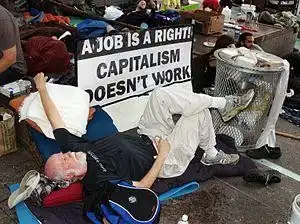
Image Source: Igor Greenwald; Forbes
Conclusion
Capitalism did not merely grow with technology; it has transformed the shape. It is closer and more embedded in day to day existence being more adaptive. It does not wait to participate it expects it and learns out of it and restructures itself.
Whether we are part of this system or not is no longer a question, but the extent to which it influences our way of thinking and acting. Not directly or provocatively, but through slow progression, repetition and design. The more it is familiar, the less it becomes visible.
To know this, one does not have to abandon technology, but they need to perceive technology with a more focused eye. Not only as an instrument, but also as a framework that was determined by certain economic motives. As soon as it comes into view, one can start dealing with it in a more conscious manner.
Since the biggest change is not what technology has done to markets, but to us. And there the dialogue ceases to be economic and comes to be political.