
OpenAI Warns Future Models Could Exploit Systems
December 13, 2025
Punjab Plans Own Provincial Electric Power Regulator
December 14, 2025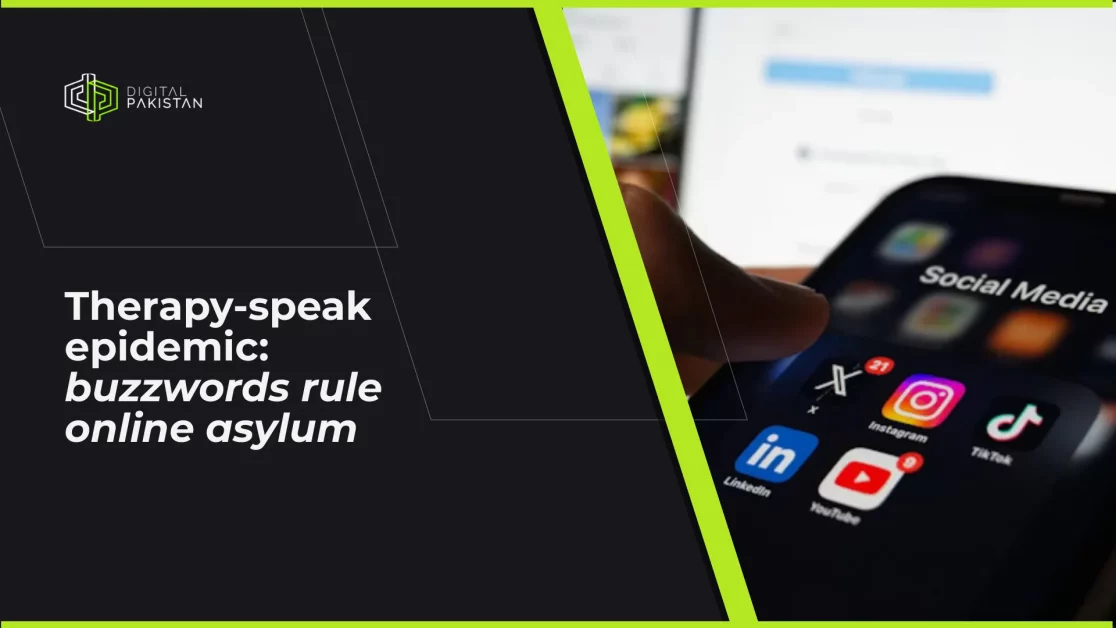
Introduction: The Fools Are Running The Asylum
Have you ever noticed how all of a sudden everyone on social media is suffering from some form of “trauma”? How everybody has a partner more “toxic” than Chernobyl. OCD is running so rampant among people that it has put COVID-19 to shame. Everybody is a “victim” of some kind of “gaslighting” “abuser”.
Is your knowledge about human psychology sourced from the dictionary of social media’s favorite diagnostic buzzwords? If yes, then you’re likely using the term “psychopath” to describe people of whom you aren’t a fan, more often than the actual occurrences of true psychopathy in the general public.
A person who would rather spend their downtime in the peace and comfort of their own company, instead of being over-stimulated into sensory numbness by a loud crowd, gets labeled “anti-social personality”. A person who’s protective of their personal boundaries, is a “narcissistic” “sociopath”.
“Depression” and “Bipolar” are selling like hotcakes. People online seem to be getting “triggered” left and right at the drop of a pin. And apparently the phrase “Trauma-Bonding” is hotter than the volleyball beach scenes in both Top Gun movies, combined.
If this introduction is beginning to feel like a hyperbolic annoyance, it’s because that is exactly what therapy-speak sounds coming from people who’re absolutely clueless about the real meaning behind the labels they so confidently throw around.
Yet, cluelessness doesn’t prevent social media influencers and fraudulent life-coaches, without a single legitimate credential to prove the veracity of their claims, from over-stuffing our mouths with ill-judged and ill-advised information. Fools have achieved access to pop-psychology jargon and now they’re reigning over the asylum.
Therapy-speak is the equivalent of handing over a bottle of anti-depressant pills to a toddler who enjoys the way it rattles, but also isn’t above opening it. Complex diagnostic terminology, that should only be employed by professionals in clinical settings, is being toyed with by people who’ve discovered fire but haven’t learned how not to get incinerated.
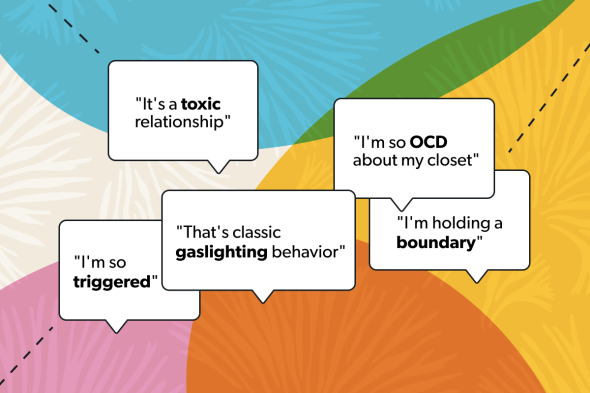
Image source: Thriveworks
I’m not about to quote the entire Diagnostic and Statistical Manual of Mental Disorders, or DSM-V, to you. Instead, we are going to have a sensational and stimulating conversation on how therapy-speak is its own kind of malicious agent, which is proving quite venomous for the minds of social media users.
The Birth of Therapy-speak
So, why is social media seemingly more disease-ridden than Europe during The Black Death? You know, since practically everyone online is either bipolar or has PTSD. Or is suffering from a concoction of psychological co-morbidities that sound like one of Harry Potter’s spells to an undiscerning ear, but in real life would’ve necessitated a straightjacket.
Some might argue that therapy-speak existed long before social media took off, and they’re not wrong. People were mishandling diagnostic labels in everyday dialogue way before Tiktok taught us it was cool to do so. Words like trauma and depression were not divorced from regular glossary.
Social media, especially short-form content, has catapulted clinical lexicon to an astronomical fame. And when has fame not been a double-edged sword? Therapy-speak’s origin can be traced down to the moment in digital time and space when social media’s power of anonymity provoked users’ proclivity for confessional behavior.
Nobody needs to know who you truly are. Which means you can confess whatever you want, to whomever, whenever, and in whichever words you want. This explosive chemical reaction was further catalyzed when therapy began shedding off its stigma and every individual received ungoverned access to psychiatric and psychological knowledge.
There were no mandatory prerequisites, no years you had to spend in lecture halls earning the appropriate academic degree, and no clinical license, for you to be able to use DSM-V coded labels. All you needed was a deluded confidence relentless enough to convince similarly misinformed and incognizant following.
Indifferent to the factual definitions of terminologies that carry serious implications, social media users started deploying them as means to “express yourself”. It is easier to justify your own wrongful actions if you can find a turn of phrase more incriminating, to portray someone else as an “abusive narcissist”.

Image source: Unsplash
Individuals online could craft whole identities around buzzwords borrowed from clinical psychology, without consequence and accountability. Identities that were repeatable and acceptable. They helped fabricate an online personality that lured others into thinking you’re interesting and smart.
You could express yourself as a “victim”, or a “survivor”. Having PTSD is both an explanation and a shield. You could even tag a fellow human as a “Gaslighter” with zero “Emotional Intelligence”, turning your cult following into 007s and ruining the accused person’s life. Vocabulary spread faster than understanding.
A “Positive Attitude” Towards Therapy
We should pay our gratitude to social media for being an indispensable right-hand in destigmatizing mental illness. For fueling mental health campaigns and for being the light at the end of the tunnel for countless individuals entombed in their tormenting silence because it was taboo to talk about their pain.
There was a time when the simple act of admitting you had a psychological complication, even in solitude, meant you weren’t normal. And there was no crime worse than being perceived as abnormal. When therapy went mainstream, it empowered people to pursue answers for questions that seemed to have none.
Gradually, the demonization of mental health issues shifted to the normalization of seeking therapeutic interventions. This new-found openness was revolutionary. It saved lives. But as the flood gates of mental health advocacy flung open, it also unleashed an avalanche of pseudo-psychology.
Without someone to fact-check information and regulate quality control, virtually anyone from anywhere can position themselves as an authority on the subject of therapeutic knowledge. From YouTube to Instagram, the guise of a self-proclaimed psychologist is democratized and unfounded advice is dispensed like candy on Halloween.
Image source: Forbes
Social media’s version of a “positive attitude towards mental health” translates to dumbing down multidimensional nomenclature into a 15-second content reel. We have to ask, what exactly is it that we are normalizing now? Human lives are not a joke and assigning labels to them has insurmountable consequences.
Is this approach towards mental health concerns just another excuse for us to execute microaggressions and wrap our internalized hostilities in fancy lexicon? With no sense of accountability, our increased comfort level for discussing psychological issues is essentially an alternative medium for candid exploitation.
This is not a healthy acceptance for mental health challenges; it is simply another method for people to hide behind a screen and continue doing their dirty work. Therapy is not absolved of the scarlet letter it has forever been tainted with; it is misrepresented, manipulated, capitalized on, and falsified to overpower the masses.
Hot Take: Therapy-speak is a Type of Totalitarianism
Therapy-speak ends conversations before they could even begin. Which contradicts the original purpose of normalizing discourse on psychological illness. You can’t argue with someone who’s decided you’re “displaying narcissistic traits” any more than you could reason with a medieval inquisitor who’d declared you possessed.
Social media has morphed pseudo psychological buzzwords into a sophisticated system of thought control that would make Orwell take notes. We’ve created a linguistic regime where disagreement isn’t just wrong, it’s pathological.
The genius of this new authoritarianism is that it’s dressed up as empathy. It wears the costume of caring. And when someone weaponizes a term such as “gaslighting” or “emotional abuse,” they’re not just winning an argument, they’re rendering you morally and psychologically defective. There’s no defense.

Image source: Psychology Today
We’ve created a system wherein the accused has no chance against an accuser who has all the levers of power. It’s a kangaroo court wherein the judge, jury, and executioner are one and the same, with a less than freshman-level understanding of the DSM-V and a Wi-Fi connection.
And the sentence? Social exile, character assassination, the digital equivalent of being declared an unperson. The most insidious part is how it polices not just behavior, but thought itself. You can’t have justified reactions any longer. Angry? That’s “toxic masculinity.” Setting boundaries? That’s “avoidant attachment.”
Calling someone out on their nonsense? That’s “triggering” them. Every natural human emotion has been pathologized, catalogued, and turned into evidence of your dysfunction. It has entrenched new social hierarchies in which victimhood is currency and diagnosis is power.
Whoever can claim the most trauma wins the argument. Whoever can assign the most damning psychological label controls the narrative. It is an oppression Olympics, and all you get for a medal is the right to silence anyone who challenges you by claiming that they are mentally unfit for discourse.
Conclusion
Therapy-speak has blown psychological nomenclature far out of its course and context. Social media’s therapy-speak is not a tolerance for diversity of individual differences on the spectrum of normality. It is a tolerance for ignorance and ineptitude, blind compliance and dull-wittedness among the masses.
We’ve handed a loaded psychological dictionary to the masses, and now everyone thinks they’re a clinician because they can pronounce “trauma response” without biting their tongue. So maybe it’s time we stop letting amateurs diagnose the world and return the asylum keys to the adults.
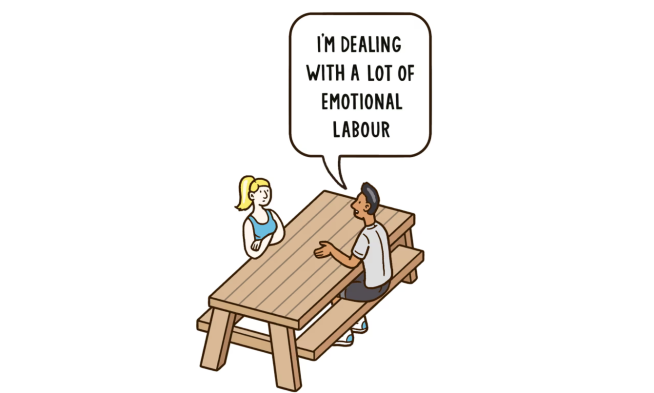
Image source: Phil Hackett/The Observer/ The Guardian
The real danger of therapy-speak isn’t that it exists-it’s that it masquerades as truth while quietly eroding our capacity for nuance, empathy, and accountability. Not every conflict is abuse.
Not every discomfort is trauma. And not every flawed human is a walking DSM entry. We need to retire the faux-clinical theatrics and relearn how to talk to each other without reaching for pathology if we want to reclaim our sanity in a world obsessed with fictional diagnoses.