
SBP Ends Bank Remittance Incentive Schemes From July
July 3, 2026
Pakistan Eyes $1.5 Trillion US Public Procurement Market to Expand Tech Exports
July 4, 2026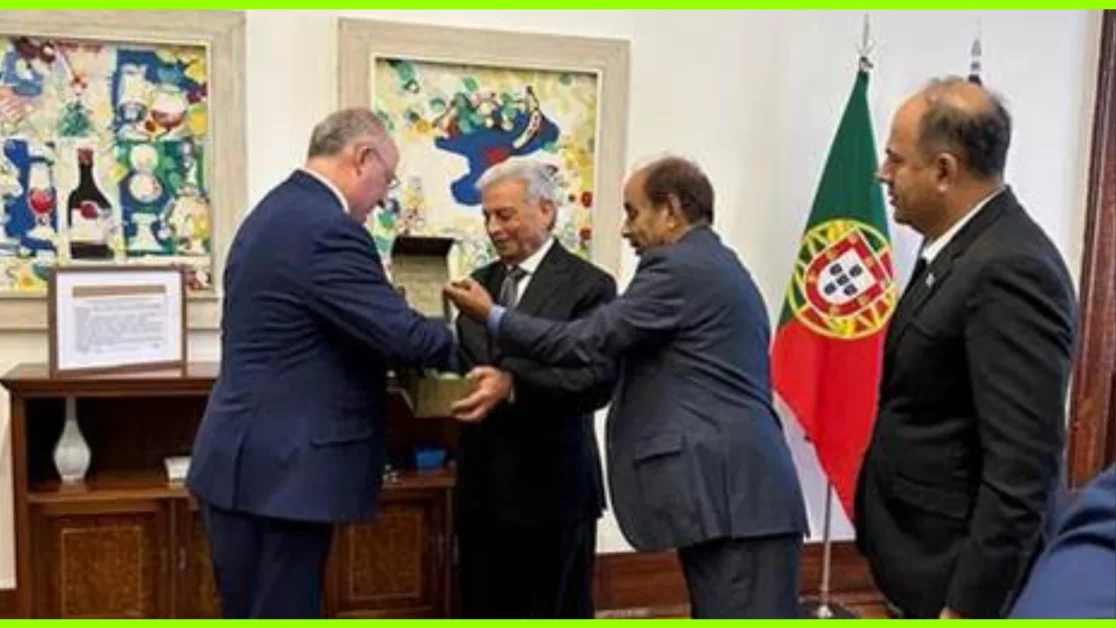
Pakistan has invited Portugal to invest in its rapidly growing olive sector, highlighting opportunities across cultivation, processing, and value-added production
Pakistan is seeking to deepen agricultural cooperation with Portugal by promoting investment opportunities in its expanding olive industry and strengthening collaboration in sustainable farming technologies.
During a meeting in Lisbon, Federal Minister for National Food Security and Research Rana Tanveer Hussain met with Portugal’s Minister for Agriculture and the Sea, José Manuel Fernandes, to discuss bilateral cooperation in agriculture, food security, olive sector development, and climate-resilient farming.
Highlighting Pakistan’s progress under the National Olive Programme, Rana Tanveer noted that more than seven million olive trees have been planted across 55,669 acres. The country’s olive ecosystem has also expanded with the establishment of modern olive oil extraction units, processing facilities, quality testing laboratories, and an evolving value chain designed to support commercial production.
The minister emphasized that Pakistan offers significant investment opportunities throughout the olive industry, including cultivation, processing, packaging, and the development of value-added olive products. He encouraged Portuguese companies to explore joint ventures and public-private partnerships, describing Pakistan as an emerging destination for sustainable agricultural investment.
To attract international investors, Pakistan is offering incentives through the Special Investment Facilitation Council (SIFC) and the Board of Investment (BOI). These include 100 percent foreign ownership, long-term land lease options, duty-free import of agricultural machinery, tax incentives, and streamlined one-window facilitation services.
Beyond investment, both sides explored opportunities to strengthen collaboration in agricultural research and innovation. Discussions covered mechanized harvesting, olive oil extraction technologies, quality certification systems, value addition, and institutional partnerships between research organizations in both countries.
The ministers also exchanged views on promoting climate-smart agriculture through efficient water management, drip irrigation technologies, and sustainable land management practices to improve agricultural productivity while addressing environmental challenges.
Rana Tanveer reaffirmed Pakistan’s commitment to the International Olive Council (IOC) following the country’s accession as a permanent member. He said Pakistan is working to align its national quality standards with international benchmarks to improve the competitiveness of Pakistani olive products in global markets.
As part of efforts to expand bilateral cooperation, the minister invited José Manuel Fernandes to visit Pakistan and observe the progress made under the National Olive Programme while exploring new opportunities in agriculture, trade, technology transfer, and investment.
The Portuguese minister welcomed Pakistan’s achievements in developing its olive sector and expressed interest in expanding cooperation for the mutual benefit of both countries.