
Anthropic Sues Pentagon Over AI Blacklist
March 10, 2026
Pakistan’s 5G Spectrum Auction: What Happened in the First Round of Bidding
March 10, 2026
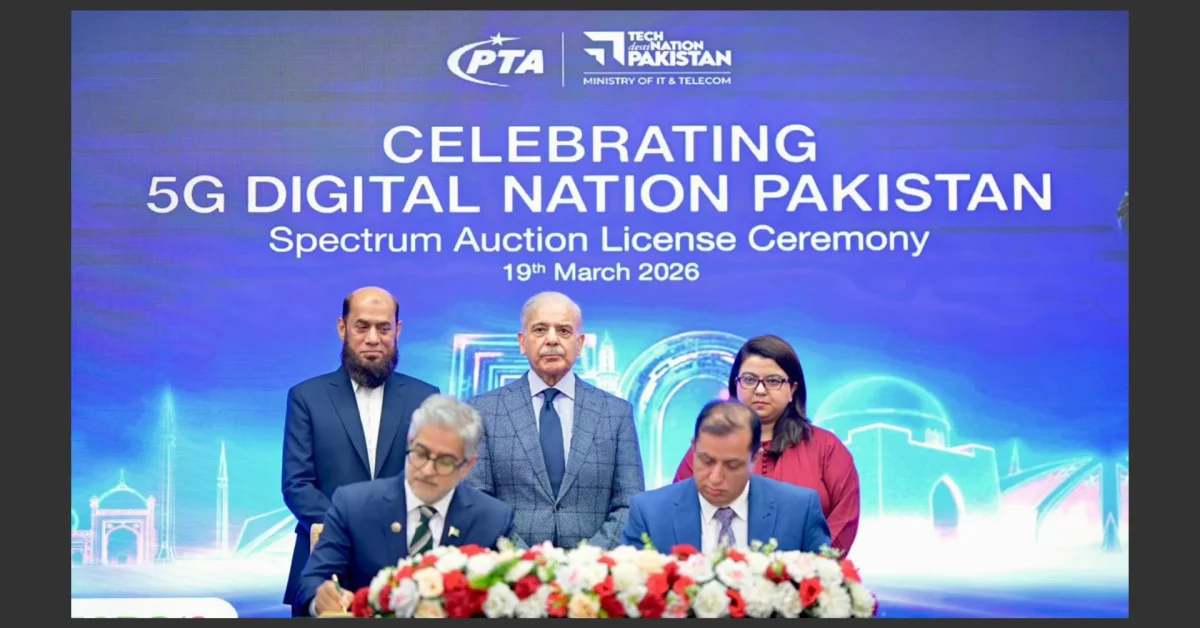
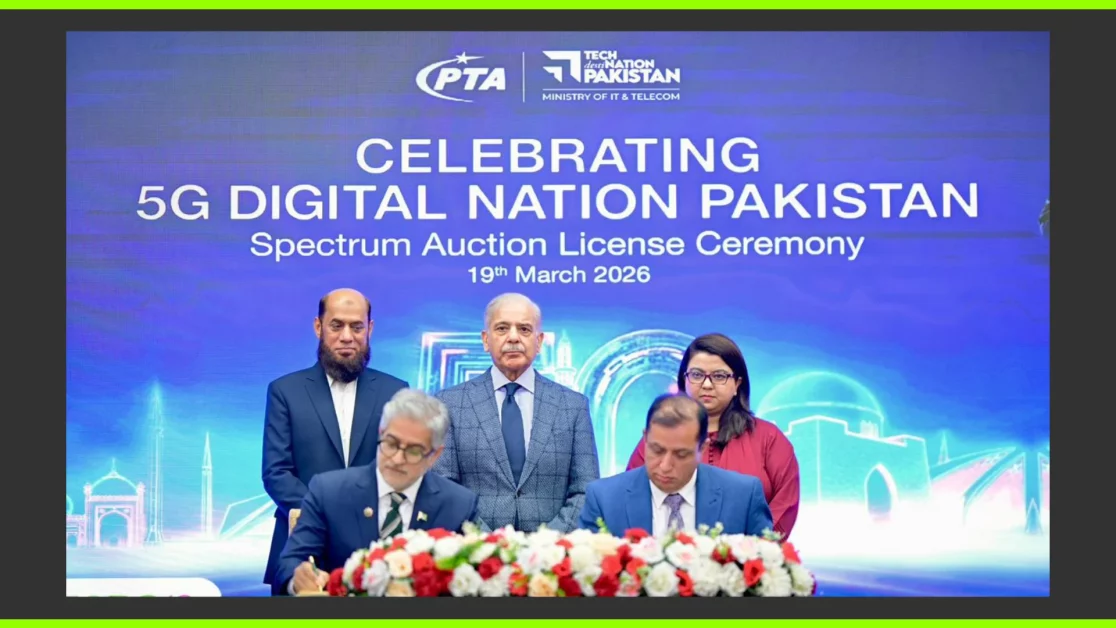
Pakistan’s long awaited 5G spectrum auction officially commenced with senior government leadership outlining how the next phase of connectivity will shape the country’s digital future.
Speaking at the auction ceremony, Federal Minister for IT and Telecommunication Shaza Fatima Khawaja and Finance Minister Muhammad Aurangzeb emphasized that expanding spectrum availability and introducing 5G are essential steps toward building a stronger digital economy.
A Technological Shift Pakistan Cannot Miss
Addressing the audience, IT and Telecom Minister Shaza Fatima Khawaja said the world is currently experiencing a major technological transformation and Pakistan must ensure it does not fall behind.
She noted that Pakistan has not held a major spectrum auction since 2014, which has contributed to many of the connectivity challenges that users experience today.
The auction, she said, marks a turning point not only for the introduction of 5G services in Pakistan but also for improving the quality of existing 4G networks across the country.
“The digital economy is the foundation of Pakistan’s future,” she said, adding that fast, reliable, and accessible internet has now become a basic necessity for every citizen.
Expanding Spectrum for Better Connectivity
The minister highlighted that Pakistan’s spectrum availability has remained limited for decades. Since the expansion of telecommunications technology in 1987, the country has operated with around 274 MHz of available spectrum.
In comparison, neighboring Bangladesh, which has a significantly smaller population, already has nearly 600 MHz of spectrum available for mobile services.
She described the current auction as the largest spectrum auction in Pakistan’s history, adding that even if only a portion of the available spectrum is successfully sold, the country’s overall spectrum capacity could increase substantially.
According to the minister, consumers may begin to see improvements in network quality within the next few months.
Within four to five months, users are expected to experience noticeable improvements in 4G service quality, while the government aims to begin introducing 5G services in major cities such as Karachi and other large urban centers within five to six months.
To support this transition, the government is also preparing a national fibrisation plan that will enable telecom operators to quickly roll out their networks once spectrum is acquired.
Building the Ecosystem for a Digital Economy
Finance Minister Muhammad Aurangzeb, who has served as Chair of the Spectrum Committee for the past year and a half, spoke about the extensive consultations that went into designing the auction framework.
He explained that policymakers had to balance two priorities while structuring the auction: generating government revenue while also creating the right conditions to accelerate Pakistan’s digital transformation.
According to the finance minister, digital transformation should not be seen as an objective in itself.
“Digital transformation is not an end in itself. It is a means to an end — delivering faster, cheaper, and better services,” he said.
He emphasized that stronger digital infrastructure can unlock significant opportunities across sectors, particularly in the IT and IT-enabled services industry, which continues to show strong growth and export potential.
Enabling the Next Phase of Technology
Aurangzeb also linked the spectrum auction to broader national initiatives aimed at building a digital economy. Efforts to strengthen digital infrastructure, expand payment systems, and digitize government services are part of the government’s broader vision for Digital Pakistan.
Looking ahead, he highlighted that emerging technologies such as artificial intelligence, blockchain, and Web 3.0 will depend heavily on robust digital infrastructure.
The transition toward 5G and increased spectrum availability, he said, will be critical in enabling these technologies and supporting innovation across industries.
A Defining Moment for Pakistan’s Digital Future
With the 5G spectrum auction now underway, policymakers see the process as a key milestone in Pakistan’s journey toward a more connected and digitally driven economy.
Beyond introducing 5G, the auction is expected to expand network capacity, improve the quality of existing services, and create the infrastructure needed for new digital industries to grow.
For Pakistan, the decisions made during this auction could shape the country’s digital landscape for the next decade.