
Pakistan, Austria Deepen Trade and Technology Ties
February 19, 2026
Interloop Partners with Oxford Pakistan Programme to Launch Fully Funded Oxford Graduate Scholarship for Pakistani Students
February 19, 2026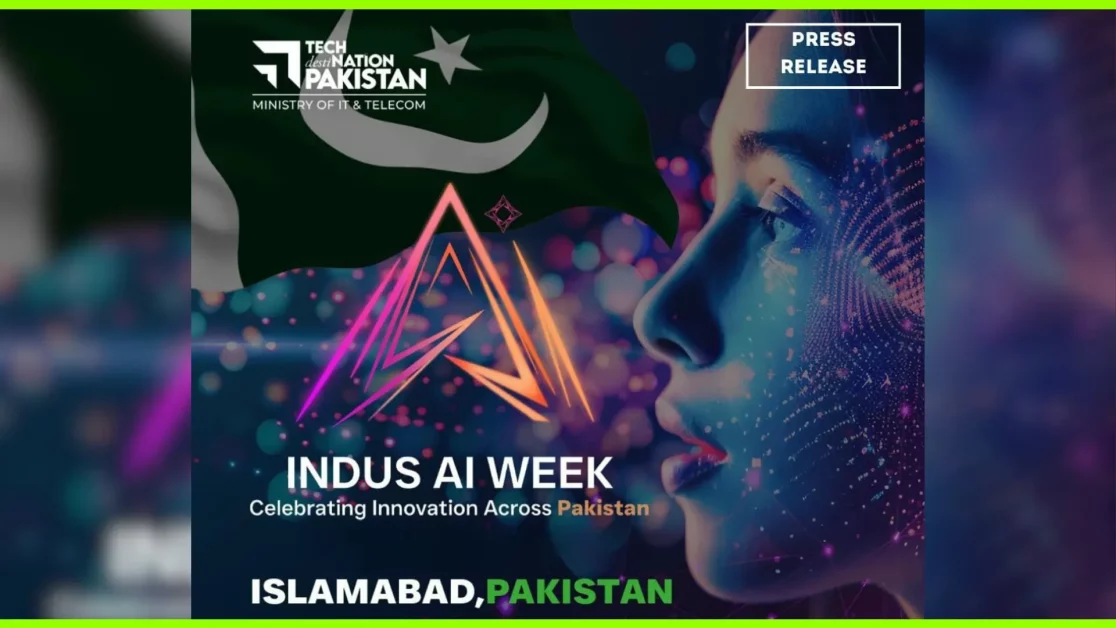
For the longest time, Pakistan’s foray into artificial intelligence had been a purely academic exercise, confined to the safe boundaries of policy drafts and high-level theoretical debates. That era officially ended on February 9. With the arrival of Indus AI Week, the conversation had shifted from policy frameworks to hard currency, turning a week-long series of events into a high-stakes magnet for the country’s most sophisticated engineering talent and high-growth startups.
The primary draw for founders and researchers was the concentration of resources that were usually fragmented across the country. The Indus AI Summit and the subsequent Innovation Arena were not merely showcases. They served as the definitive clearinghouse for the next cycle of AI investment in Pakistan. By bringing together the Ministry of IT and Telecommunication and local and international venture capital partners, the event had created a rare environment where technical validation translated directly into balance sheet strength.
A central pillar of this talent magnet was the Uraan AI Techathon 1.0, a multi-phase national challenge designed to filter for the top one percent of Pakistan’s developers. The incentives for those who survived the technical evaluation were substantial. The Gold Champion was set to receive 2.5 million rupees in equity-free capital, while the Silver and Bronze winners walked away with 2 million and 1.5 million rupees respectively. For a pre-seed startup, these non-dilutive grants provided the critical runway needed to move from prototype to product without giving up early ownership.
Beyond the immediate cash prizes, the real value proposition for elite talent lay in the post-event infrastructure. Winners and high-performing finalists were funneled into a structured incubation and mentorship phase. This period provided access to specialized cloud resources, technical support, and most importantly, pilot opportunities with public and private sector stakeholders. In an economy where procurement cycles could be notoriously long, the chance to secure a government pilot through the GovTech or DefenceTech showcases was a massive competitive advantage.
The Technology and Innovation Hub at the Islamabad Sports Complex was where this talent met the market. With over 50 local and global investors expected to attend, the Technology and Innovation Hub of Indus AI Week had become the most coveted real estate for AI founders. The criteria for selection were rigorous, prioritizing working products and live demos over simple slide decks. For the startups selected to exhibit, the event offered a direct line to life-changing resources. The pavilion also acted as a high-velocity matchmaking floor where founders could secure the lead VC commitment required for larger funding rounds.
There was also a significant focus on inclusivity through the AI for Her initiative. By highlighting the top women-led AI startups in a dedicated pavilion, the organizers were addressing a specific market gap. These female founders were connected with gender-lens investors and provided with a platform to demonstrate how inclusive AI could solve national-scale problems in healthcare, education, and fintech.
For individual engineers, the week served as a high-visibility stage to prove their skills. As local tech giants and global companies looked to identify the next generation of AI experts, the technical showcases and training bootcamps provided a pre-vetted pool of talent. These sessions allowed top-tier developers to demonstrate their capabilities in real-time, making it less about looking at a resume and more about seeing who could actually build the future.
Ultimately, Indus AI Week became a magnet because it treated AI talent as a premium asset. It offered a rare combination of immediate liquidity through prize money, long-term stability through incubation, and market access through investor matchmaking. For Pakistan’s elite AI talent, the message was clear. If you were building the future, this was the only place to be in February.