

JS Bank Earns Three Asian Banking Finance Awards
July 22, 2026
Pakistan Seeks $10 Billion US Reserve Support Facility
July 23, 2026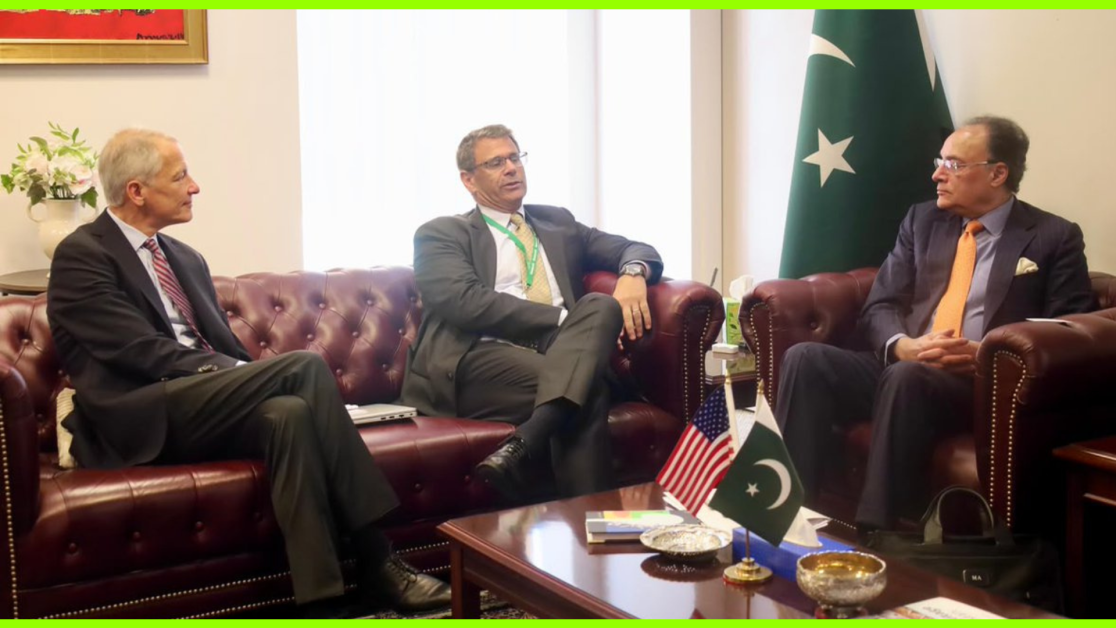
Finance Minister Muhammad Aurangzeb and Honeywell Technologies have discussed modernising Pakistan’s refineries, including technology upgrades and potential international financing.
Finance Minister Senator Muhammad Aurangzeb has discussed plans to modernise and expand Pakistan’s refinery sector with a delegation from Honeywell Technologies, as the government explores ways to strengthen domestic fuel production and reduce dependence on imported petroleum products.
The meeting, held during Aurangzeb’s visit to the United States, was attended by Honeywell Vice President and General Manager Barry Glickman, according to a statement issued by the Ministry of Finance.
The discussions focused on Honeywell’s refining technologies and equipment, along with possible financing arrangements involving the US EXIM Bank, the US International Development Finance Corporation (DFC), export credit agencies and international banks.
The finance minister welcomed the proposed investment and technology-led upgrade of the country’s refining infrastructure, saying the initiative could contribute to energy security, industrial development and long-term economic growth.
The government has been pushing for improvements in Pakistan’s refining capacity as the sector faces several structural challenges. Most local refineries rely on ageing and relatively basic technologies, resulting in higher production of furnace oil and limited output of higher-value fuels such as petrol and diesel.
The sector also faces pressure from weak refining margins, financing constraints across the energy chain and the substantial capital required to upgrade facilities and meet Euro-V fuel standards.
Pakistan’s refining industry currently includes five major operators: Pak-Arab Refinery Company (PARCO), Attock Refinery Limited, National Refinery Limited, Pakistan Refinery Limited and Cnergyico.
The proposed modernisation comes as Pakistan continues efforts to improve domestic fuel security and reduce its exposure to international supply disruptions and the cost of importing refined petroleum products.
During his US visit, Aurangzeb is also scheduled to engage with officials from the Office of the US Trade Representative, US EXIM Bank, DFC and the International Monetary Fund.
The meetings with US financing and development institutions are expected to explore potential support for infrastructure, energy and private-sector projects in Pakistan.
The discussions also take place amid ongoing Pakistan-US engagement on trade and economic ties, including negotiations concerning tariffs, market access, investment and opportunities to expand bilateral commerce.
For Pakistan, upgrading its ageing refining infrastructure remains a key part of efforts to improve fuel availability, strengthen energy resilience and lower the country’s petroleum import burden.