
Punjab Secures €15 Million For Public Solar Projects
March 12, 2026
FWO Developing Anti-Theft M-Tag Chip for Motorcycles
March 13, 2026
Cricket Viewing Frequency
The majority of respondents indicated that they watch cricket only during major tournaments or high-profile matches (ODI, T20, PSL). A smaller portion reported watching cricket regularly, while some indicated rare engagement.
Insight:
Cricket consumption appears to be event-driven rather than habitual in this sample. Major tournaments such as the Pakistan Super League and the ICC Cricket World Cup likely drive spikes in viewership.
Implication:
Streaming platforms may benefit from tournament-based marketing campaigns and event-focused promotional offers.
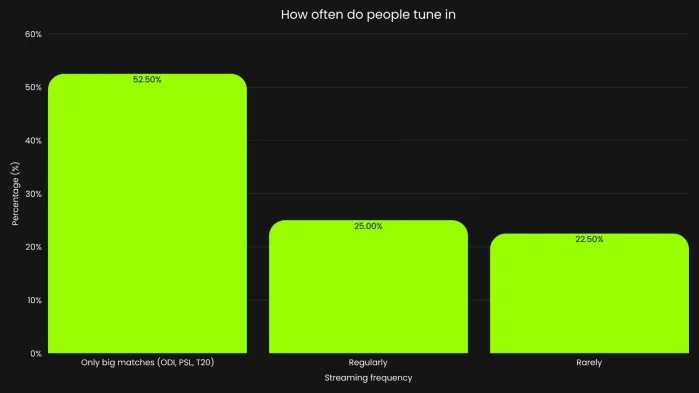
This chart shows how frequently respondents watch cricket, highlighting whether viewers watch regularly, occasionally, or mainly during major tournaments.
Primary Device for Watching Cricket
Television emerged as the dominant medium for cricket consumption. While mobile and laptop streaming were present, they did not surpass traditional TV usage.
Insight:
Despite increasing digital penetration, traditional TV continues to dominate cricket consumption within this sample.
Implication:
Digital platforms have not fully replaced cable broadcasting. A hybrid broadcast + digital strategy may be more effective than a digital-only model.
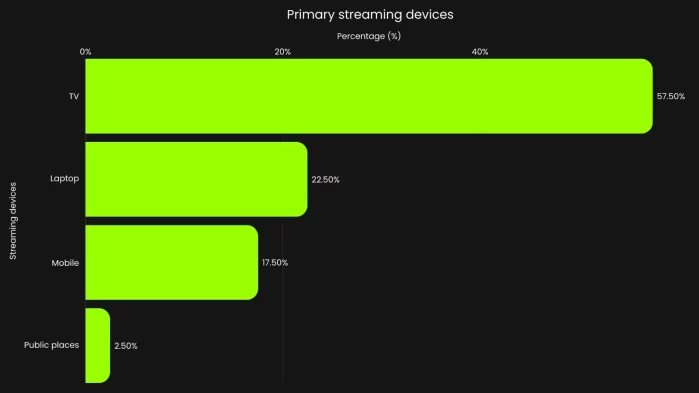
This visualization presents the main devices respondents use to watch cricket, comparing television, mobile streaming, laptops, and other viewing options
Willingness to Pay for High-Quality Streaming
A majority of respondents indicated that they are not willing to pay for high-quality cricket streaming. A moderate segment selected “Maybe,” while only a small proportion responded “Yes.”
Insight:
The audience demonstrates high price sensitivity toward paid streaming services.
Implication:
Subscription-only premium models may face adoption challenges. Instead, platforms may consider: Freemium models (free with advertisements), Telecom data bundle partnerships, Tiered pricing structures
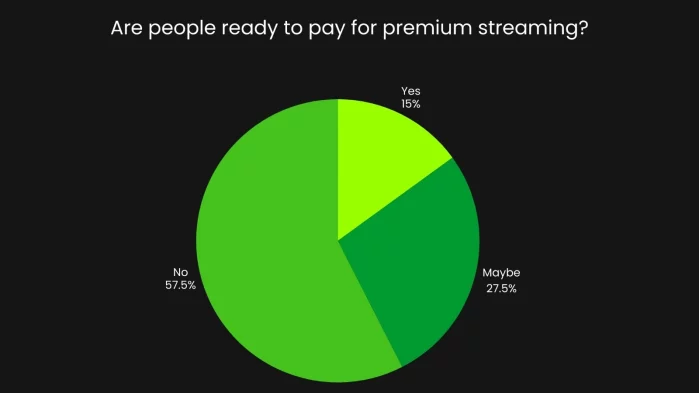
This chart illustrates respondents’ willingness to pay for premium cricket streaming services, categorizing responses into Yes, No, and Maybe.
Acceptable Monthly Price for Streaming
The median acceptable monthly price was approximately 100 PKR, indicating strong sensitivity toward subscription costs. Although the average was higher, it was influenced by a small number of high-value responses.
Insight:
Most respondents cluster around low-cost expectations, reinforcing the pricing challenge in digital streaming markets.
Implication:
Affordable entry-level packages may drive higher adoption rates compared to premium-only offerings.
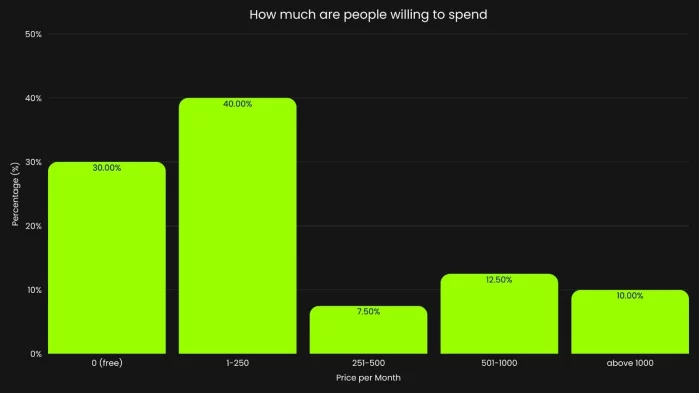
This visualization displays the distribution of acceptable monthly subscription prices respondents are willing to pay for cricket streaming services.
Platform Usage Distribution
This section analyzes the distribution of cricket streaming platforms used by people, highlighting preferences across legal services such as Tamasha and Tapmad and illegal or traditional viewing options.
Insight:
The distribution highlights some important market dynamics: Digital streaming platforms are gaining adoption. Illegal streaming is reducing but still exists. Traditional TV continues to coexist with digital platforms.
Implication:
Legal streaming platforms must differentiate through: Better user experience and stable streaming quality. While, to reduce piracy reliance, awareness campaigns promoting legal platforms could be beneficial. Moreover, hybrid consumption patterns suggest that digital transformation in cricket streaming is ongoing but not complete.
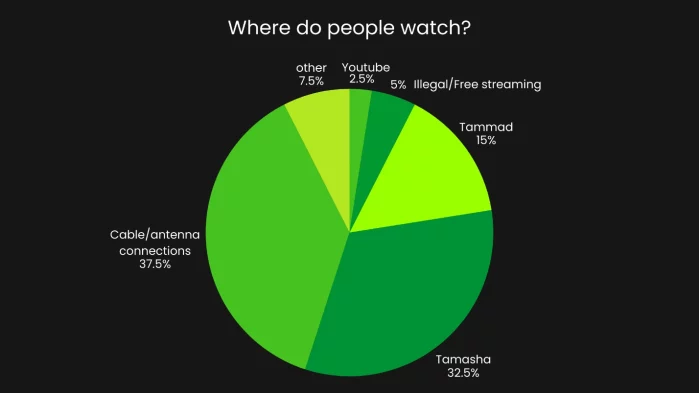
This chart shows the distribution of streaming platforms used by respondents, including services such as Tamasha, Tapmad, YouTube, and illegal or traditional viewing options.
Streaming Connections Used
This section analyzes the types of internet connections respondents use when streaming cricket content. Understanding connection preferences helps highlight the role of network infrastructure in enabling digital streaming access.
Insight
WiFi dominates streaming access, with approximately 72.5% of respondents reporting that they primarily stream cricket using WiFi connections. Among mobile networks, Jazz accounts for about 15% of streaming connections in the sample. Other connection types represent roughly 10%, suggesting some diversity in connectivity options. Usage of Ufone is minimal, accounting for around 2.5% of respondents.
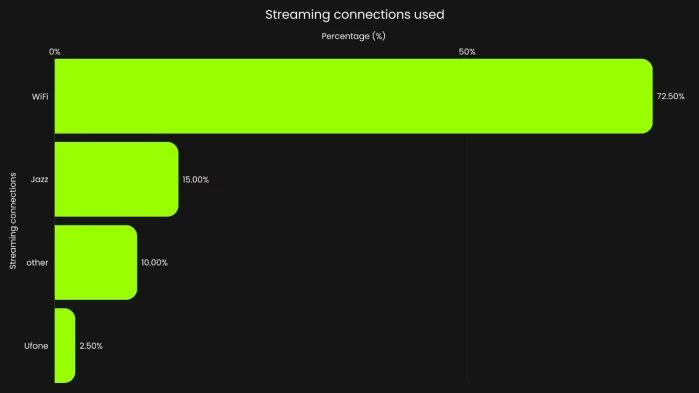
This chart highlights the types of internet connections respondents use for streaming cricket, including WiFi and mobile networks such as Jazz and Ufone
Implications
The strong reliance on WiFi suggests that users prefer stable and high-bandwidth connections for watching long-duration live sports events. Mobile data costs may discourage heavy streaming through cellular networks. Partnerships between streaming platforms and telecom providers could help expand mobile streaming adoption through data bundles or subsidized packages.
Audience Age Distribution
This section examines the age distribution of survey respondents in order to understand which demographic groups are most actively engaged with cricket streaming.
Insight:
The 19–25 age group represents the majority of respondents (65%), indicating strong engagement from young adult viewers. The 26–35 age group accounts for 32.5% of respondents, suggesting continued interest among slightly older but still digitally active audiences. Under-18 respondents represent only 2.5% of the sample, indicating limited participation from teenage viewers in this survey.
Implications:
Cricket streaming platforms may benefit from focusing on young adult audiences, who appear to be the most engaged demographic group. Marketing strategies targeting university students and early career professionals could be effective. Future research could investigate whether older age groups prefer traditional television broadcasting over digital streaming platforms.
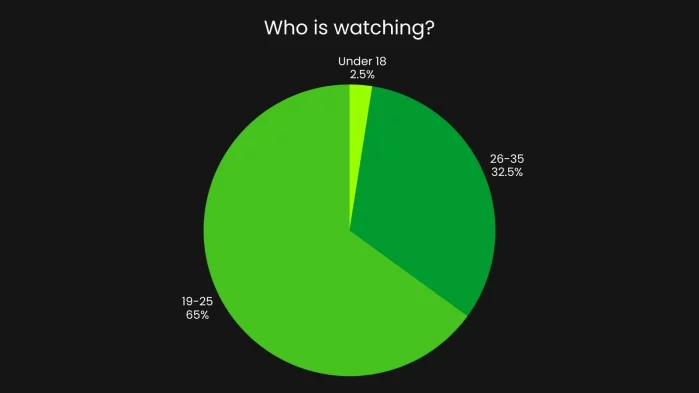
This pie chart illustrates the age distribution of respondents, showing which age groups are most represented in the survey sample.
Conclusion
The findings from this exploratory survey highlight several important trends shaping cricket streaming consumption in Pakistan. Viewership appears to be largely event-driven, with most audiences tuning in during major tournaments rather than following cricket regularly. Despite the rise of digital platforms, traditional television remains the dominant viewing medium, indicating that the transition from broadcast to digital streaming is still evolving.
The study also reveals strong price sensitivity among viewers, with most respondents unwilling to pay for premium streaming services and preferring very low subscription costs. This suggests that streaming providers may benefit from adopting hybrid monetization models such as freemium services, ad-supported content, or telecom bundle partnerships. Additionally, the widespread use of WiFi for streaming indicates that stable internet connectivity plays a key role in enabling digital sports consumption.
Demographically, the audience is heavily concentrated among young adults aged 19–25, highlighting a digitally engaged segment that streaming platforms can target through tailored marketing strategies. Overall, the results suggest that while digital cricket streaming is gaining traction, it currently coexists with traditional broadcasting and faces challenges related to pricing expectations and consumer behavior. Future research with larger and more diverse samples could provide deeper insights into long-term shifts in cricket media consumption in Pakistan.