
IFC Backs Women Entrepreneurs With $10m Pakistan Loan
August 24, 2026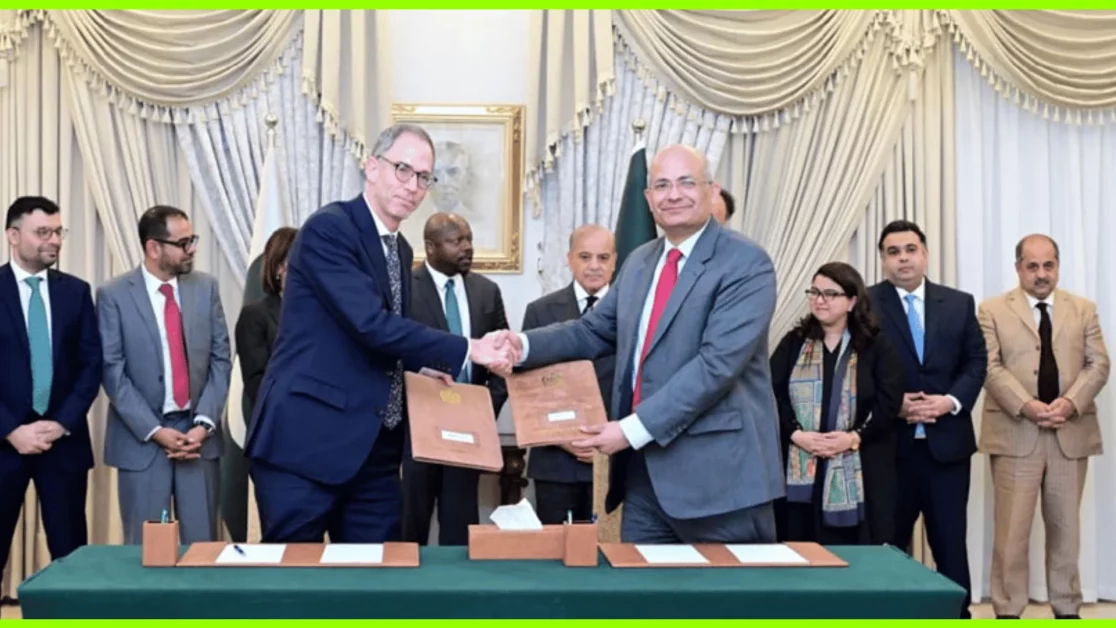
Pakistan and Google have signed an MoU to accelerate digital transformation, with cooperation covering AI adoption at the Federal Board of Revenue (FBR), digital skills, IT exports, student access to AI tools, an AI Centre of Excellence, digital payments, agriculture and technology-sector growth.
Pakistan and Google have signed a Memorandum of Understanding (MoU) aimed at accelerating the country’s digital transformation, expanding artificial intelligence (AI) adoption and strengthening digital skills, with the partnership specifically including support for the Federal Board of Revenue (FBR) to deploy AI as part of its wider digitalisation and transformation programme.
According to Profit by Pakistan Today, the agreement was signed in the presence of Prime Minister Muhammad Shehbaz Sharif and covers cooperation between Pakistan and Google across government digitalisation, AI, education, IT exports and innovation. Business Recorder reported separately that the agreement is designed to support Pakistan’s ambition of taking its IT exports and digital economy to $30 billion by 2030.
One of the most important elements of the agreement is the proposed use of AI within the FBR. Under the Prime Minister’s FBR transformation plan, Google will support the tax authority in using AI to “improve public service delivery, streamline operations and accelerate digitalisation.” The cooperation could help the FBR strengthen data-driven processes and modernise its interaction with taxpayers while improving the efficiency of internal government operations.
The agreement also has a major human-capital component. Google will explore expanding its Google Career Certificates programme in Pakistan, with a target of providing 150,000 certificates during 2026. The programme is intended to give young Pakistanis market-oriented skills in high-demand technical fields and improve their employment prospects in an increasingly digital global economy.
Education is another major pillar. Pakistani students are expected to receive one year of free access to advanced AI tools, including Google AI Plus and Gemini, enabling them to use AI-powered technologies for learning, research and productivity. The Prime Minister’s Office described this as part of the broader effort to equip Pakistan’s young population with modern technology.
Prime Minister Shehbaz Sharif welcomed the agreement as an important step in Pakistan’s digital transformation. According to The Nation’s coverage of the signing, he described it as “a wonderful day in our partnership” and called the agreement “a stepping stone towards a long journey of contributing towards a field that is very important.” He also highlighted Pakistan’s young population, saying, “We have a youth bulge and we can really turn around Pakistan’s fortunes.”
The partnership will also establish an AI Centre of Excellence in Islamabad. The centre is expected to train Pakistani youth and develop a workforce aligned with international technology-market requirements. The initiative comes as Pakistan seeks to build a stronger domestic AI ecosystem rather than simply consume imported technologies.
Beyond government and education, Pakistan and Google will explore AI applications in agriculture, including crop monitoring, yield forecasting and sustainable farming. Digital platforms will also be developed or explored to help small and medium-sized enterprises gain access to international markets.
The MoU further covers Pakistan’s mobile application and gaming industries, digital payments and digital commerce. A joint task force comprising representatives from the government, Google and relevant industry stakeholders will work on a roadmap for improving IT exports and international competitiveness. The task force will identify barriers to growth and explore opportunities for investment, skills development and access to global markets.
The agreement follows Google’s recent expansion of its presence in Pakistan. The company opened an Islamabad office earlier in August, describing the move as a milestone after more than a decade of engagement in the country. Google has also said it has supported the upskilling of more than one million Pakistanis.
The Ministry of IT and Telecommunication said the partnership had been developed over an extended period, describing it as an initiative designed to create “a young generation ready for the volatile, uncertain, complex and ambiguous, yet hopeful and full of potential, world AI has created.”
The wider significance of the agreement lies in its combination of government AI adoption, workforce development, education, IT exports and private-sector digitisation. Rather than focusing on a single technology project, the partnership establishes a broader framework for Pakistan’s digital economy.
For the FBR, the AI component could become particularly significant as the government seeks to modernise tax administration, improve public services and make greater use of data. For Pakistan’s technology sector, the agreement could provide new opportunities for skilled workers, startups, application developers, gaming companies and SMEs.
The government’s stated ambition is ultimately much larger: to build a digitally enabled economy capable of competing internationally. With Google’s technology, training programmes and AI expertise being brought into the partnership, the MoU represents another step in Pakistan’s effort to turn its large young population into a competitive digital workforce.