
Bitget Plans Pakistan Market Entry Push
June 7, 2026
Hisense’s Pakistan Entry Signals Manufacturing Push, Jobs Growth
June 8, 2026
Privacy didn’t disappear. We traded it away.
Digital surveillance is usually imagined as something sinister. Hidden cameras. Government agents. Some Orwellian control room packed with screens.
Reality turned out to be much smarter.
Nobody forced tracking devices into our pockets. Nobody demanded we carry microphones, cameras, GPS trackers, and biometric scanners everywhere we go. We bought them ourselves. Then we upgraded them every couple of years.
That’s what makes modern surveillance different from anything that came before it. Previous generations worried about being watched. Our generation built entire lifestyles around being connected, tracked, measured, and analysed.

Matthew Henry; Unsplash
We share our locations with friends and unlock phones with our faces. We wear watches that monitor our sleep, ask smart speakers to manage our homes, and post photos before we’ve even left the airport.
The most powerful surveillance system in history didn’t succeed because it forced compliance. It succeeded because it made participation feel useful.
Why convenience defeated privacy
For most of modern history, surveillance made people uncomfortable. Governments collecting information raised concerns. Corporations gathering personal data sounded invasive.
People understood a simple truth: information is power.
Somewhere along the way, convenience won the argument.
Today, most people carry devices capable of tracking their location, purchases, movements, interests, relationships, and habits. Not because they have no choice, but because modern life feels annoying without them.
Need directions? Open Google Maps. Need a ride? Open Uber. Need entertainment? Open TikTok. Need to know where your friends are? Open Snapchat.
Every one of those services solves a real problem. That’s why people use them. But every solution also creates another stream of personal information flowing back to a company somewhere.
The genius of digital surveillance is that it stopped looking like surveillance.
Spotify Wrapped is basically a yearly report on your listening habits, yet millions proudly share it online. Snapchat normalized broadcasting your location. Facial recognition turned your face into a password.
Even fitness trackers deserve attention. People willingly upload heart rates, sleep patterns, exercise habits, and movement data to the cloud every day.
Surveillance wrapped in convenience doesn’t feel threatening. It feels helpful. That’s the trick.
The surveillance states imagined in dystopian novels relied on fear. The systems we live with today rely on comfort. People are easier to monitor when they’re enjoying themselves.
Every permission request is a data transaction
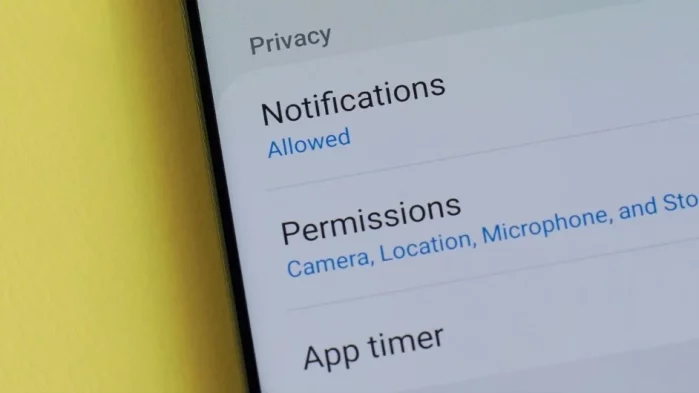
Think about the last app you downloaded. Did you read every permission request? Probably not.
SA Technologies; LinkedIn
Most people see requests for camera access, microphone access, contacts, photos, and location tracking, then immediately hit “Allow” because they want the app to work.
That moment matters more than it seems. Every permission request is a transaction. The app offers convenience, entertainment, or functionality. In exchange, you provide access to information about yourself.
Most users think they’re simply agreeing to use a service. In reality, they’re entering a relationship where their data has value.
A fitness app may help track workouts while collecting movement patterns. A navigation app may help avoid traffic while gathering location data from millions of users. A shopping app may simplify purchases while learning spending habits and preferences.
The service is real. The data collection is real too. Both things can be true at the same time.
What’s remarkable is how quickly society accepted this arrangement. Twenty years ago, voluntarily sharing your real-time location with a corporation would have sounded ridiculous.
Today, people get annoyed when location services are disabled. We like to pretend people don’t understand what’s happening. I don’t buy that anymore.
Most people know they’re giving away information. They simply value convenience more than privacy.
That’s the uncomfortable truth.
You thought you were using the product
Nothing captures this better than Pokémon Go.
Back in 2016, millions of people flooded parks, streets, and shopping centers chasing virtual creatures. It looked like a gaming craze, and it absolutely was.
But there was another layer.
Behind the game sat an enormous stream of location and mapping data generated by real human movement. People thought they were catching Pokémon. The platform was learning how people moved through physical space.
Once you notice that pattern, you start seeing it everywhere.
Take Waze. Drivers use it to avoid traffic, but the app works because millions of users constantly feed transportation data back into the system.
Look at Strava. Runners and cyclists track workouts while generating detailed movement maps. In one famous case, publicly available heat maps exposed activity around military installations because soldiers unknowingly revealed movement patterns.
Amazon Ring turned doorbell cameras into neighbourhood surveillance networks. Tesla collects huge amounts of driving data from vehicles on the road. Netflix studies viewing habits to improve recommendations.
Then there’s 23andMe.
Millions of people willingly handed over their DNA because they wanted to learn about their ancestry. Imagine explaining that sentence to someone in 1995.
Even TikTok deserves attention. The platform can often figure out your interests, political views, sense of humour, and attention span faster than some of your friends can.
None of these services are fake. They provide real value.
The point is that the service people think they’re using is often only half the story. The behaviour generated by users can be just as valuable as the product itself.
Sometimes it’s more valuable.
Why AI companies value human behaviour
Now we’re watching the same pattern unfold with artificial intelligence.
People often ask why so many AI tools are available for free or at surprisingly low prices. The answer is simple.
Human behaviour has become one of the most valuable resources on Earth.
To be clear, this doesn’t mean every conversation automatically trains every AI model. Different companies have different policies.
But user interaction itself has enormous value.
Every prompt reveal intent. Every correction reveals preference. Every conversation reveals how people communicate, solve problems, search for information, and make decisions.
The industrial economy was built on oil, steel, and land. The information economy is built on behaviour.
What do people search for? What captures attention? What makes someone click? What keeps users engaged?
Those questions are worth billions. AI companies understandably focus on breakthroughs and technology. That’s the exciting part.
What gets less attention is that human behaviour has become a resource in its own right. Not oil. Not gold.
Behaviour.
The most valuable companies in the world increasingly derive power from understanding people at scale.
We think we’re testing artificial intelligence. Artificial intelligence companies are studying us too.
Not necessarily as individuals, but certainly as patterns. And in the modern economy, patterns are where power lives.
The most successful surveillance system ever built
When people hear the word surveillance, they immediately think about governments. That’s only part of the story.
Modern surveillance is corporate, social, technological, commercial, and increasingly invisible.
The Cambridge Analytica scandal showed how personal information and behavioural profiling could influence political campaigns. Social media platforms build detailed profiles based on interests, relationships, and engagement patterns.
Facial recognition systems continue expanding across public and private spaces.
In countries like Pakistan, NADRA-linked SIM registration systems have connected digital activity to verified identities in ways previous generations could barely imagine. Similar systems exist around the world in different forms.
The infrastructure keeps expanding, not because citizens demanded surveillance, but because they demanded convenience.
That’s the uncomfortable part. Every society accepts some level of monitoring. The real debate has never been whether surveillance exists.
The debate is where the line should be drawn and who gets to draw it.
Pexelle
Right now, many of those decisions are being made by organizations most people never interact with directly. Data brokers, advertising networks, analytics firms, technology platforms, and machine learning companies quietly shape how information is collected and used.
Most people never notice because the experience feels seamless. Convenient. Personalized. The greatest achievement of modern surveillance is not that it watches billions of people. It’s that billions of people willingly participate in it every day.
We keep imagining surveillance as something that arrives with police officers, warrants, and cameras mounted on street corners.
In reality, it arrived as free navigation, free social media, free cloud storage, free entertainment, and now free artificial intelligence.
Nobody kicked down the door. Most of us downloaded the app, clicked “Accept,” and moved on. That’s what makes this moment different from every surveillance system that came before it.
The defining political question of our generation may not be who controls information. It may be how much of ourselves we handed over before realizing information was power all along.