

JazzCash Launches Sehat+ for Digital Health Services
March 26, 2026
Government Finalises App-Based Fuel Quota Distribution System
March 26, 2026
As Pakistan expands 4G coverage and prepares for 5G, geopolitical disruptions to global shipping routes could create unexpected risks for telecom infrastructure deployment.
In an increasingly connected world, even distant geopolitical conflicts can ripple through national digital infrastructure.
The recent escalation in tensions between Iran, the United States, and Gulf countries has begun to disrupt global shipping routes and increase energy prices. While such conflicts are often viewed through the lens of oil markets or regional security, they can also have less visible but equally significant consequences for sectors that rely on global supply chains — including telecommunications.
For Pakistan, where digital connectivity is rapidly expanding and preparations for 5G are underway, supply chain disruptions could slow infrastructure deployment, increase costs, and delay the next phase of the country’s digital transformation.
Pakistan’s Telecom Sector at a Critical Growth Stage
Pakistan’s telecom industry has grown significantly over the past decade and is now a cornerstone of the country’s digital economy.
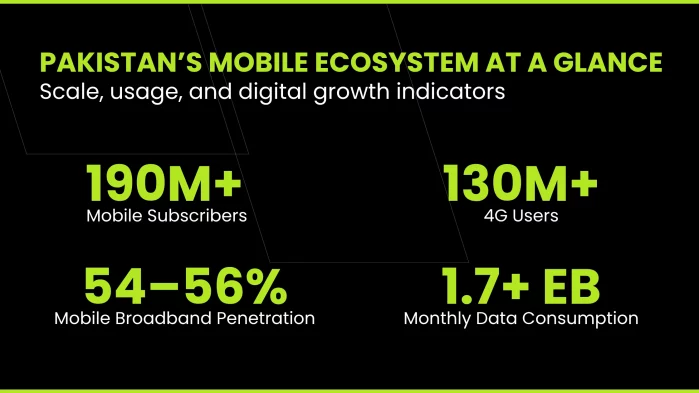
According to the Pakistan Telecommunication Authority (PTA):*
- Pakistan has over 190 million mobile subscribers
- 4G users exceed 130 million
- Mobile broadband penetration is around 54–56 percent
- Monthly mobile data consumption exceeds 1.7 exabytes
At the same time, Pakistan is preparing for its next major technological leap. The government has signaled plans to move toward 5G spectrum auctions, which will require substantial upgrades to telecom infrastructure.
These upgrades involve:
- expansion of 4G coverage in underserved areas
- fiber backbone deployment across the country
- modernization of radio access networks (RAN)
- investment in data centers and edge computing
However, most of the equipment required for these projects is imported.
Why Telecom Infrastructure Is Vulnerable to Global Disruptions
Despite being a domestic service, telecom infrastructure depends heavily on international manufacturing and logistics networks.
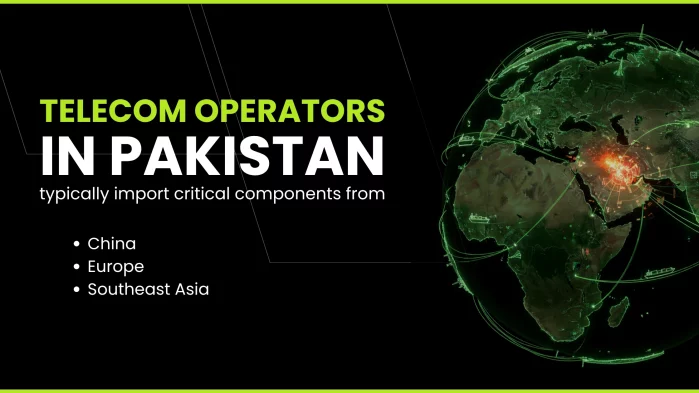
Telecom operators in Pakistan typically import critical components from China, Europe, and Southeast Asia, including:
- antennas and remote radio units for base stations
- baseband processing equipment
- microwave radios for transmission links
- fiber optic cables
- lithium batteries used for telecom tower power systems
If geopolitical tensions disrupt shipping routes, ports, or energy prices, the flow of this equipment can slow down.
For telecom infrastructure programs that operate on tightly coordinated deployment schedules, even small delays can create cascading effects.
Potential Impact on Telecom Operators
If the disruption to logistics continues for several weeks, telecom operators could face multiple operational challenges.
Delayed Network Rollouts
Projects such as 4G expansion, fiber backbone development, and future 5G readiness programs rely on synchronized equipment deliveries. Delayed shipments can push rollout timelines back by weeks or months.
Regulatory and Contractual Risks
Operators typically commit to:
- spectrum rollout timelines
- coverage obligations set by regulators
- vendor delivery schedules
Delays in equipment supply can therefore result in missed milestones or contractual penalties.
Financial Pressure
Telecom operators may also face a double financial impact:
- capital expenditure commitments already locked into infrastructure investments
- delayed revenue from new services due to postponed deployments.
Network Capacity Constraints
If network expansion slows while data demand continues to rise, operators may experience:
- increased network congestion
- declining quality of service
- higher risk of customer dissatisfaction.
The Broader Strategic Risk
If supply chain disruptions persist for four to eight weeks, telecom infrastructure programs could experience:
- rollout delays of one to two months
- 15–40 percent increases in logistics costs due to higher fuel prices and rerouted shipping
- project rescheduling and capital expenditure overruns
- slower adoption of next-generation mobile services.
For a country pursuing rapid digital transformation, such delays could temporarily slow the expansion of connectivity in underserved areas and delay progress toward future technologies.
What Policymakers Can Do
Because telecommunications is a critical component of national infrastructure, governments can play an important role in mitigating disruption.
Regulatory Flexibility
Regulators may consider temporary measures such as:
- extending spectrum rollout deadlines
- relaxing coverage obligations during supply disruptions
- pausing penalties related to delayed deployments.
During the COVID-19 pandemic, many global telecom regulators adopted similar approaches to maintain network expansion momentum.
Financial Support Mechanisms
Short-term policy support could include:
- low-interest infrastructure financing
- tax incentives for network investment during periods of global uncertainty.
Building Long-Term Supply Chain Resilience
The current geopolitical tensions highlight a structural challenge facing many countries: telecom networks are built locally, but their supply chains are global.
To reduce vulnerability to future disruptions, Pakistan could explore longer-term initiatives such as:
- encouraging local assembly of telecom equipment
- expanding domestic fiber cable manufacturing
- strengthening regional logistics partnerships
Conclusion
Pakistan’s digital future depends on the continued expansion of telecom infrastructure. Yet the events unfolding thousands of kilometers away demonstrate how interconnected today’s technology ecosystem has become.
Geopolitical shocks do not only affect oil prices or global politics — they can also slow the rollout of mobile networks, delay digital services, and increase the cost of connectivity.
Strengthening supply chain resilience and fostering closer coordination between policymakers and telecom operators will therefore be essential to ensure that Pakistan’s digital transformation continues uninterrupted.
Policy Insight:
Telecom networks may operate locally, but their supply chains are global. Strengthening supply chain resilience through diversified sourcing, regulatory flexibility, and government–industry coordination will be essential to protect Pakistan’s digital infrastructure from future geopolitical disruptions.