
Google Reimagines Search With Major AI-Powered Internet Shift
May 24, 2026
FBR Mandates Digital Monitoring for Packaged Milk Producers
May 25, 2026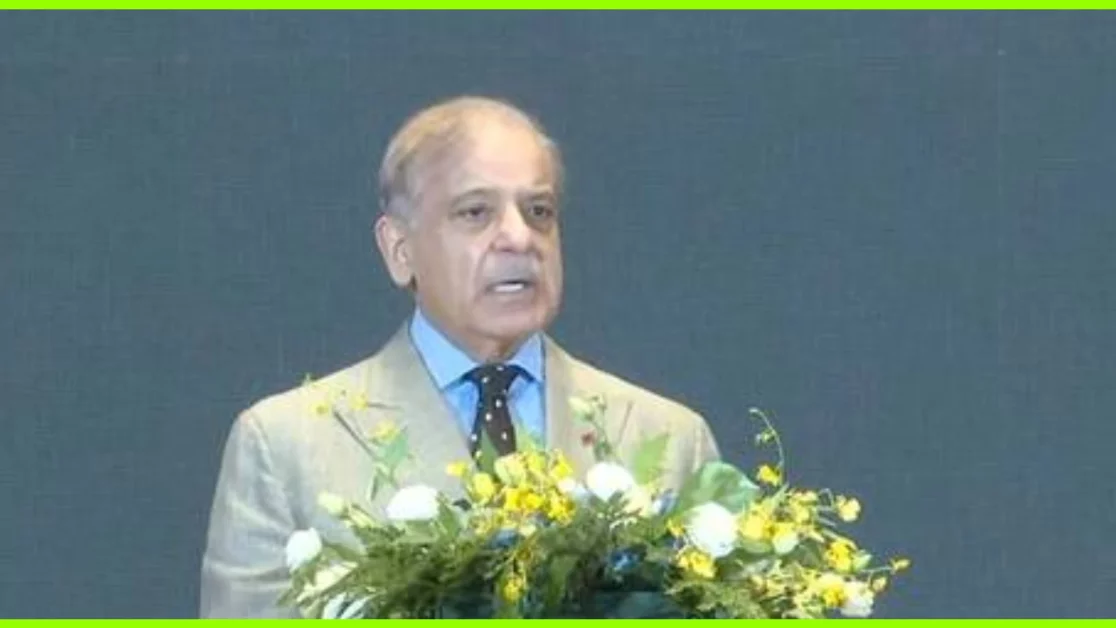
Pakistan aims to expand agricultural exports to China by $10 billion within 5–7 years, as PM Shehbaz Sharif urges deeper bilateral cooperation during his visit to Hangzhou.
Pakistan is setting an ambitious target to boost its agricultural exports to China by $10 billion within the next five to seven years, Prime Minister Shehbaz Sharif announced at the Pakistan-China B2B Investment Conference in Hangzhou. The event brought together officials and representatives from nearly 500 companies from both nations to explore new avenues of cooperation.
Sharif, who began a four-day visit to China on Saturday, underscored the importance of expanding trade and investment ties. His trip coincides with the 75th anniversary of Pakistan-China diplomatic relations. “In the next five to seven years, we expect to increase our agri-products trade to China by about $10 billion,” Sharif said, adding, “And this is not a big task, it can be done. It is possible. But we need your support”
Highlighting China’s vast demand for agricultural imports, Sharif stressed that Pakistan could capture a larger share of this market, thereby boosting exports and creating jobs. He also noted that Pakistan had sent 1,000 agricultural graduates to China last year for advanced training in food security and agriculture.
The prime minister emphasized the need to accelerate cooperation in other sectors as well, pointing out that 30 percent of bilateral memorandums of understanding had already been converted into agreements. “This is, Alhamdulillah, by the grace of God, a very satisfactory progress,” he remarked, while urging faster implementation of milestones.
Deputy Prime Minister Ishaq Dar echoed Sharif’s optimism, declaring, “Pakistan is open for business. Pakistan is reforming. Pakistan is rising.” He revealed that Pakistan and China had signed more than 300 MoUs and nearly three dozen joint ventures worth over $13 billion. “These are not merely statistics. They are proof of trust, confidence, and shared ambition,” Dar said.
Sharif also visited Alibaba Group’s headquarters, where he met Executive Chairman Joe Tsai. According to Sharif’s spokesperson Mosharraf Zaidi, Tsai described Pakistan’s digitalization journey as “the powerful case for digitalization I have ever heard.”
During the visit, Pakistan and China signed new cooperation documents, including a sister-province relationship between Punjab and Zhejiang and plans for a China-Pakistan Joint Technology Research Center at Hangzhou Normal University.
China remains Pakistan’s key strategic ally, having pledged over $60 billion in investments under the China-Pakistan Economic Corridor (CPEC), a flagship infrastructure and energy initiative linking the Arabian Sea to Xinjiang.