
SECP Raises Sahulat Account Investment Limit to Rs. 3 Million
March 16, 2026
PTA Moves Toward Commercial 5G Rollout Before Eid
March 16, 2026
Introduction: AI Doesn’t Create, It Aggregates the Average
Let’s be clear about what AI actually does: it doesn’t imagine, it imitates. It doesn’t innovate, it interpolates. It’s been trained on millions upon millions of images, texts, songs, all scraped from the internet’s vast repository of human output.
And here’s the problem: most of that output is mediocre. AI doesn’t learn from the masterpieces; it learns from the average, the acceptable, the “good enough” that floods digital spaces because quantity always drowns out quality online.
The result is a machine optimized for safety, trained to generate what’s familiar, what’s been done before, what won’t offend or challenge or push boundaries. It’s the ultimate creative coward, producing work that looks like art, reads like writing, sounds like music, but lacks the one thing that makes any of it matter: a perspective.
AI can mimic style but it can’t develop vision. It can replicate technique but it can’t take risks. It aggregates patterns from mediocrity and spits out more mediocrity, polished and algorithmically palatable.
This is what we’re calling the future of creativity: a machine that smooths out all the rough edges, eliminates all the weird impulses, flattens everything into the statistical middle ground of what’s been done a million times before. It’s not creating anything new; it’s just remixing the average until it looks presentable.
And somehow, we’re supposed to believe this is progress. That feeding a machine our collective mediocrity and watching it produce more of the same is innovation. AI won’t replace real artists because real artists aren’t trying to be average. But it will absolutely replace anyone whose taste can’t tell the difference.
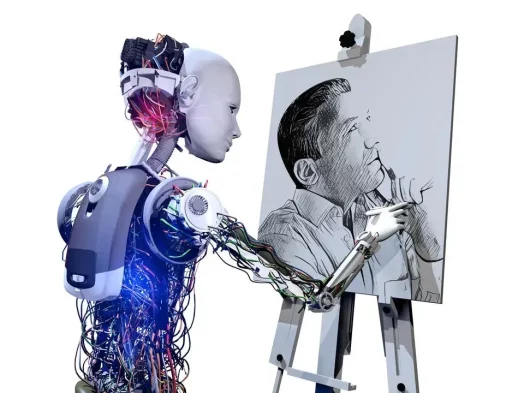
Image source: Forbes
The Death of Cultural Gatekeepers, And What Replaced Them
There used to be people whose entire job was to tell you what mattered. Critics who’d spent decades studying film, music, literature, art. Curators who understood context, history, cultural significance. Tastemakers who had actual expertise, who could articulate why something was groundbreaking or derivative, who separated the vital from the forgettable.
They were flawed, elitist, often out of touch, but they served a function: they filtered the noise. Now they’re dead, replaced by algorithms that don’t have opinions, just data points. Nobody trusts critics anymore. Why read a thousand-word review when you can check the aggregated star rating?
Why listen to a curator’s perspective when the algorithm already knows what you’ll like based on your viewing history? We killed the gatekeepers and celebrated it as democratization, as if removing expertise from the equation would somehow elevate culture rather than drown it in an ocean of algorithmic recommendations that optimize for engagement, not quality.
What replaced them isn’t better, it’s just more efficient. Algorithms don’t care if something is good; they care if it keeps you scrolling. Taste became data-driven, reduced to patterns and metrics. “People who liked this also liked that.” Your preferences aren’t cultivated; they’re predicted, served up in an endless feedback loop that narrows rather than expands.
We thought we were freeing ourselves from elitist gatekeepers. Instead, we handed taste over to machines that don’t understand art, only consumption patterns. And now nobody knows what’s actually good anymore, just what’s popular, what’s trending, what the algorithm decided you should see next.
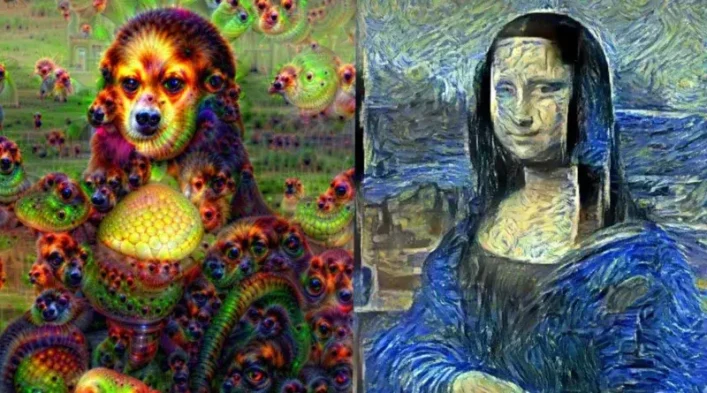
Image source: The Blake Beat Newspaper
When “Good Enough” Became Good Enough
AI art is everywhere now. Stock images generated in seconds. Book covers designed by algorithms. Music composed by machines that studied a million generic tracks and learned to replicate their blandness perfectly. And nobody cares. We’ve normalized mediocrity so thoroughly that “good enough” actually became good enough.
The bar didn’t just lower; it dissolved entirely, and we stopped noticing because we’re drowning in content that looks professional, sounds competent, and feels completely soulless. The market didn’t demand quality; it demanded speed and affordability. We optimized for convenience and sacrificed everything that made art worth caring about.
The flood of AI-generated mediocrity didn’t just compete with human creativity; it devalued it, made it seem unnecessary, expensive, inefficient. And slowly, imperceptibly, our standards eroded until we couldn’t tell the difference anymore between something made with intention and something algorithmically extruded.
Meanwhile, your playlist knows you better than you know yourself. Spotify curates your taste before you’ve even formed an opinion. Netflix predicts what you’ll watch next with uncomfortable accuracy. TikTok serves your aesthetic so precisely it feels like surveillance. You didn’t choose these preferences; they were calculated, optimized, fed back to you until they became yours.
Autonomy died the moment we let algorithms decide what we like, what we listen to, what we watch, what we consume. We outsourced taste to machines that don’t have it, and now we’re all listening to the same algorithmically-approved mediocrity, convinced it’s what we actually wanted all along.
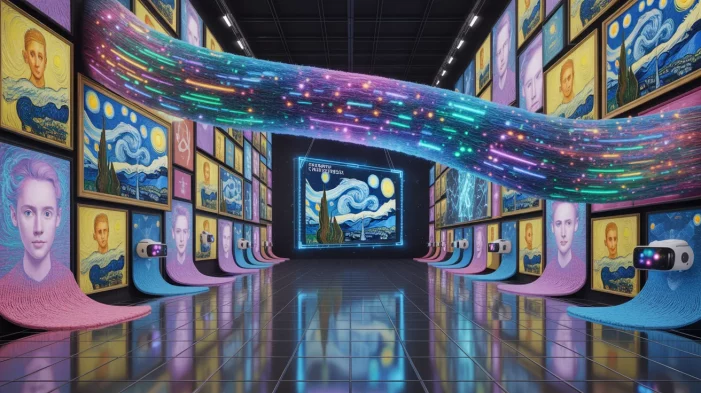
Image source: Momaa
AI Can’t Replace Vision, Only Imitation
Here’s the fundamental difference: artists have perspective, AI has pattern recognition. Artists create from lived experience, from pain and joy and the weird contradictions of being human. They take risks, make mistakes, develop a voice that’s distinctively theirs because it comes from somewhere real. AI doesn’t have experience.
It has datasets. It doesn’t create; it replicates what’s already been done, remixes existing patterns, generates outputs that look like art but lack the one thing that makes art matter, a point of view. True creativity requires vision, the ability to see something that doesn’t exist yet and bring it into being. AI can’t do that.
It can only imitate, aggregate what’s already out there, predict what should come next based on what came before. It’s sophisticated plagiarism dressed up as innovation. And the work it produces reflects that limitation: technically competent, aesthetically acceptable, utterly forgettable. It can replicate a style but it can’t develop one.
It can mimic genius but it can’t be genius because genius requires perspective, and machines don’t have that. Meanwhile, nobody cultivates taste anymore. Why bother developing preferences when algorithms already know what you “should” like? We used to explore, stumble across things accidentally, form opinions through trial and error.
Now Spotify tells you what to listen to. Netflix queues up your next binge. TikTok serves your aesthetic before you’ve even articulated it. Critical thinking became obsolete the moment we let machines curate our consumption. We don’t choose anymore; we accept what’s served.
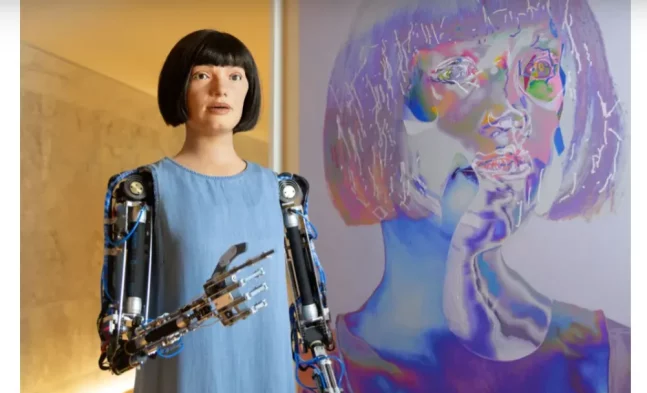
Image source: Hue and Eye
Taste isn’t something you develop; it’s something that’s assigned to you based on data points, optimized for engagement, narrowed into algorithmic comfort loops. We outsourced discernment and called it convenience. And now we can’t tell the difference between what we actually like and what we’ve been trained to consume.
Conclusion
AI won’t replace artists because artists have perspective, vision, and the willingness to fail in pursuit of something unprecedented. AI can only replicate what’s already been done, aggregate the average, and call it creation. But AI will absolutely replace mediocre taste—because we’ve already surrendered it.
We outsourced discernment to algorithms, killed gatekeepers for data points, normalized “good enough” until we couldn’t recognize excellence anymore. The real loss isn’t that AI generates mediocre art; it’s that we’ve stopped caring about the difference.
We traded cultivated taste for algorithmic convenience because developing taste requires effort, and machines promised we wouldn’t have to try. AI won’t replace artists. But it will replace everyone who can’t tell the difference between imitation and vision. And that’s most of us.