

How to Register Your Startup with PSEB (Pakistan Software Export Board): Benefits and Process
January 18, 2026
Mari Energies Subsidiary Launches Cloud AI Platform
January 19, 2026
Introduction: You Built a Legacy; What Was It All For?
Warner Brothers is the studio that gave Hollywood its spine. Founded in 1923 by four brothers who probably didn’t imagine their legacy would one day be sacrificed at the altar of quarterly earnings, Warner Bros. spent a century proving that commercial success and artistic ambition weren’t mutually exclusive.
In the 1930s and 40s, while other studios were pumping out escapist fluff, Warner was making movies that actually said something. They gave us the gritty gangster films that defined a genre, The Public Enemy, Little Caesar, films noir that explored America’s dark underbelly rather than pretending it didn’t exist.
Their social conscience pictures like I Am a Fugitive from a Chain Gang (1932) exposed brutal prison conditions and actually changed laws. It was a studio film that created real-world impact beyond merchandise sales. Then came the New Hollywood era of the 1970s, and Warner Bros. didn’t just participate, they led the revolution.
They bankrolled A Clockwork Orange (1971), The Exorcist (1973), All the President’s Men (1976), and Superman (1978). They let auteurs like Stanley Kubrick and Martin Scorsese make uncompromising cinema on studio budgets. They understood something revolutionary: treating audiences like intelligent adults might actually be profitable.
Something Netflix does not believe you to be. You are not an intelligent life form to them; you’re a mindless, unimaginative, soulless cash cow that is fed a diet of soulless cinema. Cinema that is devoid of powerful plots, innovative camera angles, emotionally charged lighting and musical score that weaves itself into the tapestry of your mind and finds for itself, a new home in you.
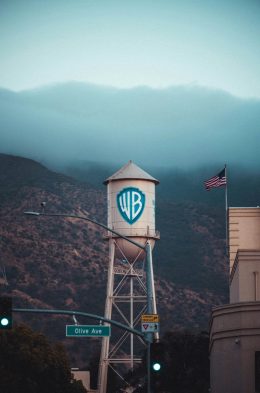
Image source: Unsplash
The ’80s and ’90s? Warner was the studio behind Batman (1989), proving superhero movies could be dark and serious before Marvel made them all quip-dispensing action figures. They produced Goodfellas (1990), The Matrix (1999), and basically every film your cool film-student friend won’t shut up about.
Christopher Nolan built his entire career there, from Memento to the Dark Knight trilogy to Inception, mid-budget, director-driven films that somehow became massive blockbusters. Even in recent years, Warner took risks other studios wouldn’t: Mad Max: Fury Road (2015), a two-hour car chase that film schools will study forever.
Blade Runner 2049 (2017), a meditative sequel nobody asked for that somehow justified its existence. Joker (2019), an R-rated character study that made a billion dollars by trusting audiences to handle complexity.
Warner Bros. backed filmmakers. They took chances. They cared about the art of cinema. They made films that mattered, that started conversations, that people actually remembered after the credits rolled. On the flipside, Netflix is a content circus masquerading as cinema.
The Bidding War: Paramount Skydance VS Netflix
The entertainment industry is facing a catastrophic development from which there is no going back. This is a heated bidding war of nearly a 100 billion dollars between Netflix and Paramount Skydance. The winner gets to take home the seat of cinematic legacy – Warner Brothers. As streaming services like Netflix consolidates more impacts and profits, the conditions of the film industry will worsen.
This might very likely create a monopoly that would crush not just the wages but also the spirits of everyone involved in the creation of film. Like a serial killer with a blood lust, Netflix buying out Warner Bros signals the death of the theatrical release experience. We could be witnessing, historically one of the biggest cases of corporate greed and corruption in the film industry.
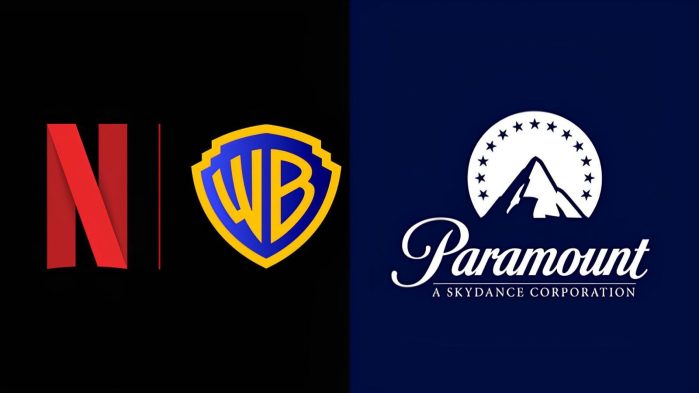
Image source: PrestigeOnline
This merger can be so consequential that it would give an abhorrent degree of control to mega corporations run by power-hungry, megalomaniac billionaires one of the most celebrated, historic and largest creative industry in the world.
For context, in 2025, there are roughly 5 companies that make up 90% of US media market. These include, Warner Bros., Disney, Paramount Skydance, Sony and ComCast. These 5 massive conglomerates own the most amount of media companies. Netflix’s combined worth is bigger than all of these companies, valuing at around 513.4 billion dollars.
Netflix is only offering to buy HBO, Warner Bros., DC Studios, Harry Potter and Newline Cinema for 82.7 billion dollars cash and stock. This does not include the cable TV media, because Netflix is not in it for that goal; It’s in it to replace all other media. Should Netflix acquire Warner Bros., they will succeed in accomplishing their mission of making things and people obsolete.
Coming in hot, Paramount Skydance’s bid is for about 108 billion dollars for EVERYTHING, cash only. Now stay with me on this one. Paramount’s original worth is for 15 billion dollars, yet their bid is for $108 billion. Let’s follow the money and see where it goes. The CEO of Skydance, David Ellison, is backed by the second richest person in the world, aka his dad, Larry Ellison.
Larry then heads on over to Jared Kushner. Yes, Donald Trump’s son-in-law. Together, this alliance gets in their jets and lands on the door step of The Saudis. The middle eastern soil of sovereign wealth itself. Both bids are unfavorable, but in very different ways.
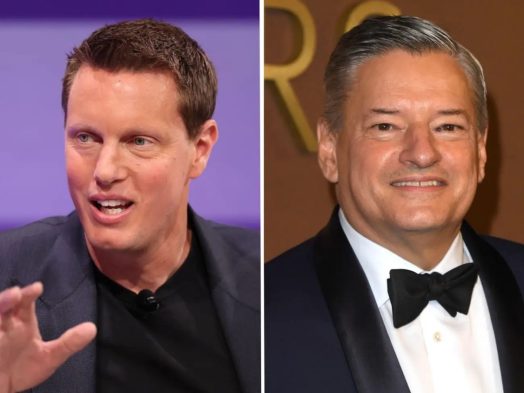
Image Source: Business Insider
The Lesser of the Two Evils
Netflix, the top streamer at this point, is looking to form a monopoly over one of the last remaining intuitions of cinema. And as always, in doing so jack up the price of subscription and put a definitive end to the theatrical release process. Extending a major “Screw you!” to people who actually cherish going to the movies and buying tickets, along with buttery popcorns and 3D glasses.
Netflix will have you think that they are in the business of making movies. Well, they’re not. They’re in the market of making content. Algorithmically calculated, short attention span friendly, play in your background while you take a shower or do your laundry – content. Content that enjoys its 15 minutes of fame basking in the glow of the algorithms before being lost forever.
For the audiences, Netflix winning this bidding war will brutally murder the entire theater-going experience. Theaters and cinemas will become obsolete words; their infrastructure will be relics of an old world, housing phantoms from a time humans loved and cared about what these architectures had to offer, enough to leave their houses and plan a whole day around watching the newest release.
They’ll whisper to the passerby, they’ll yearn for a human touch, they’ll scream as they’re torn down to be repurposed, but no one will hear and no one will come. Netflix wants movie theaters to just stop breathing. Their architecture will die a slow, agonizing death at the hands of streaming services, dissolving away in succession of time and the oblivion that comes with it.
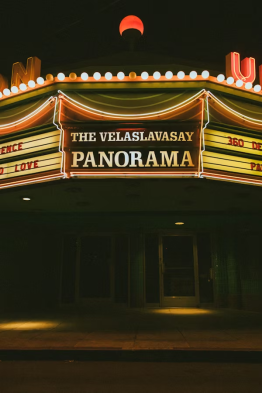
Image Source: Unsplash
It’s speculated that Paramount Skydance is essentially hoping to gather enough tools through this bid to further assimilate media with the body of the Trump administration. You scratch my back, I’ll scratch yours, and no one else will be in in the room where it happened. The room where the bounds of what’s legal and what isn’t were reshaped without anyone finding out.
Netflix’s deal is an apocalyptic move for the institution of film and the future of cinema. It won’t come after democracy as such. On the other hand, by buying out Warner Bros., Paramount Skydance is putting a direct target on the back of democracy. Entertainment and film remaining not so deeply entrenched and restrained. Either way, the losses outweigh the wins.
This is quite a conundrum because neither of the two supervillain corporate consolidation plans has a slightly more tolerable upshot. It will wound the consumer, directors, actors, the writers and artists, and the producers, making everything basically unaffordable. Adding insult to injury, everyone who’s part of the formation gets paid less than they are now.
Conclusion
Bid your farewells to immersive cinematic experiences. Film and entertainment have succumbed to their roadkill fate and the vultures are gathering. It’s almost as if, to spare a historic industry the pain of gradual extinction, it’s being offered a choice at picking two lethal poisons that will put it out of its misery fast.
Netflix offers a world where films are background noise between TikTok scrolls. Where Christopher Nolan’s next masterpiece debuts on a phone screen during someone’s commute, sandwiched between algorithm-approved true crime docs and reality shows about people organizing their closets.
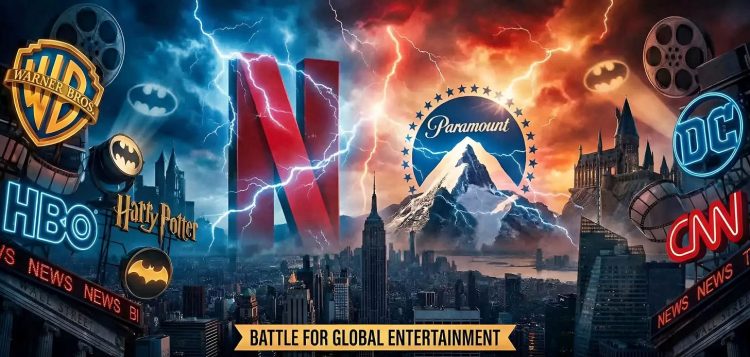
Image source: TechSpot/TheBirkidaBrief.Substack
Paramount Skydance, meanwhile, dangles the prospect of cinema as propaganda, art filtered through the ambitions of billionaires and politicians who’ve never met a democratic institution they didn’t want to hollow out for parts. So, what will you have? Cultural lobotomy or another weapon for an authoritarian regime?
What’s most tragic isn’t just that Warner Bros’ century-long legacy is being auctioned off like furniture at an estate sale, it’s that we’re all watching it happen with the resigned exhaustion of people who’ve seen this script before. We’ll tweet our outrage, sign our petitions, and then inevitably subscribe to whoever wins because what choice do we have?