
Pakistan Pushes Full Implementation of D-8 PTA
December 4, 2025
Standard Chartered Secures EMAAR Pakistan Banking Mandate
December 5, 2025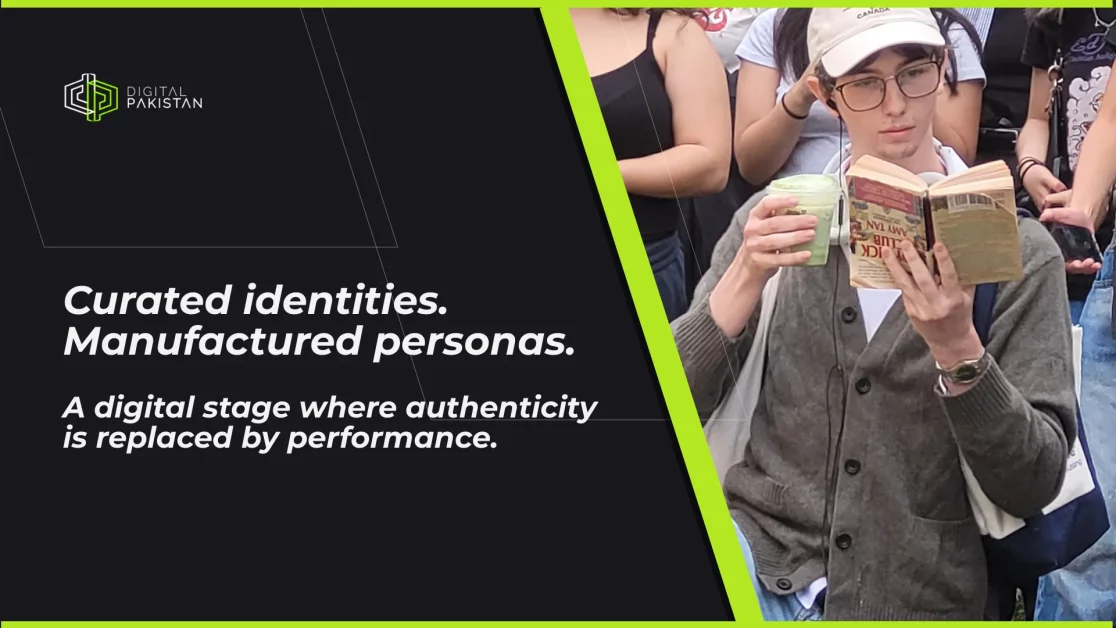
Introduction: Subcultures and Manufactured Identities
The internet’s obsession with performance and aesthetics may have gone too far. It seems as though every few weeks we exit and enter into a new era of curated identities and carefully packaged, algorithm-ready personas. Does anyone have the ability to create a unique personality that isn’t manufactured and sold to them via digital subcultures?
We phased out of the minimalist subgenre of “clean-girl” aesthetics, and are now in a liminal space of deciding who we want to be next. If digital history is any indication, the next aesthetic will be a rebellious maximalist response to its predecessor’s agendas. Either way, it’ll be primped and prepped for the sake of our online performance.
We don’t rotate and change our outfits as often as we do with our personas and identities. Each new performative aesthetic is a regurgitated, copied, pasted, repackaged and resold version of a million others that came before it. Why go through the trouble of “finding” yourself, when internet subcultures can simply deliver a ready-to-wear identity to your “for you” page.
One week you’re dressing up as an “office siren” who fell out of Vogue magazine. The next, you’re waking up at 5 am, drowning your face in a bowl of ice as part of your 16-step skincare, before making your matcha latte and choosing among 50 shades of beige outfits because a random influencer portrayed this as “having your life together”.
You can participate in dark academia by day – because apparently reading is back in style – and be an unmistaken bimbocore by night. One moment, hypermasculinity and left-wing views are cool and modern. Minutes later, readopting the hyper-femininity of 1950’s trad-wives and demonstrating conservative socio-political values is what’s hot and trendy.
Your bank account might be reflecting negative digits and wailing SOS, but you can still take part in performing “old-money”. You’ll require: neutral toned tailored fits, soft filters in low exposure lighting, some Yves Saint Laurent and Van Cleef pieces ubiquitous on everyone’s Pinterest boards, a country side background and you’re off to the races!
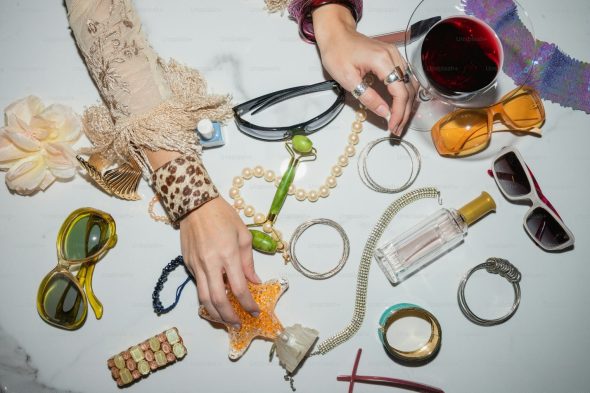
Image source: Unsplash
It matters not whether this lifestyle, much like the Van Cleef dangling from your wrist, the 7 am affirmation journaling routine and regular vegan meals – is authentic or counterfeit. You desire a main character energy, right? The genie in the magic digital lamp shall grant you your wish for constant reinventions. The audience will rarely, if ever, ask you, “Who are you in actuality?”
The Aesthetes
Historically, philosophers, painters, sculptors, scientists, architects, and the likes, have always been preoccupied by aesthetics. Prior to the 14th century Renaissance movement in Italy, ancient philosophers, like Plato and Aristotle, laid the groundwork for aestheticism.
To them, beauty and art were divine expressions for pleasure and emotional catharsis. Without aesthetics, mortal existence would be insufferable, even devoid of meaning. Plato asserted that any beauty in the mortal realms is an imperfect imitation of eternal, cosmic spheres. An objective grand design that is flawless and immortal, existing beyond our conceptions of it.
Plato’s student, Aristotle, went on to write that beauty is inherently in the symmetry and order of objects themselves. Among other principles of aestheticism put forth by early thinkers, symmetry became the bedrock of aesthetic theories that lived on to inspire masterpieces like, Da Vinci’s “The Last Supper”, Islamic geometric patterns, Dali’s “Swans Reflecting Elephants”, so on and so forth.
Up until the mid-19th century, societies operated on the idea that if something is aesthetically pleasing, then it must also be naturally and organically beautiful, strong, resilient, functional and healthy. While we may not believe otherwise in the present times, 20th century Avant-Garde movements, such as Expressionism, Abstract, Cubism and Dadaism, introduced shocking new illustrations that reformed our perspectives on art, beauty and aesthetics.
Immaculate and precise brush strokes, were replaced by bold, vibrant, and asymmetrical techniques. Subtle hues in impressionist pastels were exchanged for an explosion of brilliant and frantic palettes. In other words, aesthetics were what was expressed in the rhythms and tonality of one’s diverse style, states of mind and individual personality.
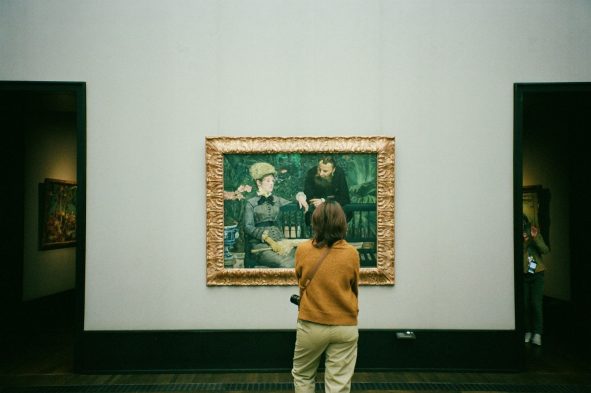
Image source: Unsplash
Although each creator is compartmentalized into their respective subcommunities, i.e. expressionists, pop-artists, surrealists etc., every one of them still maintained their unique style that could be recognized immediately. You don’t need to be a seasoned art historian to visually detect what sets apart Kandinsky’s expressionism from that of Pollacks and Munch’s.
Consumerists and Performers
We cannot tell who is who or what anymore. The more opportunistic outlets we have for self-expression, the less unique we’ve become in our prospects and aspirations. Online subcommunities are not employed for the purpose of relating to like-minded people; Rather, we dissolve completely into an indistinct and faceless mass of one.
This shared experience isn’t a method to connect with people who resonate with our sense of identity in the world. Instead, we surrender our autonomy entirely in exchange for a kind of psychological passivity that is akin to cult followings. What seems liberating and empowering at first, is just a digital performance that is bought, borrowed or stolen.
An influencer strips their house down to a minimalist neutral scheme and simplistic textures. Suddenly, inspires thousand others to drain the spectrum of colors from their lives. Someone who flaunts their picturesque routine, is canonized for ideal living. When in fact, it is nothing more than performative standards, impossible to maintain in the long-run.
Beauty influencers market their ‘glazed-donut’ youthful skin, as a direct consequence of hours of skin-care, using high-end luxury products. Skin-care is sold to viewers through romanticized depictions of self-love. In reality, their consistently camera-ready appearances are contingent on filters, studio lighting, fillers, face-lifts, and related cosmetic procedures.
We don’t restructure our wardrobes based on our intimate and personal preferences. What goes on our bodies is dictated by the transient parameters of the digitized aesthetic it represents. Are we coquette or grunge? Old-money or new-money? Cottage-core or Y2K? A VSCO girl in Birkenstocks, or a trad-wife, making cereal from scratch, dressed in designer wear?
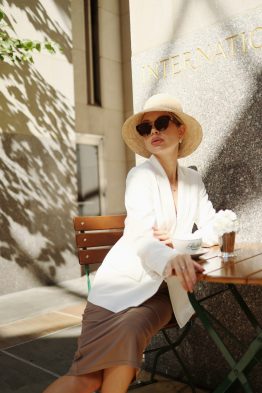
Image source: Unsplash
Each new aesthetic requires purchasing new products/adopting new behaviors. The up-keep of anesthetized living demands practical and financial resources, which more than half of the population cannot afford in times of economic upheaval.
It’s unrealistic to assume a uniform existence that follows a repeated and rehearsed regiment, unfailingly. Until algorithmic gods find another consumerist trend to propagandize. Think, Stanley cups and Labubu dolls.
So Why Can’t We Snap Out of It?
It’s one thing to take inspiration from someone else and integrate it into one’s own approach on the subject. It’s a whole other circle of hell when inspiration transmutes into submission, rampant over-consumption and an all-together decline of personal identity. Coupled with tenacious discontent and anxieties pertaining to missing out on a glamorized experience.
It’s safe to say that our manufactured online performances are not motivated by the same intentions that art and aestheticism once did. Today’s aesthetic fixation is a senseless consumption cycle that offers no true satisfaction or existential anchoring. An outer performance without intrinsic source.
Identity formation that is as impermanent and fragile as the popularity and longevity of a trendy hashtag, leaves us with nothing to hold on to in the wake. Even our activism and constitutions should be fashionable and visually appealing.
Sense of self is fragmented and repurposed into numerous different lenses, until we can’t recognize the person standing in the mirror, looking blankly back at us. With an external locus of control, we’re driven by a meta-reality constructed on delusions and unsustainable commodification. Leading to an erosion of authenticity; it’s conformity masquerading as individuality.
Algorithms reinforce this toxic homogenization, established on precarious connections and existential vacuum. Individuals are undergoing an identity crisis fueled by perpetually shifting
Image source: Unsplash
Mass adoption generates pressure to join and triggers a sort of decision paralysis. This indicates a collapse of the stable core ipseity that used to ground identity formation. There’s a radical disconnection between being and appearing. This implies a psychological emptying out wherein individuals do not have a Self that is independent of their public act.
Conclusion
The first thing we have to do to take back ourselves is ask ourselves “what do I actually want?” and not “which aesthetic am I today?”. Awareness, even painful awareness, is the start of resistance. The fact that we’re able to put this crisis into words means that we haven’t lost ourselves entirely yet. It won’t happen overnight, and it won’t be pretty or Instagram-ready.
It takes the dirty, imperfect work of staying with boredom, pushing against the need to curate, and enduring the pain of not having an off-the-shelf identity to step into. But authenticity has never been about performance or perfection, it’s about the guts to be unfiltered, unseen, and sometimes contradictory.
Ironically, what we’re so frantically searching for through never-ending reinvention, meaning, connection, ipseity, can only be discovered by standing still long enough to listen to our own voice below the noise. We don’t require a new aesthetic age or permission from algorithms to be who we are. We simply need to remind ourselves that the most subversive act in a world consumed by performance is just to refuse to perform in the first place.