JazzWorld, VEON Leadership Call on Prime Minister; Reiterate Commitment to Pakistan with USD 1 Billion Investment to Spearhead 5G Rollout
April 1, 2026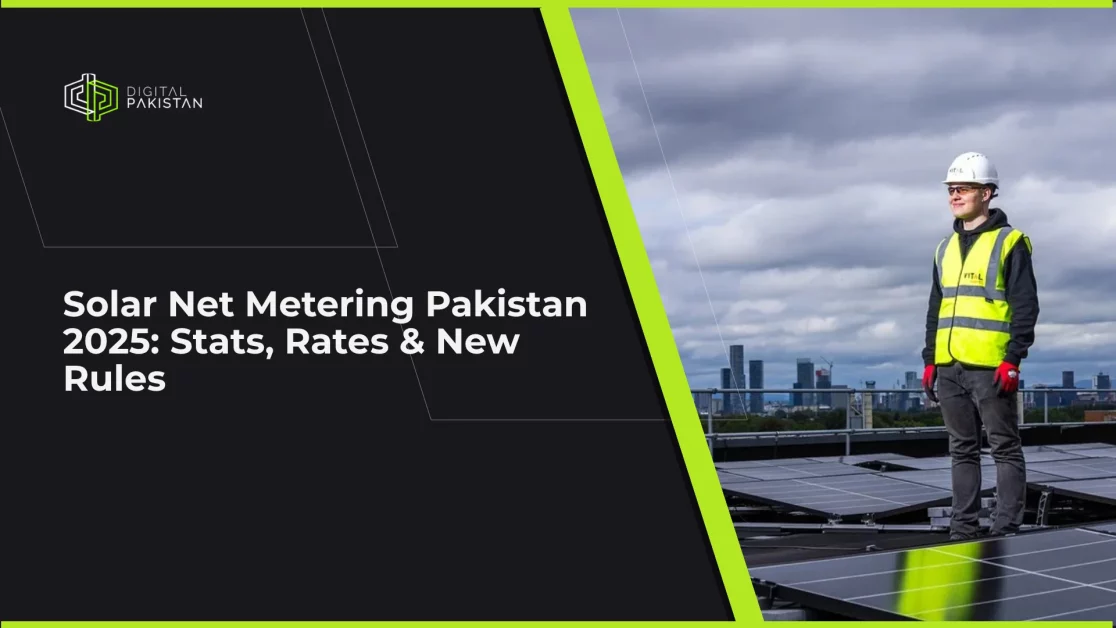
Introduction
If you searched “net metering” in Pakistan, you are probably trying to answer a simple question: is solar still worth it?
Net metering allows you to generate electricity from solar panels, use what you need, and send the excess back to the grid in exchange for billing credits. That mechanism turned solar into a financially attractive option for businesses and households across Pakistan. A few years ago, the answer for straightforward. Today, that clarity is shifting.
Solar adoption is accelerating, policies are under review, and buyback rates are under pressure. Pakistan crossed 6 GW of net-metered solar capacity in 2025, but that growth has created tensions around pricing, fairness, and grid stability. The question is no longer how solar works. It is whether the economics still hold under changing rules.
![Technicians install rooftop solar panels in Karachi, Pakistan] Image source: Yale Environment 360](https://digitalpakistan.pk/wp-content/uploads/2026/03/1-13-699x393.webp)
Technicians install rooftop solar panels in Karachi, Pakistan] Image source: Yale Environment 360
Pakistan’s Solar Boom: How Big Has It Actually Gotten?
Growth of Solar Capacity in Pakistan
Solar in Pakistan has shifted from a niche solution to a mainstream energy choice in less than a decade. Between 2016 and 2019, net-metered capacity has grown from around 50 MW to over 6 GW in 2025. Most of this growth has come in a very short period, driven by one simple reality: electricity from the grid keeps getting more expensive, while solar keeps getting cheaper.
Who Is Driving Solar Adoption?
There are now over 283,000 registered net-metered consumers across the country. The growth is not evenly distributed. Industrial users account for 67% of all net-metered installations, while residential consumers make up just 14%. Larger consumers benefit more from scale, which males the investment easier to justify at the industrial level.
Import Trends and Future Pipeline
Pakistan has imported tens of gigawatts worth of solar panels in recent years, far more than current capacity. The gap suggests the pipeline for future installations remains strong. This is not a slow transition; it is a repair shift in how electricity and produced and consumed across the country.
![[Solar panels on homes and businesses in Karachi – Photo by Hexzain/ Shutterstock] Image Source: World Resources Institute.](https://digitalpakistan.pk/wp-content/uploads/2026/03/2-14-750x330.webp)
[Solar panels on homes and businesses in Karachi – Photo by Hexzain/ Shutterstock] Image Source: World Resources Institute.
What Is Net Metering and How Does It Work in Pakistan?
What Is Net Metering?
Net metering allows consumers to generate electricity through solar panels, use what you need, and send the excess back to the grid. In return, they receive credits that reduce your bill. That simplicity is what made it popular. It effectively turns electricity consumers into producers or “prosumers” and reshapes electricity from a recurring expense into a controllable cost.
How Net Metering Works in Practice?
Under the current system, exported electricity is credited against consumption in a way that makes solar financially attractive. But that attractiveness depends heavily on how exported units are valued. This is where the distinction between net metering and net billing becomes important.
Net Metering vs Net Billing – What is the Difference?
Net metering compensates excess electricity at a higher rate, often close to what you pay for consumption. Net billing, on the other hand, values exported electricity at a lower, wholesale rate. This difference significantly changes the economics of a solar system. S switch from net metering to net billing is not a minor adjustment, it changes the financial case for going solar entirely.
![The infographic is the main image on the page] Image source: Institute for Local Self-Reliance.](https://digitalpakistan.pk/wp-content/uploads/2026/03/3-11-590x393.webp)
The infographic is the main image on the page] Image source: Institute for Local Self-Reliance.
The Numbers Behind the Solar Rush
Declining Solar costs
Solar panel prices dropped 42% globally in 2023. That decline carried into the local market, making systems more affordable than they were just a few years ago. Lower equipment costs are the single biggest reason solar adoption accelerated so quickly across Pakistan.
Rising Electricity Tariffs
Grid electricity in Pakistan cost around PKR 9 per unit in 2015. By 2024, that figure had risen to PKR 44 per unit. When grid electricity becomes this expensive, the value of generating your own power increases proportionally. Solar does not reduce the bill; it provides a hedge against further tariff increases.
Payback Period and Financial Viability
For most users, the payback period still falls between three to five years. After that, the savings are effectively ongoing. These numbers are not fixed, they depend on policy, pricing, and how exported electricity is treated, which is exactly why recent debates have centred on buyback rates.
![A worker carrying a solar panel at a market in Lahore, June 2024] Image Source: CNN, Photo By: Arif Ali/AFP/Getty Images](https://digitalpakistan.pk/wp-content/uploads/2026/03/4-6-589x393.webp)
A worker carrying a solar panel at a market in Lahore, June 2024] Image Source: CNN, Photo By: Arif Ali/AFP/Getty Images
The Buyback Rate Controversy: PKR 27 vs PKR 10
Proposed Changes in Buyback Rates
One of the most debated changes in Pakistan’s solar policy is the proposed reduction in buyback rates. The current rate sits at around PKR 27 per unit. The proposed reduction would bring it down to PKR 10 and PKR 13. On paper this looks like a technical adjustment. In practice, it changes the entire value proposition of new solar users.
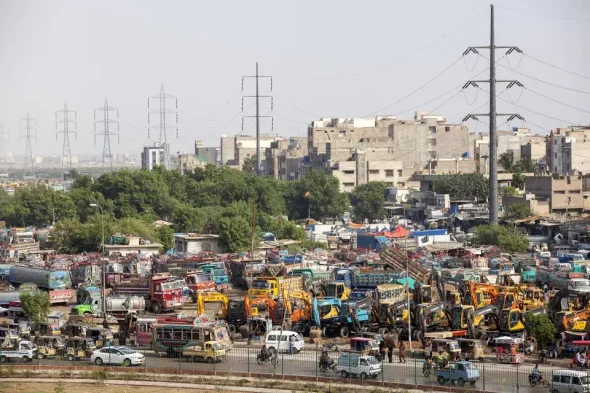
Image Source: Bloomberg
Grid Costs and the PKR 159 billion Burden
The government’s concern is straightforward. As more consumers adopt solar, fewer units are purchased from the grid, but the grid still needs to be maintained. Estimates indicate that net metering has shifted approximately PKR 159 billion in costs onto consumers who do not use solar. That is the core of the fairness argument behind the proposed rate cut.
Public Backlash and Policy Uncertainty
The proposal has faced strong pushback from solar users, industry groups and policymakers. Reducing buyback rates risks slowing adoption at a time when Pakistan still needs more renewable capacity. The policy has not been fully implemented. For now, the direction remains uncertain, and uncertainty affects investment decisions more than any single rate change.
Prosumer Regulations 2025: What’s Changing for Solar Owners?
Why the 2015 Framework Is Being Revised
Pakistan’s original net metering regulations date to 2015. At the same time, adoption was limited and the rules were designed to encourage growth. That growth has not happened. The proposed Prosumer Regulations 2025 aim to adjust the framework to reflect current realities in the grid and the market.
Key Changes Under the New Regulations
The proposed regulations include a reduction the licensing period from seven to five years. The 1.5x sanctioned load allowance, which previously let users install systems significantly larger than their connection capacity, is proposed to be removed. This is intended to reduce overproduction and manage pressure on the grid.
What This Means for New vs. Existing Users
For existing users, the impact of these changes maybe limited. For new users, the revised framework could define the economics of going solar. The broader shift toward net billing. If implemented, would be a structural change, not a minor update. Anyone evaluating solar now should factor in where policy is heading, not just where it currently stands.
Should You Still Go for Solar in Pakistan?
The Core Case Still Holds
The short answer is yes, but not in the same way as before. Even with lower buyback rates, solar systems in Pakistan can still recover their cost within a reasonable timeframe. Electricity tariffs have risen from PKR 9 to PKR 44 per unit over the past decade and show no sign of stabilising. The value of generating your own power remains high regardless of what happens to export rates.
The Shift Toward Self-Consumption and Hybrid Systems
Solar is no longer primarily about selling excess electricity back to the grid. It is increasingly about reducing dependence on the grid altogether. Hybrid systems that combine solar with battery storage are gaining ground. They cost more upfront but offer reliability that the grid often cannot.
Making the Decision Now
The decision to go solar depends less on ideal policy conditions and more on how much control you want over your electricity. If you are evaluating solar today, factor in rising tariffs, your consumption pattern, and likely policy direction, not just the current buyback rate.
![Vaqar Zakaria’s white EV charging under rooftop solar panels at his home in Islamabad] Image Source: Dawn](https://digitalpakistan.pk/wp-content/uploads/2026/03/6-2-655x393.webp)
Vaqar Zakaria’s white EV charging under rooftop solar panels at his home in Islamabad] Image Source: Dawn
Conclusion
Solar energy in Pakistan is no longer an emerging trend. It is an established part of the energy system. What is changing is the framework around it. Net metering made solar highly attractive in its early phase by offering financial incentives. As adoption has grown, those incentives are being reconsidered. The system is moving from expansion to adjustment.
For users, this does not remove the opportunity. It just makes the decision more nuanced. Solar still works, but it no longer works on assumptions.
Key Takeaways: Solar Stats at a Glance
- Pakistan’s net-metered solar capacity crossed 6 GW in 2025, up from 50 MW in 2016-2019.
- Over 283,000 registered net-metered consumers nationwide.
- Industrial consumers account for 67% of installations, residential users just 14%.
- Solar panel prices dropped 42% globally in 2023, driving local affordability.
- Grid electricity tariffs rose from PKR 9/kWh (2015) to PKR 44/kWh (2024).
- Current payback period: 3-5 years for most system sizes.
- Proposed buyback rate cut from PKR 27/unit down to PKR 10-13/unit.
- Net metering has shifted an estimated PKR 159 billion in grid costs onto non-solar consumers.
- Prosumer Regulation 2025 propose removing the 1.5x sanctioned load allowance and shortening licensing from 7 to 5 years.
- Hybrid solar-plus storage systems are gaining ground as the policy environment shifts.