
Bank of Punjab, Office of AI Sign MoU for AI Infrastructure
April 11, 2026
Author Info

If you want to make money with AI in Pakistan, the good news is you’re not too late. The better news is that most people around you haven’t figured this out yet. The slightly uncomfortable news is that AI is also quietly eating some of the jobs Pakistanis relied on before. So the window is open, but it won’t stay open forever.
This is not a “passive income while you sleep” fantasy post. This is a practical breakdown of what’s actually working, what tools you need, how to get paid legally, and why the old playbook of competing on cheap rates is officially dead.

Why AI is a real income opportunity in Pakistan right now
Let’s set the stage before diving into the how.
Pakistan’s freelancing baseline: already a global hotspot
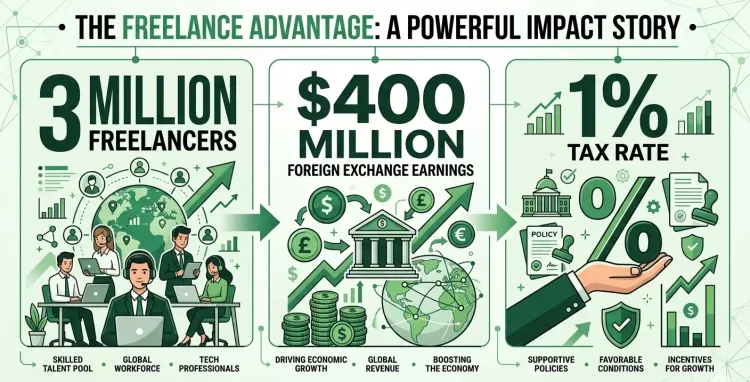
Pakistan already ranks among the top three global freelancing hubs, with nearly 3 million freelancers contributing approximately $400 million in foreign exchange earnings in FY2025. That’s not a startup scene, that’s an established industry.
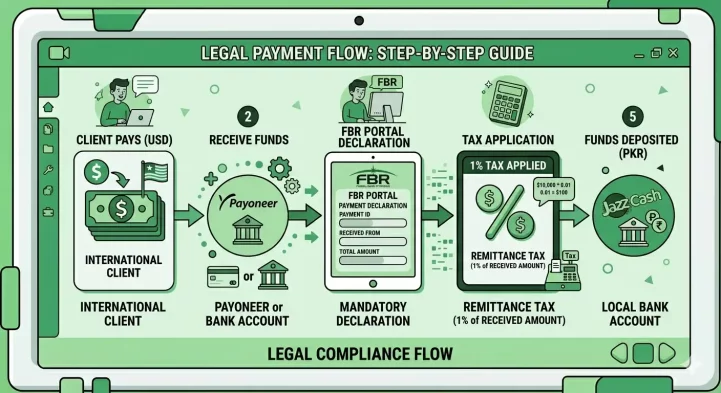
One thing that makes Pakistan genuinely competitive is the tax structure. Freelancers earning in foreign currency through legal banking channels pay a maximum flat tax of just 1% on gross income. That is, without exaggeration, one of the most favorable freelancer tax rates anywhere in the world.
So the question is no longer whether Pakistanis can earn online. That’s been answered. The question is how you stay relevant, and stay earning, as AI reshapes what clients are willing to pay for.
The honest truth: AI is replacing some work too
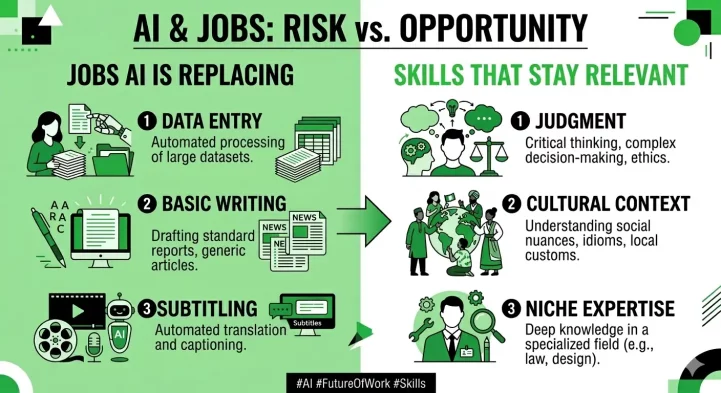
Let’s not sugarcoat it. Entry-level freelance work, basic blogs, product descriptions, simple data entry, generic virtual assistance, is being handed to AI at a growing rate. Clients who used to pay $10 for a 500-word article are now using ChatGPT and paying nothing. That income stream for beginners has genuinely thinned.
Globally, AI automation is displacing virtual assistants, basic bookkeepers, subtitlers, and project coordinators. If your current income depends on volume-based, low-skill repetitive tasks, that is a real risk worth taking seriously.
But here’s the reframe: the opportunity isn’t in pretending AI doesn’t exist. It’s in being the one who wields it better than everyone else.
Legal ways to make money with AI in Pakistan
These aren’t theories. These are services people are actively hiring for and paying real dollars.
AI-assisted freelance writing and content creation
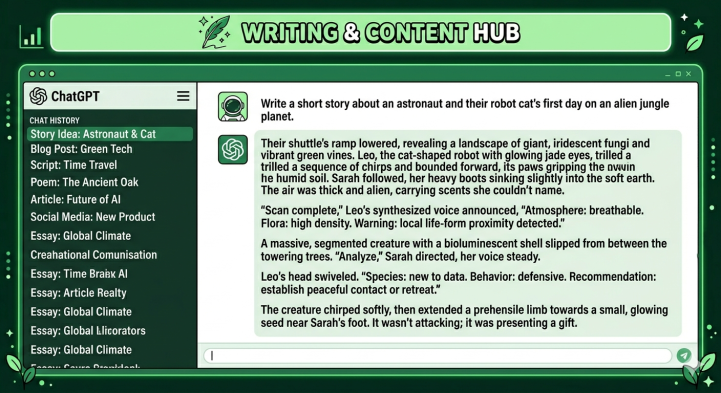
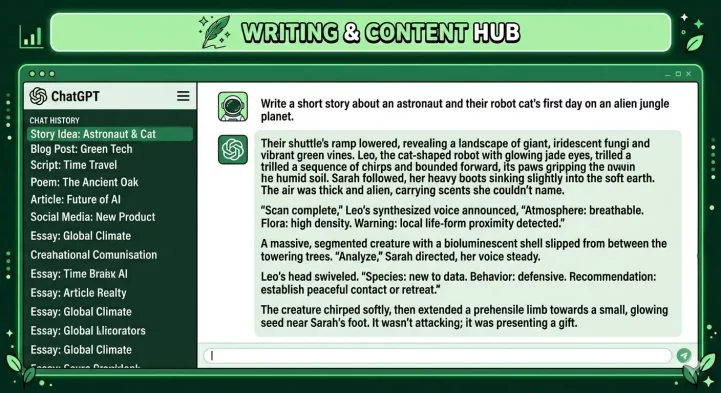
Pakistani content writers are already using ChatGPT to generate SEO-friendly blog outlines, social media captions, email sequences, and multilingual translations, letting them take on more projects without sacrificing quality or burning out.
The key differentiator that AI can’t replicate? Local insight, Urdu fluency, and cultural context. A client in Dubai launching a campaign for the Pakistani market doesn’t want generic English output. They want someone who knows the audience.
Platforms like Upwork, Fiverr, and Freelancer.com all openly permit AI-assisted work with disclosure, so there’s no grey area here. Declare your process, deliver strong output, and charge for your judgment, not just your typing speed.
AI graphic design and visual content
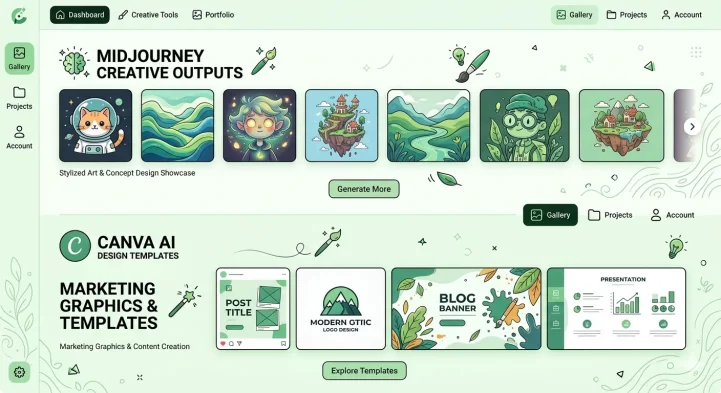
You don’t need a degree from NCA to make money in design anymore. Tools like Midjourney and DALL-E allow Pakistani designers to generate locally themed art including Urdu quotes, cricket culture, Eid visuals, and sell via print-on-demand platforms or freelance gigs.
Combining Canva with AI-generated visuals, designers are producing custom assets for international clients, from startup logos to full social media template packs, at a pace that would have required a full agency team a few years ago.
Zero prior design experience needed to start. The skill you’re building is prompt engineering, knowing how to ask the tool for exactly what you need.
AI video production and voiceover services
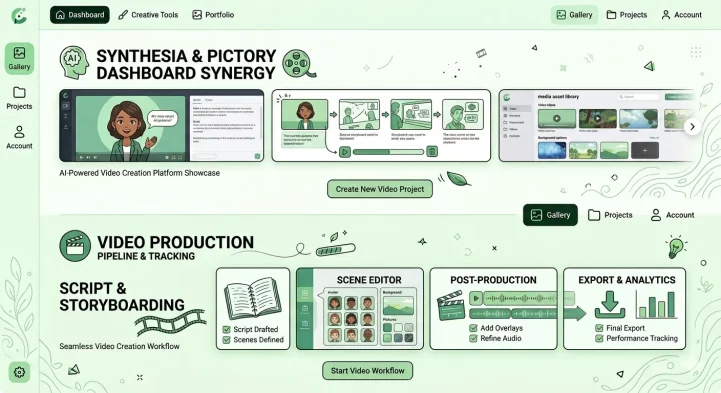
This one is genuinely underexplored in Pakistan. Tools like Pictory, Synthesia, and Murf.ai let you create professional videos and AI voiceovers without hiring actors, renting studios, or owning any camera equipment.
Demand is coming from Pakistani startups that need explainer videos, educators building online courses, and influencers who want polished content without production overhead. YouTube automation channels, where AI writes scripts, AI generates voiceovers, and editors piece it together, are also a growing income model.
Here’s an angle worth noting: Urdu-language AI content is still vastly undersupplied relative to demand. That gap is an opportunity.
Teaching AI skills to others
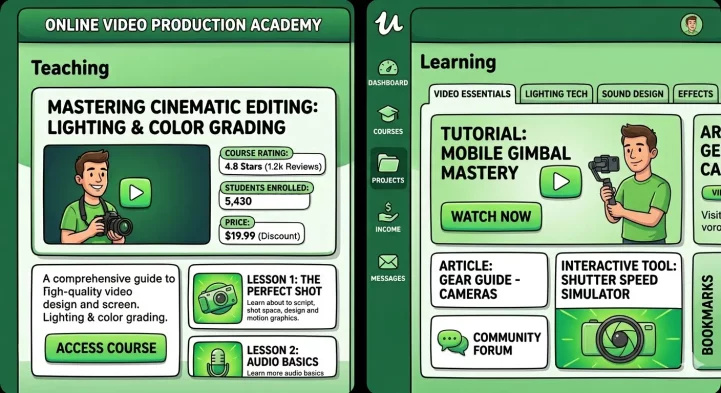
If you’ve spent a few months getting comfortable with ChatGPT, Midjourney, or any AI workflow tool, you are already ahead of the majority of the population. That knowledge has monetary value.
Options include one-on-one tutoring, uploading Urdu-language courses on Udemy, or running a YouTube channel where you explain AI tools in a way that makes sense to a Pakistani audience. Running group webinars on topics like “how to write SEO articles using ChatGPT” can be particularly lucrative right now because first-mover advantage is still very much in play.
DigiSkills.pk and various local institutes are already integrating AI literacy into their programs, which signals where the market is heading. Getting ahead of that curve is the move.
Teaching AI skills to others
If you’ve spent a few months getting comfortable with ChatGPT, Midjourney, or any AI workflow tool, you are already ahead of the majority of the population. That knowledge has monetary value.
Options include one-on-one tutoring, uploading Urdu-language courses on Udemy, or running a YouTube channel where you explain AI tools in a way that makes sense to a Pakistani audience. Running group webinars on topics like “how to write SEO articles using ChatGPT” can be particularly lucrative right now because first-mover advantage is still very much in play.
DigiSkills.pk and various local institutes are already integrating AI literacy into their programs, which signals where the market is heading. Getting ahead of that curve is the move.
AI-powered translation and localization
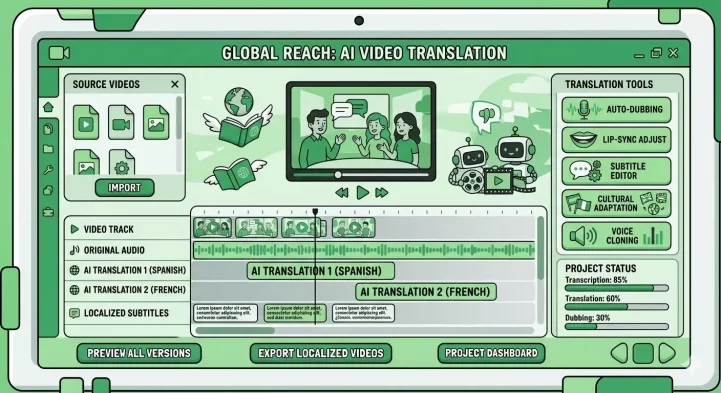
Tools like DeepL and Google Translate have become genuinely powerful, but they still need a human in the loop to catch nuance, fix tone, and ensure cultural accuracy. That’s where a bilingual Pakistani professional adds value that pure automation can’t.
There is serious demand from international brands entering the Pakistani market that need quality Urdu, Punjabi, and Pashto adaptations of their content. The model that works: use AI for speed, apply human judgment for quality, and charge premium rates on Upwork. Human oversight plus AI speed is a service offering, not a shortcut.
Tools you need (free and paid options in Pakistan)
Free tools to start with zero investment
You don’t need a budget to start. ChatGPT’s free tier, Canva AI’s free plan, Google Gemini, and Microsoft Copilot are all accessible in Pakistan with no upfront cost. Many of these tools are usable on mobile with relatively low data consumption, which matters if you’re outside a major city.
The strategy that works: start entirely on free plans, get your first paying client, and reinvest those earnings into paid tiers that unlock more capability.
Paying for AI tools from Pakistan
This is where a lot of beginners get stuck, so let’s be direct about it. Most major AI tools accept Payoneer-linked Mastercard debit cards for international subscriptions. JazzCash and Easypaisa are more limited for international payments, but the fintech options available through Pakistani banks are expanding.
A VPN is not required for most AI tools, though some image generation platforms do have regional access restrictions worth checking in advance.
If there’s one investment worth prioritizing early: ChatGPT Plus at $20 per month via Payoneer. The quality difference between the free and paid tiers is significant enough that it will show up in your client work. That’s a high-ROI spend for a beginner.
How to get paid legally in Pakistan
This section matters more than most people realize.
Banking your AI income, the right way
For receiving international payments, the main options are HBL, Meezan Bank, Bank Alfalah, and Payoneer. For local payments, JazzCash, Easypaisa, and NayaPay are the standard.
The part that’s easy to skip but absolutely shouldn’t be: declare your income through FBR’s freelancer portal. Doing so is what qualifies you for the 1% preferential tax rate. If you receive foreign income and don’t declare it, you lose that protection and expose yourself to standard tax treatment, which is significantly less favorable. Undeclared foreign income also puts your banking arrangements at risk if you ever need to move larger amounts.
The 1% rate is a genuine advantage. Use it.
The mindset shifts: from cheap labour to AI-powered specialist
This is the part that separates people who earn well from people who stay stuck competing on price.
Stop competing on price, compete on output quality
The era of winning freelance gigs by undercutting everyone else on rate is functionally over for most categories of work. Clients can get “cheap and fast” from AI directly now. What they can’t get from AI alone is domain expertise, strategic judgment, and a human who understands their specific context.
Prompt engineering, AI workflow automation, and genuine niche expertise command three to five times the rates of generic AI-assisted output. One well-trained AI operator can now produce what a five-person team delivered two years ago. That’s the leverage available to you if you build real skill, not just surface-level familiarity with tools.
Pakistan’s next move in the global economy isn’t cheaper versions of yesterday’s services. It’s creating smarter products and specialized expertise for a world that’s willing to pay for quality.
Conclusion
The opportunity to make money with AI in Pakistan is real, it’s current, and it’s accessible to someone with a smartphone, a free ChatGPT account, and the discipline to build a skill. But it rewards people who treat it seriously, pick a niche, and actually deliver results, not people who chase shortcuts.
The tools are free or cheap. The market is global. The tax advantage is genuine. The only thing standing between you and your first dollar earned with AI is starting.