
Pakistan to Launch First Lithium-Ion Battery Plant
April 13, 2026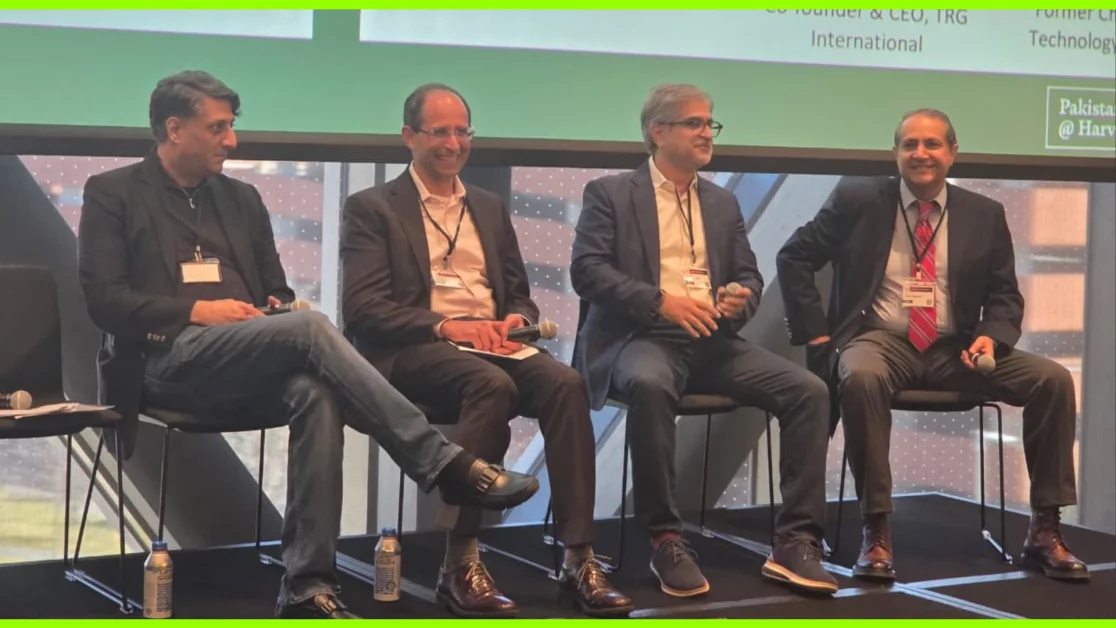
ISLAMABAD – April 13, 2026: Harvard Business School hosted the Pakistan Conference at Harvard 2026 on Sunday, centered on the theme “Pakistan — From Potential to Performance,” where Aamir Ibrahim emphasized that Pakistan’s digital journey has entered a decisive phase, one where the focus must shift from expanding access to delivering measurable economic impact at scale.
Speaking at a panel discussion titled “Pakistan’s Digital Transformation: Opportunity, Scale & What It Takes,” Aamir Ibrahim joined global policymakers, investors, and industry leaders to examine how Pakistan can transition from connectivity-driven growth to execution-led outcomes. The session was moderated by Ziad Bashir, Director at Gul Ahmed Textiles and Vice President at the Pakistan Business Council, and featured Mohammed Khaishgi, Co-founder and CEO of TRG International, and Amer Hashmi, Co-Chairman of QGDC and former Chairperson of the Special Technology Zone Authority.
Aamir Ibrahim noted that Pakistan’s digital ecosystem has moved beyond its early stages, with strong foundations established through mobile connectivity, financial inclusion, and rapid platform adoption. He described mobile technology as a powerful equalizer and a cross-sector enabler, transforming industries across finance, agriculture, and education, and unlocking new pathways for growth.
“Technology is the foundational layer for everything we do—but infrastructure alone is not enough. You build transparency to create credibility, but it is trust that delivers longevity. The real challenge now is ensuring that this digital foundation translates into inclusion, opportunity, and sustained economic growth,” he said.
The discussion highlighted Pakistan’s scale, with over 200 million mobile subscribers and more than 160 million internet users, alongside rapidly rising data consumption. Participants noted that while access has expanded significantly, the next challenge lies in driving affordability, adoption, and meaningful usage.
Aamir Ibrahim stressed that accelerating access to smartphones and broadband remains critical to bridging divides across income, geography, and gender. He cautioned that without deliberate efforts to expand inclusion, emerging technologies risk widening existing gaps rather than closing them.
He further highlighted Pakistan’s emergence as a data-producing economy, underscoring the importance of data sovereignty, local infrastructure, and readiness for Artificial Intelligence (AI). He noted that the global race for AI leadership will shape future competitiveness, making sustained investment in both technology and human capital essential.
The session concluded that Pakistan’s next phase of growth will depend on execution at scale, requiring alignment across policy, investment, and innovation to translate digital potential into jobs, inclusion, and long-term economic resilience.