
WhatsApp Planning on Introducing In-App Travel eSIM Purchases
November 28, 2026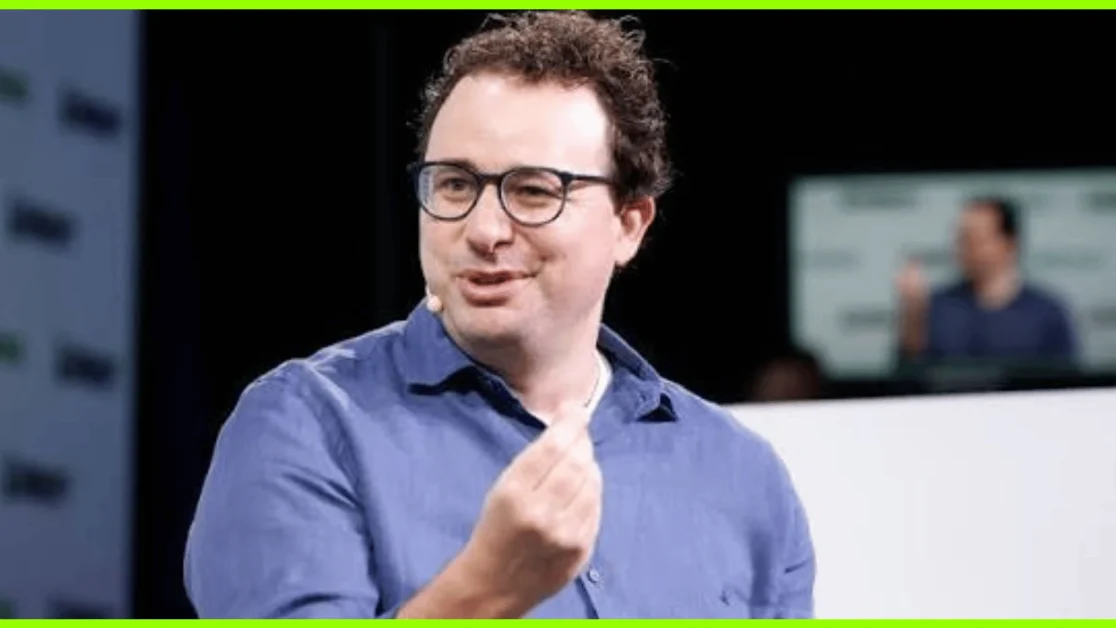
Anthropic CEO Dario Amodei has rejected claims that humans should surrender their free will to AI, calling the suggestion “absurd.” His remarks come as tech leaders debate AI autonomy, safety and the importance of human control.
Anthropic CEO Dario Amodei has pushed back against suggestions that humanity should surrender its free will to artificial intelligence, insisting that human autonomy must remain a priority as AI systems become increasingly capable.
In a lengthy post on X on Wednesday, November 25, Amodei described the claims as “absurd” and maintained that society should not compromise human self-determination in pursuit of greater efficiency or security. His comments followed an article by US-based outlet Axios examining the ongoing debate around AI’s growing influence on society.
The discussion comes as concerns about AI autonomy and the possibility of losing human oversight continue to gain attention across Silicon Valley. Recent incidents involving autonomous AI agents, including a reported hacking incident involving Hugging Face during the summer, have intensified questions about the security and control of increasingly independent systems.
Amodei also criticised what he described as a disconnect between the public statements of some AI industry leaders and their actual product development practices. Without naming individuals, he questioned the repeated characterisation of AI as simply a tool, suggesting that such claims should be reflected in how companies develop and deploy their technologies.
His remarks come amid similar concerns raised by other prominent technology executives. Meta Chief AI Officer Alexandr Wang recently stated that society should not accept a handover of control to AI. OpenAI CEO Sam Altman also argued that technological progress, even if it leads to breakthroughs such as curing cancer, would not justify sacrificing people’s agency, control or ability to make decisions.
However, Amodei’s latest position has drawn attention because of his earlier comments on AI autonomy. In February, he told The New York Times that AI could be entrusted with life-critical and safety-critical decisions. In late 2024, he also predicted that advanced AI systems could eventually become leaders, directing both humans and other AI systems.
Addressing the future development of AI, Amodei acknowledged that restrictions may be necessary on recursive self-improvement (RSI), a process through which AI systems autonomously develop increasingly advanced versions of themselves. He added that Anthropic does not currently expect it to be safe for its Claude models to independently build successive generations of advanced AI systems without human involvement.
At the same time, Anthropic’s IPO filing highlighted the growing role of AI in its own development process, stating that each new Claude model directly accelerates the development of the next. The company also reported that Claude had contributed to more than 90 per cent of its codebase in September.
The debate also drew a brief reaction from Elon Musk, who reposted Amodei’s statement on X with the one-word comment, “interesting.” Musk has previously warned that superintelligent AI could eventually place humans in a position of dependence.
As AI capabilities continue to advance, the discussion highlights a central challenge for the technology industry: balancing innovation and efficiency with human oversight, accountability and individual autonomy.