
Mobilink Bank Ranks Among Top Five Under PM’s Apna Ghar Program
November 25, 2026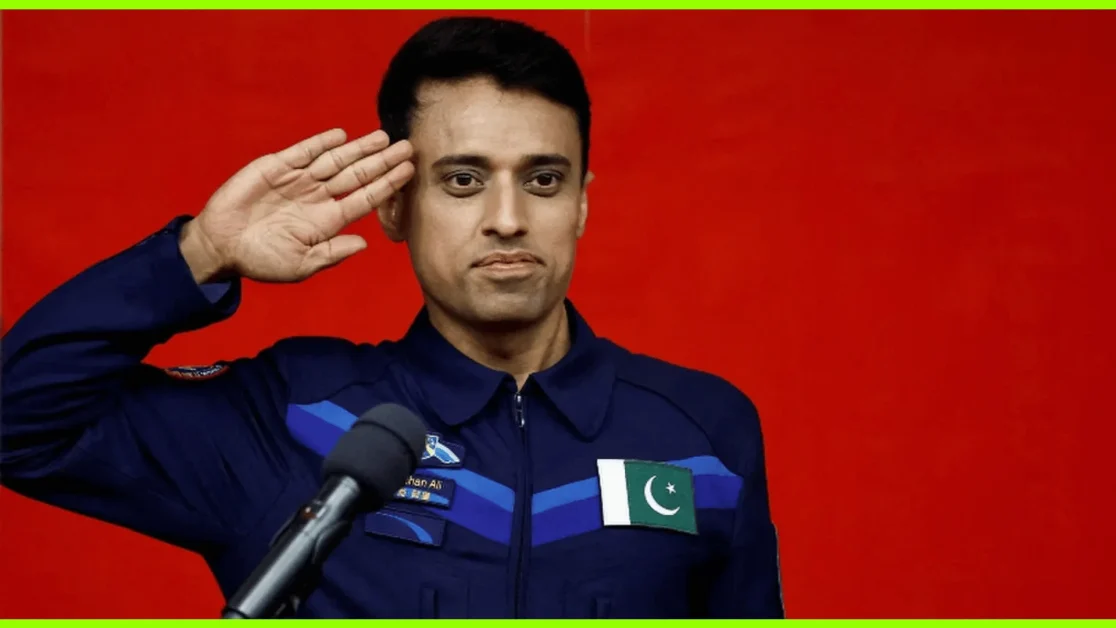
Pakistan Air Force fighter pilot Muhammad Zeeshan Ali has been officially selected for China’s Shenzhou-24 crewed spaceflight, poised to become both the first Pakistani in orbital space and the first international astronaut aboard the Tiangong Space Station.
Pakistan has achieved a watershed moment in its national space history with the official unveiling of Pakistan Air Force pilot Muhammad Zeeshan Ali as the country’s first orbital astronaut. Announced on Tuesday at the Jiuquan Satellite Launch Center in northwestern China, the 40-year-old aviator will serve as payload specialist aboard the Shenzhou-24 mission, simultaneously becoming the first foreign crew member to board China’s Tiangong Space Station.
Scheduled to lift off aboard a Long March-2F carrier rocket on Wednesday morning, Ali will fly alongside Chinese mission commander Tang Hongbo and flight engineer Wu Yi. During an intensive one-week orbital stay, Ali will install and initiate four joint Sino-Pakistani scientific experiments selected from over 300 university proposals submitted to the Space and Upper Atmosphere Research Commission (SUPARCO), including biotechnology and materials science research involving photosynthetic microorganisms designed for closed-loop life support and terrestrial food security.
Speaking to international media ahead of liftoff, Ali underscored the collective national significance of the flight, noting that he carries the aspirations of 250 million Pakistanis on his shoulders. Framing the voyage as a launchpad rather than a finish line, he expressed hope that bilateral aerospace cooperation would expand from a single flight into sustained joint missions toward the Moon and Mars. Following his week-long assignment in microgravity, Ali is scheduled to return to Earth aboard the Shenzhou-23 spacecraft.
The historic mission stems from a bilateral astronaut selection and training accord signed in Islamabad in February 2025 between SUPARCO and the China Manned Space Agency (CMSA). Both Ali and fellow Pakistani candidate Khurram Daud completed rigorous simulator drills, centrifuge conditioning, and Mandarin language training in record time, earning praise from Prime Minister Shehbaz Sharif and Planning Minister Ahsan Iqbal as an inspiration for Pakistan’s youth.
Building upon earlier robotic milestones such as the iCube-Qamar lunar orbiter and planned rover participation on Chang’e-8 around 2028, Pakistan’s entry into crewed orbital spaceflight marks a decisive leap in indigenous scientific capability and deep-space diplomacy.