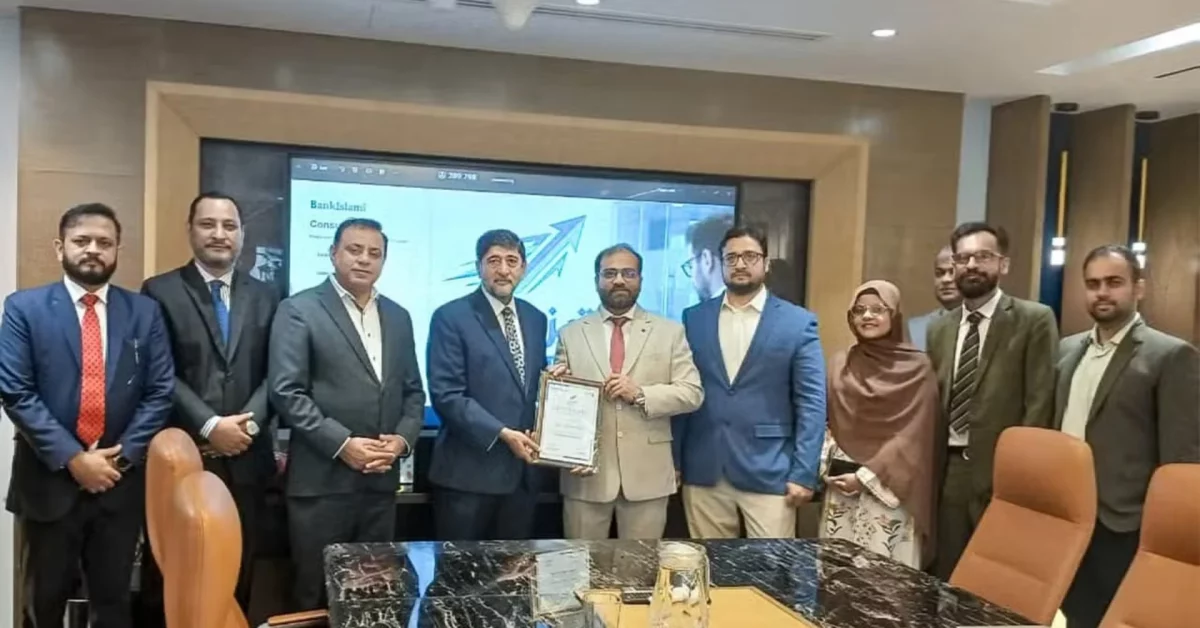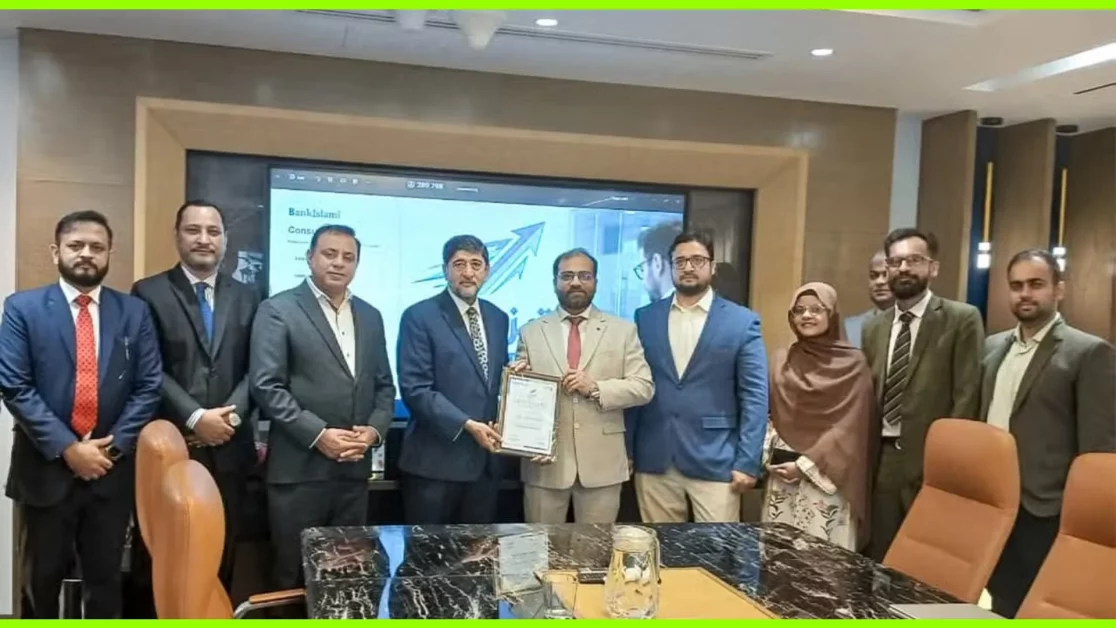

BankIslami Launches AI-Powered Consumer Finance System
September 27, 2026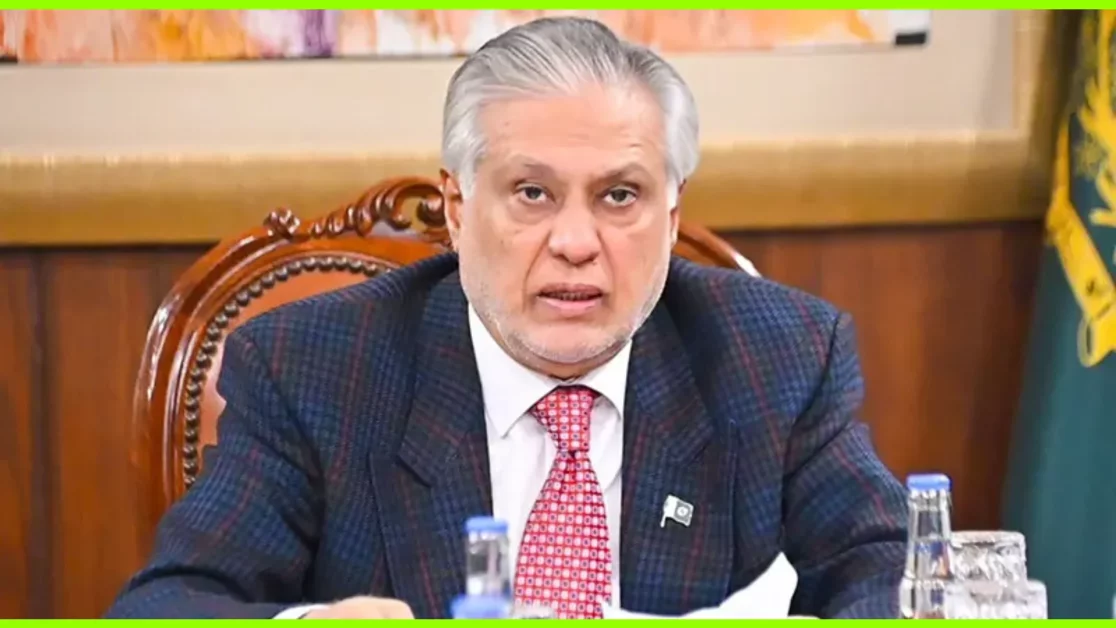
FM Ishaq Dar addressed the UN Security Council’s first AI and international security briefing, calling for an inclusive global governance framework and warning against AI monopolisation and militarisation.
Pakistan took its most forceful position yet on the global governance of artificial intelligence at one of the world’s most consequential forums. Deputy Prime Minister and Foreign Minister Senator Ishaq Dar addressed the UN Security Council on September 23 at a high-level briefing on Artificial Intelligence and International Security, convened by France as Security Council president for September, calling for a comprehensive, inclusive global framework to govern the technology before it reshapes the international order in ways that cannot be undone.
Dar’s core argument was direct: human judgment and control must be retained at every stage of AI design, development, and deployment. He warned against allowing AI to become “another facet of the global arms race,” calling for restraint and confidence-building measures to reduce the risks of miscalculation and compressed decision-making in the military domain.
He also issued a pointed warning on access and equity, cautioning that measures introduced in the name of AI safety must not become instruments of technology denial. “No small group should be allowed to monopolise this technology,” he said.
Stressing that AI governance must be pursued through representative and inclusive forums under the auspices of the United Nations, with universal participation rather than self-selected coalitions of technologically advanced nations.
Dar also highlighted the immediate, practical threats AI already poses to international security: the proliferation of fake news, the escalating scale of cyberattacks, and the risk of AI being used to facilitate or accelerate conflict.
He called for urgent international cooperation to address each of these dimensions alongside the longer-term risks of autonomous or militarised AI systems.
The briefing convened by France was among the most senior gatherings ever assembled to discuss AI and international security.
Foreign ministers of Denmark and the Democratic Republic of the Congo, the UK Secretary of State for Foreign, Commonwealth and Development Affairs, and the US White House Office of Science and Technology Policy director all participated alongside representatives from China, Russia, Panama, Greece, Somalia, Bahrain, Latvia, Colombia, and Liberia.
The Council was separately briefed by Professor Yoshua Bengio, co-chair of the UN International Independent Panel on AI, OpenAI CEO Sam Altman, Anthropic CEO Dario Amodei, and Hugging Face CEO Clement Delangue.
Dar also used his address to reaffirm Pakistan’s founding membership of the World Artificial Intelligence Cooperation Organization (WAICO), describing it as a concrete step toward promoting AI development “for good and for all,” and to welcome the first UN Global Dialogue on AI Governance held in Geneva earlier this year.
Pakistan’s position at the Security Council briefing, delivered in the same week that PVARA Chairman Bilal Bin Saqib addressed the UNGA on AI and financial inclusion, signals a coordinated and increasingly confident Pakistani voice on the global AI governance stage.
The country is no longer merely a recipient of AI policy decisions made elsewhere. It is actively seeking to shape them.