
Engro–Baidu Partnership Launches New Era for AI
June 6, 2026
Telenor Eyes to Sell Easypaisa, Wanting Full Pakistan Exit
June 7, 2026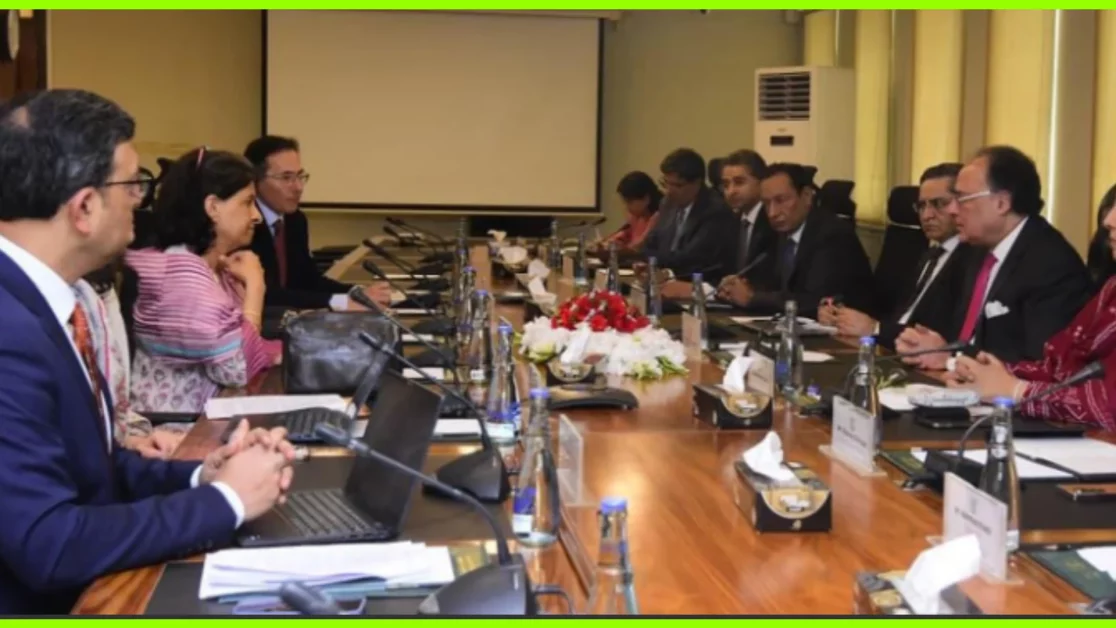
Federal Minister for Finance and Revenue Senator Muhammad Aurangzeb and a World Bank delegation discussed strengthening cooperation in human capital development.
Pakistan and the World Bank have reaffirmed their commitment to strengthening cooperation in human capital development following a meeting between Federal Minister for Finance and Revenue Senator Muhammad Aurangzeb and a World Bank delegation led by Vice President for Human Development, Mamta Murthi.
The discussions focused on key areas of Pakistan’s human development agenda, including skills enhancement, healthcare, education, social protection, workforce participation, and technology-enabled public service delivery. Senior representatives from the World Bank Group, including Country Director for Pakistan Bolormaa Amgaabazar, Regional Director for Human Development Keiko Inoue, Health Practice Manager Sherin Varkey, and IFC Director Simon Andrews, also participated in the meeting.
During the discussions, Aurangzeb acknowledged the World Bank Group’s continued support for Pakistan’s development priorities and reform efforts. He noted that while the country has made progress in restoring macroeconomic stability, the government is increasingly focusing on improving social and human development outcomes through investments in health, education, skills development, and social protection programs.
The minister emphasized the importance of ensuring effective implementation and measurable outcomes under the World Bank’s Country Partnership Framework with Pakistan. He highlighted that Pakistan’s large youth population represents a significant national asset and stressed the need to improve human capital indicators, increase workforce participation, and equip young people with skills that align with changing labour market demands.
The meeting also examined several priority areas, including maternal and child health, nutrition, immunization, early childhood development, education outcomes, and population-related challenges. Participants discussed strategies to strengthen service delivery systems and improve access to essential services, particularly for women and children.
A major focus of the discussions was workforce development and the need for upskilling and reskilling initiatives. Aurangzeb emphasized that preparing Pakistan’s workforce for a rapidly evolving global economy would be essential for supporting productivity, employment generation, and long-term economic growth. He noted that enhancing employability, particularly among young people, remains a central component of the government’s broader economic transformation agenda.
The World Bank delegation shared international experiences related to healthcare financing, technology-driven service delivery, and private sector participation in human development programs. Discussions also explored the growing role of artificial intelligence and digital technologies in healthcare, education, and workforce development.
The meeting concluded with discussions on future collaboration between the Government of Pakistan, the World Bank Group, and the private sector to advance human capital development objectives. During the meeting, Mamta Murthi invited Pakistan to participate in a global forum on Universal Health Coverage scheduled to be held in Japan later this year, an initiative supported by the Government of Japan and jointly facilitated by the World Bank Group and the World Health Organization.