![Technicians install rooftop solar panels in Karachi, Pakistan] Image source: Yale Environment 360](https://digitalpakistan.pk/wp-content/uploads/2026/03/1-13-80x80.webp)
Solar Expansion Helps Pakistan Offset Rising Energy Costs
April 9, 2026
ECNEC Approves Rs280bn Development Projects Package
April 10, 2026
Introduction
Social media marketing in Pakistan is no longer a trend. It is where most businesses are either growing or getting left behind. With over 85 million active social media users by late 2025, representing over 31% of the population, the digital opportunity is obvious.
Most businesses are present on social media. The challenge now is using these platforms effectively, not just to post, but to generate measurable results. Social media marketing in Pakistan has shifted from “optional growth” to an essential capability for businesses of all sizes. What matters most in 2026 is how strategically you use it.
Why Social Media Marketing Matters in Pakistan Right Now
The Scale of Pakistan’s Digital Audience
Pakistan’s digital growth has reached a point where it can no longer be ignored. Pakistan is now home to:
- 79.9 million social media users (31.2% of the population)
- 194 million cellular mobile connections active in late 2025 (75.9% do the population)
- 117 million individuals using the internet (45.6% of the population)
These figures have grown sharply since early 2025, reflecting the “digital state” of Pakistan in 2026.
Social media ad spend continues to rise, expected to surpass USD 75 million in 2026 with annual growth of around 10-12%. Businesses are clearly investing where their audience lives that is online in today’s day and age.
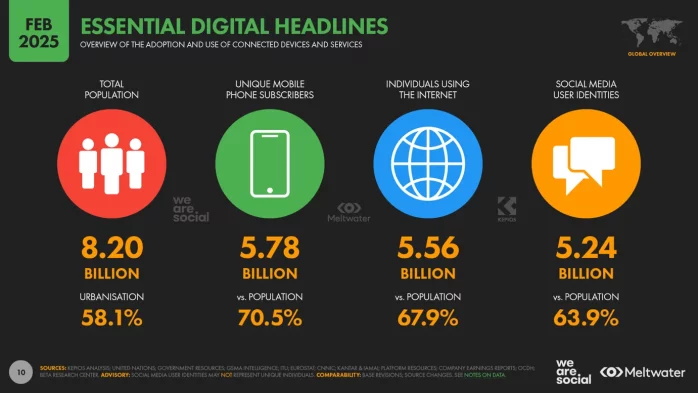
[Global digital usuage statistics including internet and social media adoption (2025) – Graphic by We Are Social & Meltwater] Image Source: DataReportal Digital 2025 Report
Why Traditional Marketing No Longer Cuts It
For decades, businesses relied on television, print, and outdoor advertising to reach audiences. A billboard may reach thousands of people, but it cannot distinguish between potential customers and those with no interest in the product. In 2026, these channels still matter for awareness, but they lack precision, measurability and speed.
Social media allows granular targeting by age, location, interests, or online habits, turning visibility into actionable performance data. In a country where the majority of consumers are mobile-first, this precision gives digital platforms a clear edge.
This shift has made digital marketing not just efficient but adaptive, a critical advantage in Pakistan’s fast-moving, youth-driven market.
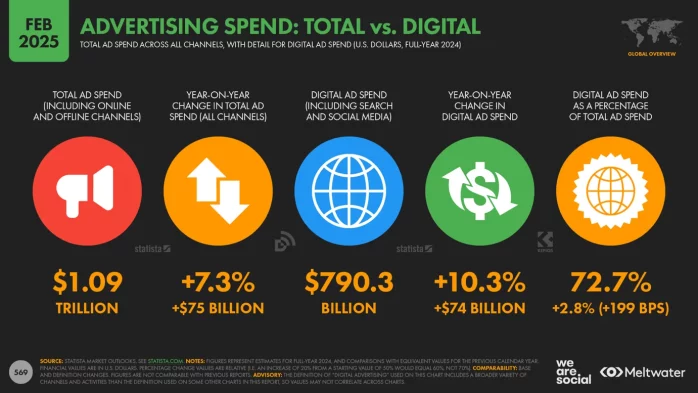
[Global advertising spend comparison between traditional and digital channels (2025) – Graphic by We Are Social & Meltwater] Image Source: DataReportal/Statista (2025)
Why Social Media is Now a Business Necessity
Social media has become the default space where consumers discover, compare, and engage with brands.
With ad budgets starting from as low as PKR 500 per day, even small businesses can test, learn, and grow without huge upfront commitments. At the same time, customers can expect brands to exist online, whether through a Facebook page, product reviews, or direct WhatsApp chat.
In this environment, ignoring this expectation means losing visibility where decisions are being made on screens not billboards.
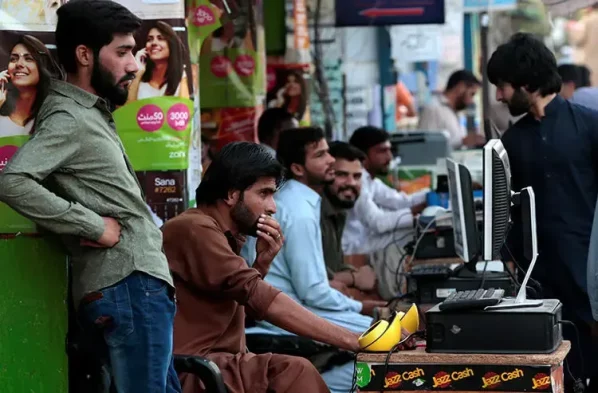
[People using digital services and computers at a street-side setup in Pakistan – Photo by Reuters] Image Source: Reuters/ Getty Images
Picking the Right Platform for Your Business
Facebook: Still the King
Despite the rise of newer platforms, Facebook remains the most widely used social media platform in Pakistan, with around 44 million users. In strength lies in its advertising capabilities, which allow businesses to reach highly specific audiences.
For local businesses and e-commerce brands, Facebook offers a reliable way to generate leads and sales. Its ad system provides detailed performance tracking, while relatively low cost-per-click rates between PKR 10 to PKR 400 and CPM from PKR 150 to PKR 1,100, depending on audience, season and industry. Make it an accessible platform for smaller businesses and the most ROI-driven platform for 2026.
Instagram & TikTok: Where Gen Z Lives
Instagram and TikTok operate in a different space, one driven by content rather than just targeting. These platforms are particularly popular among Gen Z and urban audiences, fuelled by short-form video. TikTok’s reach in Pakistan expanded further in 2025-26, while Instagram Reels continue to drive daily engagement across metro cities like Karachi, Lahore and Islamabad.
The environment is such that visibility is not always tied to spending, a single engaging video can reach thousands, or even millions, without a significant ad budget. But organic reach is still possible, creative, consistent video content can go viral without paid ads. Brands succeeding here are the ones aligning with authentic trends, storytelling, and community interaction.
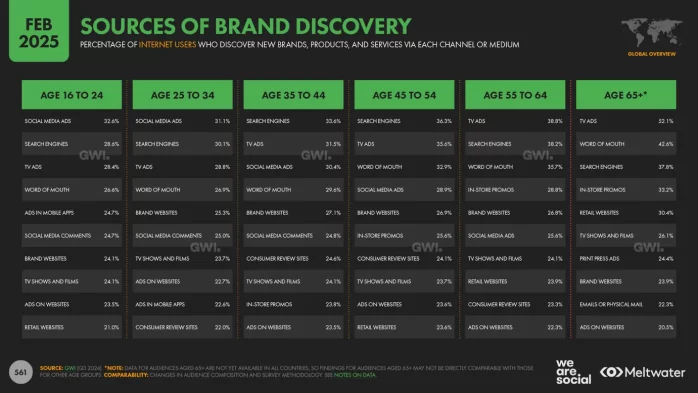
[Channels through which user discover brands across age groups (2025) – Graphic by We Are Social & GWI] Image Source: DataReportal/ GWI (2025)
WhatsApp Business: Pakistan’s Hidden Marketing Weapon
While platforms like Instagram and TikTok attract attention, WhatsApp plays a different but equally important role.
It is one of the most widely used apps in Pakistan. It’s the conversion layer of social media marketing, ideal for handling inquiries, sharing product catalogs, confirming order, or marinating ongoing customer relations.
Unlike other platforms, WhatsApp is not about discovery. It is about conversion and retention, often acting as the final step in the customer journey.
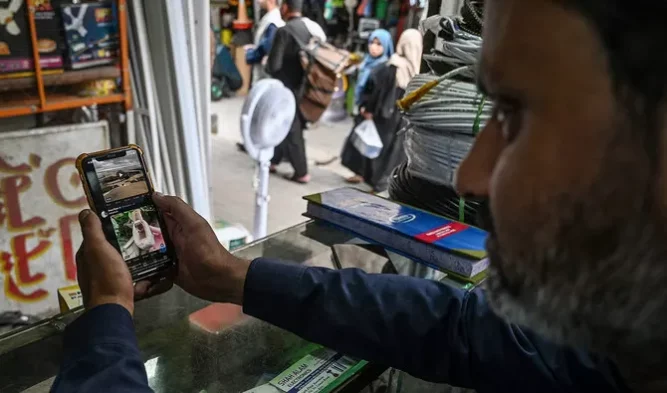
[A shopkeeper using a smartphone to browse social media content in Karachi – Photo by Arab News] Image Source: Arab News
LinkedIn & YouTube: The Underestimated Two
LinkedIn and YouTube are often overlooked, but they offer significant value when used correctly.
LinkedIn is increasingly important for B2B businesses, recruitment, and professional branding. It’s especially relevant for startups, tech, and services sector expanding workforce visibility.
YouTube, on the other hand, is built for long-form content like tutorials, vlogs, product explainers. It remains Pakistan’s leading search-based video platform. Lower ad competition compared to facebook or instagram makes both valuable for brand longevity.
Building Your Strategy from Scratch
Step 1 – Define Your Audience & SMART Goals
A successful strategy begins with a clear understanding of the target audience segments (age, location, language, income and interests). In the context of Pakistan, language alone plays a role in influencing engagement, Urdu and Roman Urdu content tend to perform better for broader audience reach, while English resonates among professional audiences.
Set one specific, measurable goal e.g., lead generation, awareness, or sales and build your content and ads around it.
Step 2 – Content That Actually Works in Pakistan
In Pakistan, context and culture lead performance. Campaigns that tie into religious occasions like Ramadan and Eid, national events like Independence Day and PSL, or relatable humour consistently outperform generic content.
Video remains king, over 80% of online traffic in Pakistan is video-based, mostly short-form like tutorials, testimonials and trends while maintaining authenticity. A mix of informative, storytelling, entertaining and promotional content helps maintain interest and trust.
Step 3 – Posting Frequency & Content Calendar
Consistency is often underestimated, but it is one of the most important factors in social media success. Consistency builds algorithmic trust, aim for 3-5 posts weekly and use a content calendar to plan around key event and campaign dates. Batch-create visuals and captions to maintain quality without last-minute stress.
Paid Advertising: How Much Does It Actually Cost?
Facebook & Instagram Ads in PKR
One of the most common mistakes in paid advertising in scaling too quickly without testing.
A more effective approach is to begin with smaller budgets, test different creatives and audiences, and gradually increase spending based on performance. This reduces wasted spend and improves overall efficiency.
Understanding the difference between boosting posts and running structured campaigns is also important. While boosting is easier, it offers less control compared to campaign-based adverting.
What ROI Should You Expect?
Returns on social media advertising can vary, but there are general benchmarks. Average businesses see a 3x-5x return on social media ad spend. But beyond pure sales, digital ads build brand equity and nurture repeat customers, metrics often undervalued in short-term analysis.
Therefore, measuring success requires looking beyond likes and impressions to actual conversions and customer relationships.
Do You Need a Social Media Agency in 2026?
Freelancer vs Agency vs In-House
-
-
-
- Freelancers: Cost-effective and flexible for early-stage brands or single-platform management.
- Agencies: Offer end-to-end management from strategy, creative, ads to analytics.
- In-House Teams: A resource-intensive option, best for scaling businesses with consistent monthly campaigns, while offering greater control and alignment with business goals.
-
-
A typical social media management cost ranges between PKR 15,000- 100,000 per month, scaling higher for performance-oriented campaigns.
Once monthly ad spend surpasses PKR 200,000, partnering with an agency or hybrid team improves ROI and reporting efficiency.
Conclusion
Social media marketing in Pakistan has moved beyond experimentation to strategic discipline. The barrier to entry remains low, but competition for visibility is at an all-time high.
Success in 2026 comes down to:
- A clear strategy
- Consistent and relevant content
- Smart budgeting and incremental scaling
Start small, test deliberately, and build momentum gradually. Social media rewards persistence over perfection. The opportunity remains massive but the difference lies in execution.
Key Takeaways: Your First 30 Days on Social Media
A Simple 30-Day Action Plan
-
-
-
- Choose one platform to focus on.
- Define one measurable goal.
- Post consistently (3-5 times weekly).
- Track metrics (reach, engagement, conversions).
- Adjust based on data.
-
-
Common Mistakes to Avoid
- Spreading too thin across multiple channels.
- Ignoring analytics.
- Posting without purpose or consistency.
- Over-promoting without offering value.
In 2026, sustainable growth on social media is achieved though clarity, consistency, and cultural relevance.