
Pakistan, Canada Stress Trade, Investment Cooperation Talks
February 8, 2026
VEON and JazzWorld Launch “Invest In Pakistan” Initiative
February 9, 2026
Introduction: The Perfect 80’s Nostalgic Cosmic Horror Sci-fi Drama
For 10 years the hit Netflix show Stranger Things remained the absolute cult favorite. The show’s creators, twin brothers, Matt and Ross Duffer, assembled a cast of relatively unknown actors and catapulted them into a meteoric fame through a 1980s nostalgic sci-fi horror drama wrapped in an emotional coming-of-age story.
Set in a small fictional town, Hawkins, in the state of Indiana, in the 80s, in many ways Stranger Things was the perfect show. It blends small-town mystery, supernatural terror, and government conspiracy with the warmth of childhood friendship. At its core, it’s about growing up while the world quietly falls apart and realizing that the monsters outside are often less frightening than the ones within.
Stranger Things draws heavily from real-world paranoia and pop mythology, especially Dungeons & Dragons and the Montauk Project mind-control experiments. D&D gives the kids a shared language to name the unknown, turning cosmic horror into something playable, structured, and survivable.
Scary Russians, a small outlandish girl with telekinetic powers, evil scientists operating beneath the surface of Hawkins in a secret government facility, and tall human-shaped alien predators with enormous teethy heads that open up like demonic flowers – from worlds beyond world controlled by a hidden entity.
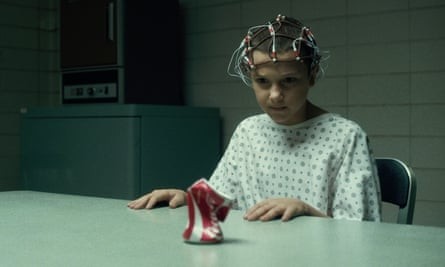
Image source: The Guardian
The sci-fi aspect of the story line, allegedly inspired by the conspiracy theory surrounding the Montauk Project, feeds the show’s darker dimensions: secret government programs, psychic experimentation, and the terror of underground institutions operating without moral limits. Together, they blur fantasy and conspiracy, grounding the supernatural in fears that once felt disturbingly real.
From an ordinary basement of a regular suburban house, 4 kids at the cusp of adolescence, sit around a table bickering emphatically over their D&D boards on a random school night. Completely unbeknownst to them was the fact that their lives are about to turn upside down.
Stranger Things had an aura that felt surreal and transcendent, while also being so close to home. On the surface, everything is familiar: kids on bikes, quiet streets, school corridors, family homes. The nostalgia for a time long gone made the viewers sink into the story on a deeply emotional level. But just beneath that normalcy, there’s something vast and unsettling.
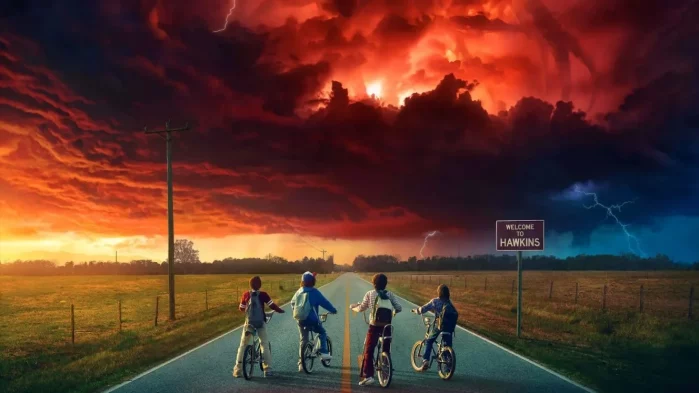
Image source: insMind
The Upside Down looks like the real world, only stripped of warmth and life, as if time itself is off. That tension, between what’s known and what’s beyond our powers of conception gives the show this strange, liminal feeling, like standing on the edge of something you don’t fully understand.
The extraordinary exists parallel the mundane, quietly seeping in. It was the realization of how big and terrifying the world can be while you’re still lying awake in your childhood bedroom, listening to the house breathe around you.
It Was More Than Just A Show
The audiences who had been wholeheartedly devoted to the story, from the time the first season came out in July of 2016, grew up with the characters in this show. In the past 10 years, the audiences transitioned from multiple stages of their own lives.
High school, college, graduations, jobs, leaving home to settle in different countries or cities – through all that has been lost and gained, the return of Stranger Things to our screens offered a home-like safety, comfort, and an empathetic refuge from the jarring clash of realities we faced in our life otherwise.
The 8 episodes per season were more than enough for us to find some semblance of security in the wonder and thrill of following the characters on their adventures. Characters we’ve loved for so long. Some more than others, *winks at Steve Harrington*. Whose pain, trauma, joys, ambitions, weaknesses and strengths we made our own.
Stranger Things gave audiences a lens to revisit childhood with wonder and vulnerability, making nostalgia feel alive. It validated deep emotions, showing bravery, grief, and loyalty as strengths. The show became a shared cultural experience, connecting generations through music, games, and suspense.
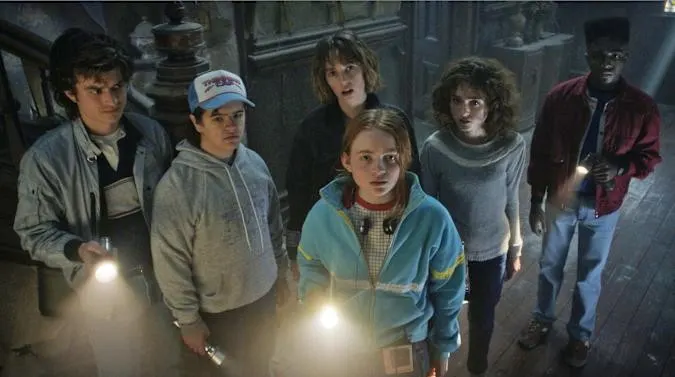
Image source: Jonite
It offered continuity amid life’s chaos, making Hawkins feel like home. Its impact lingers because it didn’t just tell a story, it accompanied viewers through a decade of growth and change. Which is why the audiences now find themselves to be recipients of injustice when Duffer brothers failed to bring an epic and unforgettable story to a conclusion it deserved.
The audiences are heartbroken by the fact that creators had just given up on delivering the optimal resolution. Did we learn nothing from Game of Thrones? Because of that long, shared history, the ending didn’t just feel disappointing, it felt personal.
When a story walks alongside you for a decade, it stops being “just a show” and becomes woven into memory, routine, and identity. A rushed or careless conclusion doesn’t simply close a narrative; it fractures the trust between creators and audience.
What hurts most is not that every mystery wasn’t answered, but that the care and patience the viewers offered for years didn’t seem to be returned. For many, the finale didn’t land as a goodbye, it landed as an abandonment, leaving audiences to mourn not only the story that ended, but the one they believed they were promised.
The Finale Crashed and Burned
It seems like the only person who actually delivered anything remarkable and noteworthy was Steve Harrington, played by actor and musician Joe Keery, with his devilish good-looks, flawless character development and astoundingly captivating screen presence. The fact that Duffer Bros. didn’t kill him off like the fan theories were afraid they might do – was the season 5’s only saving grace.
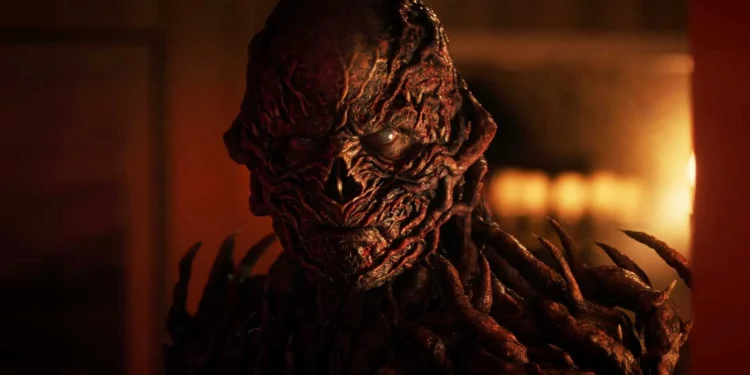
Image source: Collider
No, but seriously though, who keeps the audiences waiting for 3 years to release a finale that nonsensical? It certainly appears that the creators forgot the original purpose and plot points of their own show. Or, they simply did not care anymore after the historic global success the series had garnered over the years.
They set the stage up, laid down an unimpeachable storyline, then decided to contradict every core aspect they had built up till now. Here are just a handful of the qualms the fans are left scratching their heads on with no expectations of ever acquiring any closure:
- Why were there no demobats, demogorgans, and demodogs in the Abyss? Where in all the wormhole was Vecna’s army? Might we remind you that our very initial connection to the Upside Down was through one of these creatures.
- If defeating Vecna “fixed” everything, it makes the Mind Flayer feel like wasted buildup. If it didn’t, then what exactly were we fighting all along?
- Speaking of which, a character as potent, fierce, well-designed and forceful as Vecna, should not and cannot possibly die that easily. At the hands of some teenagers with flame throwers and a hysterical mother yielding a worn-down axe.
- Where did that stone come from that henry/001/Vecna found in the cave which apparently gave him all his powers? You can’t just choose to reveal a crucial piece of information, so integral to the character’s entire arc, without even attempting to explore it further.
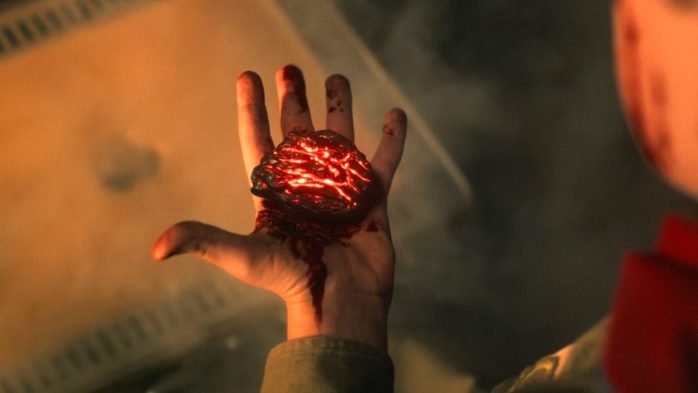
Image source: Nerdist
- Do you expect us to believe that Eleven, who flipped an enormous truck with a simple head nod when she was only 12 years old, while riding on the back of a moving bike, is now struggling to do the same with objects that are nothing compared to her superpowers? This girl eviscerated a helicopter up in the air one season ago!
- We were under the impression that the Mindflayer, to quote Will, “likes it cold”. However, the Abyss where it resides looks like the Saharah desert.
- Why were none of the main characters arrested after they literally killed men from the military? What happened to Dr. Kay?
- Giant military-grade weapons could not scrape the skin off of the monsters, but a drunk Karen Wheeler’s jagged grocery store wine bottle maimed that poor demogorgan?
- Characters used to walk very cautiously around the vines connected to the Hivemind in the Upside Down for fear of waking up Vecna. Now everyone’s just traipsing in and out of the Upside Down like it’s their vacation getaway. Helicopters flying in the dimension’s atmosphere, really?
- Will Buyers, a closeted gay kid decides to come out to his whole village while an apocalypse is descending upon Hawkins, in an excruciatingly long scene, and no one bats an eye? This is America in the 1980s we’re talking about. The unrealistic unnecessariness of this scene was both laughable and cringe-worthy.
- Max was in coma for 2 years. Now she’s graduating from high school at the same time as the rest of her group? Hopefully, her run towards graduation was faster than when she was sluggishly jogging towards the Kate Bush portal.
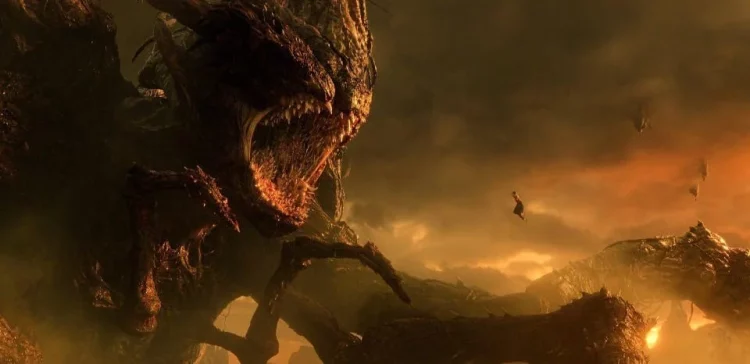
Image source: Forbes
What’s even more preposterous is that all the main characters had plot armors so impenetrable they fought off the shows focal point in a matter of minutes and walked out of multiple dimensions, inside a wormhole, without so much as a scratch on the arm. Duffer Brothers could’ve had their pick at anyone of them and rescued the show from it’s abysmal demise. Except Steve Harrington ofcourse.
An Act of Desperation
Believe it or not, these are only a few issues the fans have with the 3-part finale. While part 1 hornswoggled us into thinking this will be the greatest season of the series, part 2 and 3 banjaxed our expectations so brutally, it left the fans foolishly believing that the Duffers actually had a secrete episode 9.
In an act of desperation, fans online came together to theorize that episode 9 will be the shows real ending, since it was physically impossible for them to accept that episode 8 was the real conclusion. It all felt too off and senseless to be true. They call it “The Conformity Gate”.
“Conformity Gate” isn’t an official plot device in the show but a viral fan theory that emerged after the finale aired. According to this theory, the seemingly peaceful ending we all watched, where Hawkins heals, characters graduate, and everything looks resolved, isn’t the real ending at all.
Instead, fans argue that what we saw was a false reality or illusion created by the Vecna, meant to make both the characters and the audience conform to a comforting, fake closure rather than the truth. What’s more desperate is Netflix’s audience-pleasing choices. Fans largely blame Netflix for pushing a finale that felt rushed and underdeveloped.
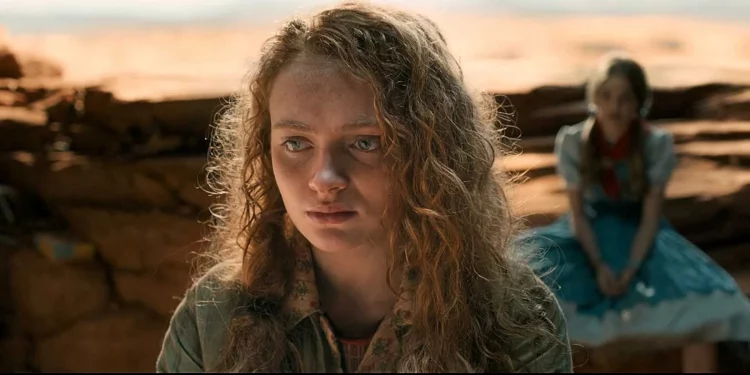
Image source: Collider
Production deadlines meant the script wasn’t fully finished before filming began. They were filming “Escape from Camazotz” episode before it was fully written. Which meant that the actors were not aware of what they were supposed to be expressing, feeling and performing. This explains some of their frozen faces and blunted affects during the scenes.
Heavy marketing hype built unrealistic expectations that the ending couldn’t satisfy. Audience‑pleasing choices led to safe, anticlimactic resolutions rather than bold storytelling. “Conformity Gate” theory shows how frustrated fans hoped for hidden content or a deeper ending.
Netflix confirmed no secret episode, intensifying disappointment. The behind‑the‑scenes documentary revealed creative chaos, making fans feel the finale lacked vision. Altogether, Netflix’s pressures and promotion shaped a conclusion that felt emotionally unearned after a decade of investment.
Conclusion
All that and we’ll never know what the Duffer Brothers were thinking. Stranger Things was a unique cultural phenomenon. A show that made us feel both the vast terror of the unknown and the intimate warmth of belonging. It reminded us what it was like to believe in magic, to fear the dark, and to trust that friendship could save us from monsters both real and imagined.
That’s why the finale stings. It was rushed, contradictory, and disconnected from the very foundations the show had so carefully established. The characters deserved better. And frankly, the Duffer Brothers deserved to see their own creation through with the brilliance they once brought to it. Stranger Things will always hold a place in our hearts for what it was at its best. Will come back to rewatch and comfort view it time and time again? Without a shadow of a doubt.